Best Metal for Knife Blades: Top Utility Blade Options for Every Task
The right metal choice can dramatically affect blade life, edge retention, and safety. This guide compares common blade metals in popular utility knives, focusing on durability, flexibility, and ease of maintenance. Whether you’re opening boxes, trimming cardboard, or tackling DIY projects, these blades are built to perform with reliable steel types and smart design features. Below, five highly regarded blades are reviewed, followed by a practical buying guide to help you choose the best metal for your needs.
| Product | Brand | Notable Metal/Design Feature | Key Benefit |
|---|---|---|---|
| Lenox Utility Knife Blades, Titanium Edge, 5-Pack (20350GOLD5C) | Lenox | High-speed steel with titanium coating | Enhanced edge retention and durability |
| IRWIN Utility Knife Blades, Bi-Metal, 100-Pack (2084400) | IRWIN | Welded bi-metal construction | Sharper edge with flexible body, safer use |
| WORKPRO Premium Utility Knife, Retractable All Metal Heavy Duty Box Cutter | WORKPRO | SK5 blade steel heat-treated to 64 HRC | Long-lasting, precise cuts |
| DIYSELF Box Cutters, 4 Pack Small Box Cutter Retractable | DIYSELF | Metal shell, SK5 steel blades | Durable, precise for everyday use |
| CRAFTSMAN Utility Knife Blades, 100 Pack, CMHT11921A | CRAFTSMAN | Precision-honed edge for versatility | Consistent performance across materials |
Lenox Titanium Edge Utility Blades

Lenox’s 5-pack features high-speed steel with a titanium coating designed to extend blade life in demanding tasks. The blades are described as shatterproof with a bi-metal construction that provides both rigidity and a degree of flex. A 4-notch design enables deeper cuts, improving performance in tougher materials and repetitive use scenarios. These attributes make Lenox blades well-suited for heavy-duty box opening and general cutting work where sustained sharpness matters.
IRWIN Bi-Metal Utility Knife Blades

IRWIN’s blades use a welded bi-metal design to balance a sharp edge with a flexible body. The construction aims to deliver extended edge life compared to traditional blades while maintaining some resilience against snapping. The shatter-resistant design adds safety during use, making these blades a practical choice for varied tasks like drywall, cardboard, and light plastic work where edge retention is important.
WORKPRO Premium Utility Knife

This all-metal, heavy-duty box cutter emphasizes rugged construction and practical versatility. With SK5 blade steel heat-treated to about 64 HRC, the blades offer excellent edge retention for repeated cuts through cardboard, plastic packaging, and other common materials. The knife features a retractable blade with a quick-change mechanism and includes ten extra blades, enabling longer projects with fewer interruptions. Its 1.5-meter drop test compatibility highlights a focus on durability for workplace environments.
DIYSELF Box Cutters

DIYSELF offers a four-pack of small, all-metal box cutters with SK5 steel blades. The rugged housing minimizes blade wobble and supports long cutting days. SK5 steel provides reliable edge life for everyday tasks like opening packages or trimming light materials. The design prioritizes quick, safe blade retraction and a snug sheathing that helps protect users when not in use, ideal for home or light-industrial applications.
CRAFTSMAN Utility Knife Blades
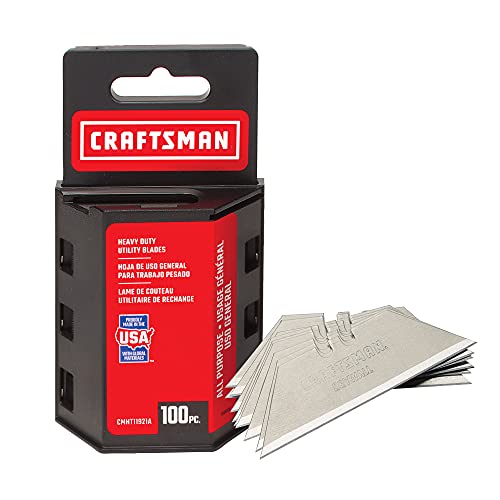
CRAFTSMAN recommends a heavy-duty blade edge suitable for a broad range of materials from drywall to leather. Their 100-pack blades feature a precision-honed edge designed for consistent cuts and long cutting life. The blades fit most standard utility knives and maintain a reliable performance across multiple materials, making them a solid baseline option for mixed-use projects in home workshops or job sites.
Buying Guide: Key Considerations For Choosing Utility Knife Blades
- Material and edge retention: High-speed steel with protective coatings (like titanium) tends to resist dulling, while SK5 steel is prized for its balance of hardness and durability.
- Construction quality: Bi-metal blades, welding methods, and blade-to-handle fit affect reliability and safety during use.
- Intended tasks: Choose blades designed for the specific materials you encounter most (cardboard, plastic, drywall, leather), as some blades excel in particular applications.
- Blade geometry and coatings: Precision-honed edges, coatings that reduce corrosion, and design features like multi-notch or retractable mechanisms impact cutting performance and safety.
- Safety and usability: Retractable blades, secure blade storage, and shatter-resistant designs help minimize accidents on the job.
- Cost per use: Higher-quality blades may last longer, reducing the frequency of blade changes. Consider packs that match your typical workload.
- Environment and maintenance: Durable materials with corrosion resistance are advantageous in humid or workshop environments; store blades securely when not in use.
When selecting blades for metal working or heavy-duty tasks, prioritize edge retention, blade rigidity, and safety features. The five reviewed options provide a spectrum of metals and constructions—from titanium-coated edges to bi-metal designs and SK5 steel—that address common American home and workshop settings. For best results, match the blade’s metal composition and construction to your typical projects, and keep spare blades on hand for uninterrupted work flow.