Best Mortar Mix for Fireplaces: Top Refractory Solutions for Home Bricks
Finding the right mortar mix for a fireplace, fire pit, or chimney project is essential for lasting repairs and solid joints. This guide highlights high-heat, durable options and explains who each product is best for. Whether you’re rebuilding a firebox, resurfacing a brick chimney, or sealing a fire pit ring, the right mix matters. The top five products below cover a range of sizes and heat ratings, helping you pick a solution that fits your project scale and climate. A quick buyer’s table follows to compare key details at a glance.
| Product | Best For | Heat Rating | Size |
|---|---|---|---|
| Tenon Refractory Mortar (1 lb) | Small repairs, touch-ups | Up to 2550°F | 1 lb |
| Tenon Refractory Mortar (50 lb) | Medium to large projects | Up to 2550°F | 50 lb |
| Rutland Dry Mix 211 (10 lb) | Fireplace bricks, flue tiles | Up to 2550°F | 10 lb |
| Akona Medium Duty Refractory Mortar (50 lb) | Indoor/outdoor fireplaces, pizza ovens | Up to 2550°F | 50 lb |
| GIRtech Refractory Cement Dry Mix (5 lb) | Professional-grade lining and repairs | Up to 3000°F | 5 lb |
Tenon Refractory Mortar – 1 lb (White)

Best for quick touch-ups and small joints in fireplaces, fire pits, or chimneys. This preblended mix is ready to use—just add water. It’s suitable for indoor or outdoor applications such as setting clay flue liners or parging smoke chambers. A key advantage is its 1-hour working time before hardening, which helps novices complete precise repairs without rushing. Avoid this if you’re tackling a large-scale rebuild that requires more material upfront.
Who it’s best for: homeowners performing minor repairs or refinishing narrow joints. Why chosen: compact size and ready-to-use formula simplify small projects without needing additional mixing or curing steps in mild conditions.
Limitation to note: the small 1 lb bag may require multiple returns for larger jobs.
Tenon Refractory Mortar – 50 lb (White)

This larger bag is designed for more extensive fireplace, fire pit, or chimney projects. It shares the same high-heat rating as the 1 lb version and is ideal for continuous joints, parging, and masonry work that demands higher material volume. It’s best for users who are planning a mid-to-large project or professional-scale repairs. A possible drawback is handling the heavier bag in tight spaces.
Who it’s best for: those undertaking multiple joints or larger rebuilds. Why chosen: the 50 lb bag reduces the number of bag openings and ensures consistent mix quality for bigger tasks.
Caution: ensure you have appropriate lifting capability and a clean mixing area to avoid material waste and spillage.
Rutland Dry Mix 211 – 10 lb
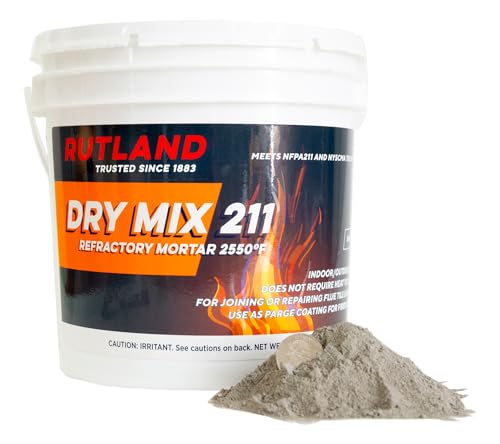
Best for general-purpose high-temperature repairs in both indoor and outdoor settings. This dry mix does not require heat curing and cures with exposure to air, making it convenient for projects where firing is not feasible. It’s rated for temperatures up to 2550°F, suitable for fire pits, fireplaces, kilns, and pizza ovens. It’s a practical balance of ease of use and heat resistance.
Who it’s best for: DIYers seeking a reliable, air-cure mix for medium-scale repairs. Why chosen: no curing heat is needed, simplifying use in residences without high-heat facilities.
Caution: follow the water-to-mix guidance precisely to achieve optimal strength and avoid crunching or cracking as it cures.
GIRtech Refractory Cement Dry Mix – 5 lb

Best for professional-grade applications, including lining stoves, fireboxes, ovens, and furnaces. It withstands high temperatures up to 3000°F (1648°C) and requires firing to develop strength. The mix is simple to prepare—just add water—and performs well when bricks are pre-wet to maximize adhesion. It’s especially suitable where maximum heat resistance is essential, though it requires attention to firing procedures for strength development.
Who it’s best for: builders and serious DIYers needing superior heat tolerance. Why chosen: the 3000°F rating and clay-based formulation deliver robust performance for extreme heat environments.
Caution: proper firing is needed to achieve full strength; avoid premature exposure to heat before the material has cured properly.
Rutland Dry Mix 211 – 2.5 lb

Best for compact firebox repairs and small masonry joints where a light-duty, air-curing mortar is suitable. This dry mix is designed for easy mixing with water and cures by exposure to air, with a heat rating of up to 2550°F. It’s a convenient option for small, contained projects or touch-ups around a fireplace or chimney.
Who it’s best for: homeowners performing small corrections or fittings in limited spaces. Why chosen: smaller package size aligns with occasional-use projects and reduces material waste.
Rutland Fireplace Mortar Cartridge – 10.3 oz

Best for small fireplace repairs where convenient cartridge application is preferred. This mortar supports interior use and requires heat to cure. It’s a quick option for patching small chips, re-pointing joints, or bonding small sections of firebricks. It may be less suited for large rebuilds due to its cartridge format and limited total material.
Who it’s best for: quick, localized repairs inside the fireplace. Why chosen: easy application without mixing, suitable for tiny cracks or chips.
Buying Guide
What to consider when choosing a fireplace mortar:
- Project size: Large rebuilds benefit from bulk bags (e.g., 50 lb) while minor repairs suit 1–10 lb options.
- Heat rating: Most products tolerate up to 2550°F, but some like GIRtech reach 3000°F. Choose based on expected peak temperatures and exposure duration.
- Curing method: Some mortars cure with air exposure; others require firing to develop strength. Plan around available equipment and safety routines.
- Indoor vs outdoor: Ensure the product is approved for the intended environment, and heed ventilation and curing guidance in enclosed spaces.
- Joint workability: Working time varies. Pick a formula that allows you to finish joints before set, especially in larger projects.
- Ease of use: Ready-to-use blends reduce prep time; dry mixes demand precise mixing but offer flexibility for larger jobs.
- Application type: Pour, trowel, or cartridge application may suit different repair scopes. Cartridge mortars work well for targeted fixes.
FAQ
- What is the typical working time for refractory mortars?
Most preblended mortars offer around 1 hour of working time before hardening, depending on temperature and humidity.
- Can these mortars be used outdoors?
Yes, many are rated for indoor and outdoor use, but confirm weather exposure and curing requirements for exterior applications.
- Do I need to fire the mortar to achieve full strength?
Some products require firing to develop full strength, while others cure fully in air. Follow the product’s instructions.
- Is a high temperature rating always better?
Higher ratings are beneficial for extreme heat environments, but ensure the mortar is compatible with your specific project and bricks.
- Are cartridge mortars suitable for large repairs?
Cartridges are ideal for small patches. For large joints or rebuilding sections, bulk dry or preblended bags are more efficient.
- Should I wet bricks before applying refractory mortar?
Some products benefit from dampened bricks to improve adhesion; check the manufacturer’s guidance for best results.