Best Non-Smart Thermostats for Simple Home Comfort
The following picks focus on reliable, straightforward thermostats that don’t rely on advanced smart features. Ideal for budget-friendly renovations or homes that prefer manual control, these options emphasize easy installation, clear displays, and dependable temperature regulation across common HVAC setups.
Summary of Selected Products
| Product | Brand | Type | Key Benefit |
|---|---|---|---|
| RTH5160D1003 | Honeywell Home | Non-programmable | Simple, intuitive controls |
| Heagstat Non-Programmable | Heagstat | Non-programmable | Clear wiring guides; broad compatibility notes |
| Suuwer Non-Programmable Thermostat | Suuwer | Non-programmable | Conventional single-stage compatibility |
| New! Honeywell Home Smart Thermostat | Honeywell Home | Smart/Non-programmable hybrid | WiFi-enabled with simple presets |
| Amazon Smart Thermostat | Amazon | Smart | Easy upgrade with Alexa and energy features |
Honeywell Home RTH5160D1003 Non-Programmable Thermostat, White
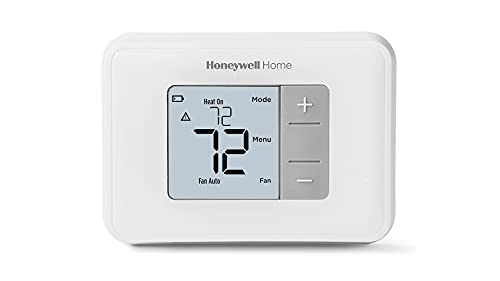
Designed for straightforward operation, this Honeywell Home model offers a simple interface with a backlit display showing both current room temperature and the set point. Its basic +/- 1 degree F control supports reliable comfort without the need for programming. Suitable for conventional single-stage heating and cooling systems, it provides a dependable, budget-friendly option for households that prioritize clarity over smart features.
Heagstat Non-Programmable Thermostats for Home Conventional Single-Stage Systems

This Heagstat thermostat is built for conventional single-stage systems and emphasizes straightforward installation with warnings and compatibility notes to help buyers avoid mismatches. It supports up to 1 Heat/1 Cool configurations and works with common furnace setups. The device’s emphasis on a simple base attachment and limited wiring makes it a practical choice for DIY projects where a basic, no-fruss option is preferred.
Suuwer Non-Programmable Thermostats for Home 1 Heat/1 Cool Conventional Single-Stage Systems

The Suuwer model is tailored for conventional single-stage heating and cooling with a blue backlit display for easy night-time readability. It comes with clear installation guidance and cautions about wiring compatibility. It supports 1H/1C configurations and excludes multistage systems, making it a practical fit for straightforward homes that prioritize dependable, manual control without programming.
New Honeywell Home Smart Thermostat

While marketed as a smart thermostat, this Honeywell Home model serves as a practical upgrade for users seeking reliable, user-friendly control with optional WiFi connectivity. It supports conventional systems and may require a C-wire connection in some homes. The device offers straightforward scheduling and display customization, bridging basic manual operation with modern convenience when desired.
Amazon Smart Thermostat

Amazon’s Smart Thermostat provides a simple upgrade path for homes that want to preserve familiar manual operation while gaining basic smart capabilities. It integrates with Alexa and Ring ecosystems and supports presence-based adjustments. While it includes smart features, it remains suitable for users who prefer a straightforward thermostat with optional voice control and app-based adjustments rather than full smart-home automation.
Buying Guide: Key Considerations For Choosing A Non-Smart Or Basic Thermostat
- Compatibility: Confirm your HVAC system type (gas, electric, heat pump, single-stage, multi-stage). For older homes, ensure the thermostat supports the number of wires you have (commonly 2-5 wires).
- Wiring Requirements: Many basic models require a C-wire only for certain power configurations. If you lack a C-wire, look for models designed to work without it or be prepared to use a C-wire adapter.
- Ease Of Installation: Non-programmable units often emphasize tool-free or simple wiring. Look for built-in level, clear labeling, and straightforward instructions to minimize installation time.
- Display And Readability: Backlit displays and large set-point indicators improve usability, especially in dim rooms or late-night adjustments.
- Reliability And Durability: In regions with temperature swings, a sturdy housing and dependable sensors help maintain consistent comfort without frequent recalibration.
- Future Upgrades: If you anticipate wanting smart features later, consider a model that can be upgraded to a smart thermostat with minimal changes to wiring or mounting.
- Energy Savings: While non-smart thermostats don’t offer automated optimization, some basic models provide precise temperature control that can contribute to steady energy use when paired with a well-matched HVAC system.
- Installation Support: Some brands include detailed wiring diagrams or video guides. This can be crucial for homeowners new to DIY installation or for complex wiring scenarios.
- Warranty And Support: Check the warranty length and the availability of customer support if troubleshooting is needed after installation.
- System Compatibility Checker: If you’re unsure about system compatibility, many brands offer online checkers or support pages to verify which thermostat will work with your existing HVAC setup.
These considerations help balance the desire for straightforward operation with reliable performance. Whether you’re upgrading a basic, no-frills setup or evaluating a future-smart upgrade, the right thermostat should align with your HVAC system and your comfort preferences while remaining easy to install and maintain.