Best Nylon 3D Printers for Durable, High-Precision Parts
Nylon filaments are prized for toughness, wear resistance, and the ability to produce durable parts with good heat tolerance. This guide highlights top nylon-oriented 3D printing options, focusing on filaments from reputable brands that work well with standard FDM printers. Each product profile includes core strengths, printing notes, and how it fits common nylon applications like gears, bearings, and functional prototypes. Use this overview to compare material properties, moisture handling, and dimensional accuracy before committing to a spool. The buying guide at the end covers essential considerations for choosing the right nylon filament for your printer and projects.
Summary of selected products
| Product | Brand | Filament Type | Approx. Spool Weight | Notes |
|---|---|---|---|---|
| SUNLU Easy PA Filament | SUNLU | Nylon PA 6/66 | 1 kg | High strength, warp-free, low shrinkage |
| OVERTURE Nylon Filament | OVERTURE | Copolymer Nylon 6/66 | 1 kg | Odorless, low warping, good dimensional stability |
| YXPOLYER 3D Nylon Filament | yxpolyer | Nylon PA6 | 1 kg | Excellent toughness, high temperature resistance |
| Creality Nylon Filament | Creality | Nylon | 1 kg | Durable, low friction, good dimensional accuracy |
| Kingroon Nylon 3D Printer Filament | Kingroon | Nylon 1.75 mm | 1 kg | Low moisture absorption, stable printing |
SUNLU Easy PA Nylon Filament – 1.75mm 1kg
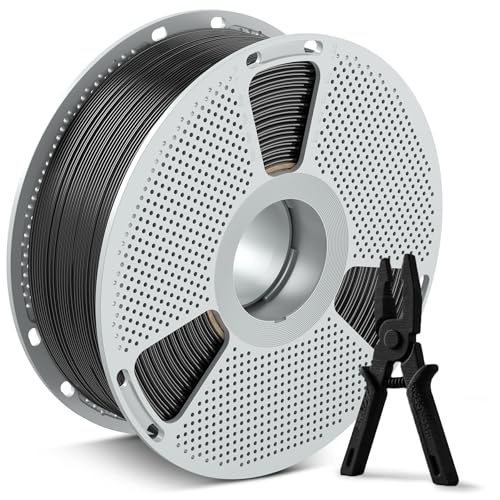
Brand: SUNLU. This 1 kg spool uses a nylon 6/66 copolymer to deliver high tensile and bending strength, surpassing typical PLA/ABS performance. The filament is designed for durability in high-stress parts like gears and bearings with excellent drop resistance. It also features low shrinkage to minimize warping, enabling reliable dimensional accuracy for complex geometries.
OVERTURE Copolymer Nylon Filament – 1.75mm

Brand: OVERTURE. This filament blends Nylon 6/66 copolymers for heat resistance up to 180°C and stable dimensional control. The material is marketed as odorless with minimal warping, suitable for parts requiring both strength and durability. Users should store it properly to control moisture sensitivity, and a compatible bed adhesion strategy is recommended for best results.
YXPOLYER Nylon Filament – 1kg, 1.75mm
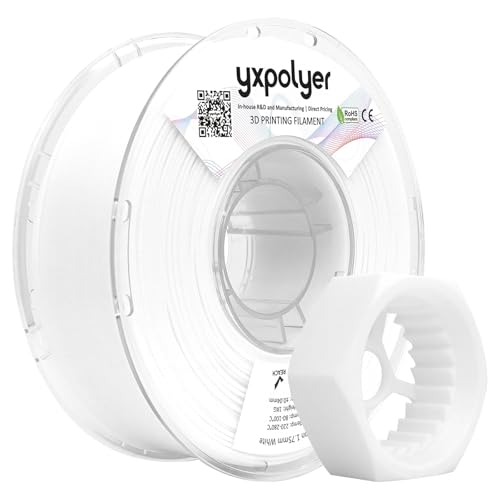
Brand: yxpolyer. This white nylon filament emphasizes toughness with a melting point around 381°F (194°C) and low friction for moving parts. Its abrasion resistance helps keep gears and bearings functional over time, and it is positioned for automotive and industrial applications thanks to its improved heat resistance and durability compared to standard plastics.
Creality Nylon Filament – 1.0 kg
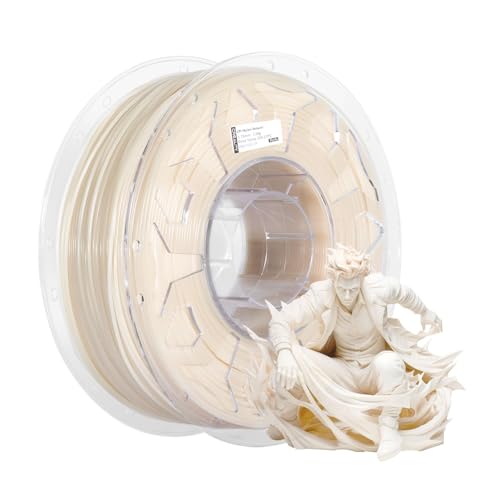
Brand: Creality. This nylon filament emphasizes durability and flexibility with notable heat resistance. It is designed for parts that require longevity and some give, offering chemical resistance and a low-friction profile that helps reduce wear on moving components while maintaining tolerances.
Kingroon Nylon Filament – 1.75 mm
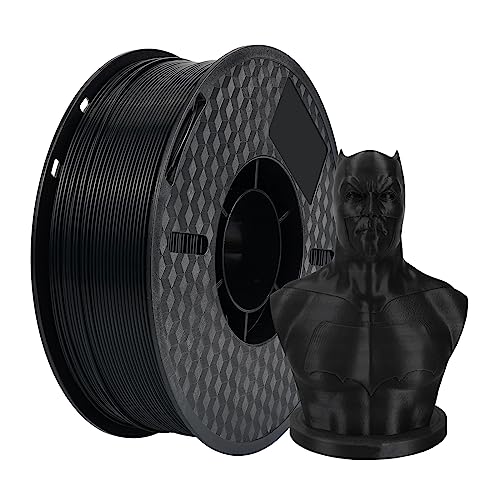
Brand: Kingroon. This nylon filament focuses on reliable printing with low moisture absorption and good adhesion. The 1.75 mm filament is packaged to minimize exposure to humidity, supporting dimensional stability and stronger end-use parts with glossy surface finishes and improved fracture resistance.
Buying Guide: Nylon Filament Choices And Printing Considerations
When selecting nylon filaments, the primary considerations include moisture sensitivity, printing temperature, bed adhesion, and part performance. Nylon tends to absorb moisture from the air, which can cause bubbling, poor layer adhesion, and print defects. Look for desiccant-sealed packaging or storage recommendations and plan to dry filaments if needed before printing. Temperature ranges typically fall around 230–260°C for the nozzle with appropriate bed temperatures and may require a heated bed or enclosure to minimize warping. Low friction and high toughness are common benefits, making nylon ideal for gears, bearings, bushings, and snap-fit components. For hobbyists, copolymer nylons can offer easier handling with reduced warping, while PA6/66 blends may provide maximum strength and heat resistance. Consider printer compatibility, moisture handling, and post-processing needs when choosing a nylon spool for your projects.
Key purchase considerations
- Moisture management: packaging, storage, and drying requirements.
- Dimensional stability: shrinkage, warp resistance, and tolerance control.
- Mechanical properties: tensile strength, impact resistance, and toughness.
- Thermal performance: maximum service temperature and heat resistance.
- Printer compatibility: nozzle temperature, bed configuration, and enclosure needs.
- Print settings: recommended speeds, retraction, and adhesion strategies.
Comparisons
Between copolymer nylons and standard PA6/66 nylons, copolymers often offer easier handling and lower warp, at a potential trade-off in some mechanical properties. For high-load, functional parts with tight tolerances, PA6/66 blends may deliver stronger end-use performance. Filaments from reputable brands typically provide clearer retraction and humidity guidance, improved shelf life, and more consistent diameter tolerances, which helps reduce failed prints and wasted material. A well-ventilated workspace is recommended to minimize any odor concerns with nylon prints, especially on hobby-grade machines.