Best Cross Legged Office Chairs for Flexible, All-Day Comfort
The modern workspace often demands flexible seating options that reduce fatigue and support focus. Cross legged office chairs offer a dynamic alternative to traditional desks, blending kneeling, cross-legged, and standard sitting postures with ergonomic support. This article highlights five high-quality options designed for long hours at work, study, or gaming—each prioritizing adjustability, comfort, and movement. Explore chairs that accommodate ADHD-friendly active sitting, wide cushions, and supportive backrests to help maintain posture without locking you into one position.
| Product | Brand | Key Feature |
|---|---|---|
| Cross Legged Office Chair, Ergonomic Cloud Criss Cross Desk Chair | HOMRELEXA | Multi-position seating with cloud-soft cushion and extended backrest |
| AtHope Ergonomic Cross Legged Office Chair with Wheels | AtHope | 360-degree footrest and ADHD-friendly active sitting |
| Bestier Cross Legged Office Chair | Bestier | 135° reclining backrest, adjustable arms, big-and-tall build |
| ELABEST C39 Cross Legged Office Chair | ELABEST | Large XL seat with flip-out armrests and retractable footrest |
| FelixKing Criss Cross Chair with Wheels | FelixKing | Wide vanity-style chair with dual-layer velvet and back support |
Each option below is evaluated for multi-position versatility, ease of movement, upholstery comfort, and suitability for long sessions. The featured chairs are chosen for users who want to alternate between cross-legged, kneeling, and standard seating without sacrificing ergonomics.
HOMRELEXA Cross Legged Chair

The HOMRELEXA cross legged chair is engineered to support fluid transitions between cross-legged, kneeling, meditation, and standard sitting styles. Its lower seat height aids shifts between work and relaxation and helps relieve joint stress. The cloud-soft cushion distributes weight comfortably, while the extended backrest supports spinal alignment for long sessions. This design emphasizes fatigue reduction and leg circulation benefits, making it a strong option for ADHD-friendly settings and extended daily use.
Key features: multi-position seating; lower seat height for easy posture shifts; wide cushion and extended backrest for ergonomic support. The chair’s durable construction supports daily use, while its unique layout encourages active sitting without requiring a drastic change in position.
AtHope Ergonomic Cross Legged Chair With Wheels

This AtHope chair is designed for flexible seating across home, office, and gaming environments. It supports cross-legged, squatting, or kneeling positions and includes a 360-degree rotating footrest to adjust posture without moving the chair. The model is particularly suitable for ADHD-minded users who benefit from subtle movement and active sitting to maintain focus. The design aims to reduce discomfort during long hours and promote sustained engagement with tasks.
Key features include versatile seating positions, a 360-degree footrest, and lumbar support that helps maintain posture while allowing frequent shifts. The chair’s wheels enable easy relocation, making it adaptable to changing workspaces or gaming setups.
Bestier Cross Legged Office Chair

Bestier offers a criss-cross chair with adjustable arms, a 135° reclining backrest, and wheels. This model is built to accommodate larger users with a weight-capable frame and includes a 3-inch gas lift for easy height adjustment. The 360° swivel and 20.2″-23.2″ seat height range support a variety of body shapes and preferences. The adjustable arms enhance space management when seated cross-legged, ensuring legroom and freedom of movement.
Key considerations include the chair’s material quality, weight capacity, mobility, and the ease of transitioning between upright and reclined positions. The flip-up arms provide additional customization for compact desks and personal comfort in different work modes.
ELABEST C39 Cross Legged Chair

ELABEST’s cross-legged chair emphasizes a large XL seat and a convertible armrest design. The armrests flip outward to reveal the criss-cross seating arrangement, complemented by a retractable footrest for meditation, reading, or focused work. The faux suede upholstery and velvety texture offer a premium feel while remaining relatively easy to clean. A dual-layer cushion and lumbar pillow provide continuous support to the back and hips, supporting extended use with a focus on comfort and stability.
Considerations include ease of conversion between arm positions, the length and stability of the footrest, and the durability of the fabric in high-traffic environments. The pet-friendly XL design adds an appealing flexibility for shared workspaces with companions.
FelixKing Criss Cross Chair With Wheels
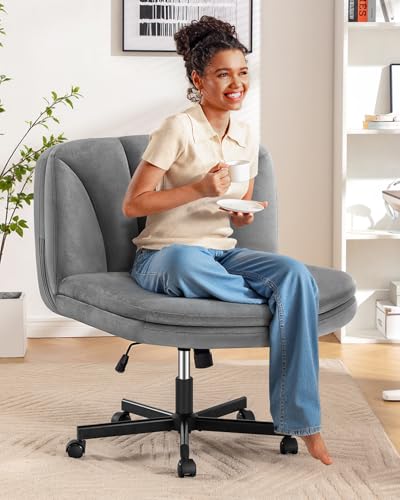
FelixKing’s cross-legged chair combines a wide velvet seating area with a back and arm support system designed for all-day use in a home office or bedroom. The chair emphasizes a plush two-layer cushion and back support, with a sturdy metal frame capable of heavier use. The armless, armoire-like design supports varied postures, including cross-legged or kneeling positions, while maintaining a sleek, modern aesthetic suitable for living spaces or work zones.
Key features to note include high-density foam padding, a durable PU leather finish, and a weight-capable frame. The chair is designed for busy households or shared spaces where pets or children are present, prioritizing durability and ease of maintenance.
Buying Guide
- Seating versatility: Look for chairs that support cross-legged, kneeling, squatting, and standard upright positions, with easy transitions between modes.
- Seat height and depth: A lower seat height can facilitate cross-legged siting, while a deep cushion reduces hip pressure during long sessions.
- Back support: Extended backrests and lumbar cushions help maintain posture and reduce fatigue during fatigue-prone work or gaming bursts.
- Armrest design: Flip-up or adjustable arms can enhance legroom and snug storage under desks, particularly in compact workspaces.
- Footrest and mobility: A 360-degree footrest or swiveling capabilities allow posture changes without moving the chair, and wheels enable easy room-to-room transitions.
- Materials and maintenance: Choose materials that are durable, easy to clean, and resistant to wear from daily use, pets, or children.
- Weight capacity: Ensure the chair supports your body type and anticipated long-term use, especially for heavier builds.
- Workspace compatibility: Consider desk height, room size, and whether the chair fits beneath a desk when not in use.
- Adaptability for ADHD or active sitting: Chairs designed for movement can help focus and reduce restlessness, but ensure they remain ergonomic and supportive.
- Warranty and after-sales support: Look for meaningful warranties and accessible customer support to address potential wear concerns.
When evaluating options, compare cushion density, fabric breathability, and the overall build quality. A chair that integrates a comfortable seat with a supportive backrest and adjustable features is more likely to deliver sustained comfort across a variety of postures. Consider how often you switch between positions, the size of your workspace, and the likelihood of sharing the chair with pets or children, all of which influence long-term satisfaction.