Best Paint Brush Options for Kitchen Cabinets: Smooth, Even Finishes Every Time
Looking for the right paint brush set to achieve cabinet-quality results? This guide highlights five top picks that excel at cutting-in, basecoating, and delivering a smooth, streak-free finish on kitchen cabinets. These brushes are best for DIY homeowners tackling cabinets, woodwork, and tight spaces, as well as professional remodelers seeking efficient kits. Below, find concise product comparisons, who each option is best for, and practical buying considerations.
| Product | Best For | Note |
|---|---|---|
| Pro Grade 5-Piece Brush Set | Professional-grade cabinet interiors and trim | Comprehensive size range; includes a 2″ angle stubby for tight areas |
| Mister Rui 11-Piece Foam Roller Kit | All-in-one kit for cabinets and walls | Includes rollers and a 2″ angled brush; great for smooth finishes |
| Rhibak Paint Roller Kit | Cabinets and flat surfaces | High-density foam coverage; multiple brushes included |
| PinStone 3 Pack Professional Brushes | Hands-on control for cabinet doors and frames | Three sizes with soft-to-firm bristles |
| Bates- Paint Brushes 6 Pack | Versatile cabinet, trim, and wall projects | Six-piece set with both flat and angled brushes |
Pro Grade 5-Piece Paint Brush Set
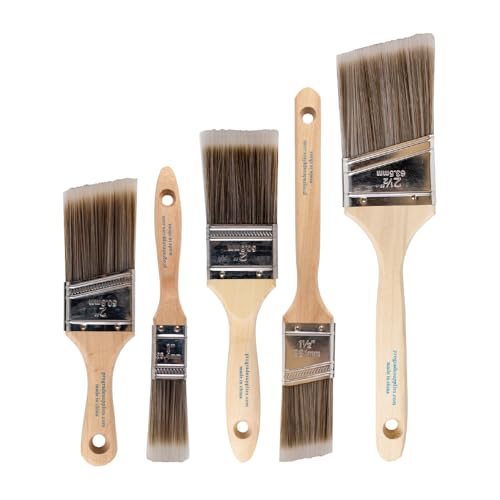
The complete 5-piece kit covers essential sizes: 1″ flat, 1.5″ angle, 2″ flat, 2″ angle stubby, and 2.5″ angle. Designed for walls, trim, cabinets, doors, and furniture, these brushes promise a smooth, streak-free finish with premium SRT synthetic filaments. Best for: professional painters or serious DIYers working on cabinets and intricate trim who want reliable performance across multiple brush sizes. Limitation: the set’s bulk is best utilized when you have several cabinet-related tasks rather than a single small touch-up.
Mister Rui 11-Piece Foam Kit

This all-in-one kit emphasizes ease of use with a 4-inch roller, ergonomic handle, magnetic tray, and multiple foam covers plus angled brushes. Best for: DIY homeowners who want an integrated system for cabinets and walls that reduces cleanup time. Advantage: the magnetic tray and dual ridges help with consistent paint pickup. Caution: foam rollers can wear faster on heavy-duty solvent-based paints; avoid if using tough finishes often.
Rhibak Paint Roller Kit

Includes 4-inch high-density foam rollers with multiple brushes in a versatile all-in-one kit. Best for: homeowners painting cabinet exteriors or flat surfaces who want consistent coverage with few brush marks. Why selected: the kit emphasizes smooth, even finishes on cabinetry surfaces with durable foam. Limitation: some users may prefer wood-handled brushes for longer cutting-in sessions, as rollers dominate the bulk of application.
PinStone 3 Pack Professional Brushes

Three sizes—1″, 1.5″, and 2″—with synthetic bristles and ergonomic rubber handles. Best for: cabinet doors, drawers, and trim where precise edge control matters. Why chosen: the pack provides varied widths for efficient coverage on cabinets, minimizing tool changes. Caution: check bristle stiffness for smooth surfaces; stiffer bristles may leave minor streaks on very flat finishes.
Bates- Paint Brushes 6 Pack

This six-piece set includes three flat and three angled bristle styles (1″, 1.5″, 2″ flats; 1.5″, 2″, 2.5″ angles). Best for: cabinet refacing and trim projects where you need both broad coverage and edge control. Why selected: natural bristles hold more paint for fewer dips and smoother coats on wood surfaces. Caution: natural bristles can pick up dust; keep brushes clean to maintain a smooth finish.
Buying Guide
What brush types work best for kitchen cabinets?
Synthetic bristles provide smooth, consistent coverage with latex and oil paints, while natural bristles can yield a traditional finish on oil-based coatings. For cabinets, consider a mix of flat and angle brushes in small to mid sizes (1″ to 2.5″) for cutting-in and edging, plus a 2″ or 2.5″ option for doors and large flat areas.
What features help with cabinet painting?
- Stiffness and tip shape: “flagged” bristles reduce streaks and help hold paint on the tip for precise edges.
- Durable ferrules and bonding: prevent bristle shedding and keep bristles aligned during heavy use.
- Ergonomic handles: essential for longer painting sessions to reduce hand fatigue.
- Appropriate width range: 1″ to 2.5″ for interior edges, panels, and frames; include an angled brush for tight corners.
Should I buy a kit or individual brushes?
Kits offer value and convenience when you tackle multiple cabinet tasks: cutting-in around frames, edging doors, and applying long, smooth coats. Individual brushes may be better when you need a specific size for tight corners or a repeat task on a single cabinet door.
Are foam rollers suitable for cabinet work?
Foam rollers provide smooth, even coverage on flat cabinet surfaces, especially for large panels. They work well with enamel and water-based paints but may wear faster with solvent-based coatings. Pair them with compatible brushes for edges and details.
What about cleanup and maintenance?
- Rinse with water for latex paints; use mild soap for oil-based paints.
- Reshape bristles after cleaning to preserve form.
- Store brushes upright to prevent bristle splaying.
FAQ
- What size brush is best for cabinet doors?
Typically a 2″ brush works well for doors, with 1.5″ or 1″ for tighter edges.
- Should I use a angled brush for cabinet edges?
Yes, angled brushes help with precision along trim, frames, and inside corners.
- Are synthetic bristles better than natural for cabinets?
Synthetic bristles are generally better for latex and oil-based paints due to uniform pickup and edge control.
- Can I use a foam roller on cabinet faces?
Yes, for flat panels, foam rollers can deliver a smooth finish; avoid heavily texturized surfaces.
- Is a multi-piece kit worth it for a small cabinet project?
Yes, if you need various sizes for different areas; otherwise, pick a couple of targeted brushes.
- How do I prevent bristle shedding on new brushes?
Condition the bristles by washing before first use and follow manufacturer care instructions.