Best Perimeter Alarms for Yards: Secure Your Outdoor Space With Smart Motion Alerts
Answering your search for perimeter alarms for yards, this guide highlights top options that help you monitor driveways, gates, porches, and other property borders. These picks suit homeowners needing reliable motion alerts, campers or hikers seeking portable security, and anyone protecting outdoor spaces from wildlife or intruders. Each product section explains who benefits most and why it was selected, with practical cautions where relevant.
| Product | Best For | Key Benefit |
|---|---|---|
| HTZSAFE Driveway Alarm (1 Receiver + 2 Sensors) | Homeowners with mid-size perimeters | Long-range wireless with adjustable sensitivity |
| HTZSAFE Portable Outdoor Perimeter Alarm (1 Receiver + 4 Sensors) | Campers and hikers | Ultra-portable, weather-resistant, multi-mode alerts |
| HTZSAFE 1/2 Mile Driveway Alarm (1 Receiver + 4 Sensors) | Large properties | Robust range and dual-sensor coverage |
| Wuloo Solar Driveway Alarm (1&4 Sensors) | Remote areas with solar power | Solar-powered, expandability up to 8 sensors |
| 1byone Driveway Alarm (1 Receiver + 2 Sensors) | Budget-conscious buyers | Long-range, versatile alert modes |
Driveway Alarm 1/2 Mile Long Range Wireless (HTZSAFE)

The HTZSAFE kit provides a 1/2 mile wireless range between a weather-resistant motion sensor and the receiver, covering outdoor and indoor spaces. Best for homes or small business perimeters where long-range alerts are needed across a driveway or yard. The system uses FSK+FHSS to minimize interference and offers two motion sensitivity levels (Low and High) to balance detection and false alarms. Suitable for monitoring driveways, gates, pools, garages, and porches.
Who it’s best for: homeowners with a mid-sized property who want a reliable, adjustable perimeter alert that works across seasons and weather. Why selected: it combines broad range, weather tolerance, and adjustable detection to fit varied environments. Caution: actual range varies with terrain and nearby obstacles; large metal structures may reduce signal clarity.
Portable Outdoor Perimeter Alarm System (HTZSAFE) – 1 Receiver + 4 Sensors
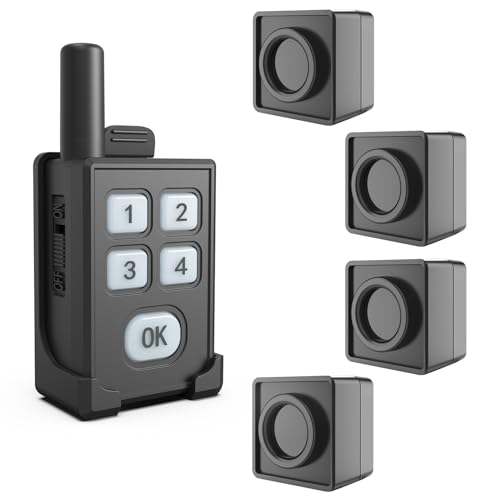
This portable kit emphasizes mobility and quick setup, ideal for campers, hikers, and temporary security needs at campsites, rental properties, or hunting bases. It has IP65 weather resistance, a 1/4 mile wireless range, and a detection radius up to 35 feet per sensor. The kit includes a compact storage bag and a receiver with multiple alarm modes.
Best for: outdoor enthusiasts and field security where portability matters. Why selected: its weatherproof design and compact form support rapid deployment in remote or seasonal locations. Caution: shorter range compared to larger property systems, and terrain can limit effectiveness in dense forests or canyon layouts.
Driveway Alarm 1/2 Mile Long Range (HTZSAFE) – 1 Receiver + 4 Sensors

This model mirrors the core capabilities of HTZSAFE’s driveway alarm with a 1/2 mile wireless range and four sensors for broader perimeter coverage. It is well-suited for larger yards or properties where multiple access points require monitoring. The 50-foot-wide detection range helps detect thorough movements and reduces blind spots when set along fences or gates.
Best for: larger properties needing multi-point coverage with strong outdoor durability. Why selected: expanded sensor count improves protection along longer perimeters. Caution: still subject to terrain and obstacles reducing wireless reach; ensure sensor placement aligns with line-of-sight as much as possible.
Wuloo Solar Driveway Alarm (1&4 Sensors)

The Wuloo solar option prioritizes energy efficiency with a rechargeable battery and a solar panel capable of supporting long-term operation. The package supports up to eight additional sensors, enabling scalable security zones. The system offers up to 11 or 24 months of operation between charges, depending on usage, and includes a receiver that can function as a clock and alarm with customizable chimes.
Best for: remote properties or areas with limited access to power where long-term operation matters. Why selected: solar power reduces maintenance and supports scalable expansion. Caution: solar charging depends on sun exposure; in shaded locations, battery life could be shorter without sufficient sunlight.
Driveway Alarm Wireless Outside (1 BY ONE) – 1 Receiver + 2 Sensors

The 1BYONE kit delivers a long-range wireless system (up to 1000 feet) with two sensors and multiple alert options. It is designed as a versatile doorbell-like security solution for driveways, porches, gates, and yards. The receiver supports three alert modes including sound and LED indicators, aiding visual or audible notifications for varying scenarios.
Best for: budget-conscious buyers seeking strong range and flexible alerts without extra bells. Why selected: straightforward setup and multiple notification modes make it a practical option for basic perimeter monitoring. Caution: with only two sensors, larger perimeters may require adding more units to maintain full coverage.
COTINSE Solar Outdoor Motion Sensor Alarm (13 Sounds, 360° Coverage)
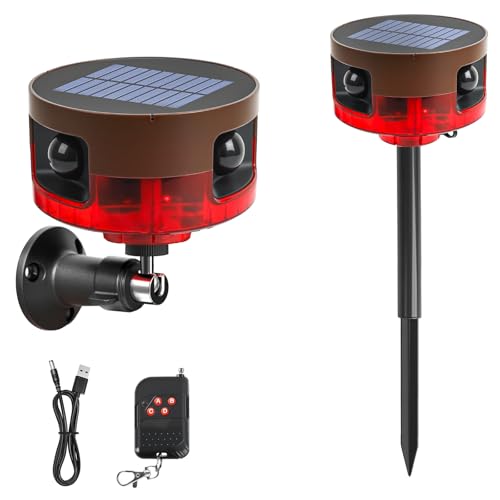
The COTINSE solar alarm emphasizes a high-decibel siren with customizable deterrence. It features 360° motion detection and a library of deterrent sounds, plus the option to record a personal message. This model is suitable for immediate perimeter deterrence where a loud alert is desired to startle intruders or wildlife.
Best for: properties needing a loud, immediate deterrence with wide-angle coverage. Why selected: strong 130 dB alert and configurable sounds create a robust deterrence strategy. Caution: rely on the audible alarm as a first line of defense; consider pairing with physical barriers or cameras for stronger security.
Buying Guide: Key Considerations For Perimeter Alarm Systems
- Range and terrain: Determine if 1/4 mile, 1/2 mile, or 1 mile fits your property. Real-world range can be reduced by trees, buildings, and metal obstacles.
- Sensor count and placement: More sensors provide broader coverage. Place sensors to cover entry points, driveways, and boundary lines while avoiding blind spots.
- Power options: Choose battery, solar, or plug-in receivers. Solar is ideal for remote areas but needs sun exposure for reliability.
- Detection sensitivity: Adjustable sensitivity helps balance between catching legitimate motion and reducing false alarms from wind, leaves, or small animals.
- Weather resistance: For outdoor use, ensure IP ratings or weatherproofing align with local climate (rain, snow, extreme heat).
- Alert modes: Consider whether you prefer audible chimes, visual LED indicators, vibration, or a combination for varying environments.
- Expandability: If you anticipate needing more coverage later, choose systems that allow adding sensors or receivers.
- Power reliability and maintenance: Solar systems reduce maintenance but require periodic cleaning and battery checks; wired systems may need professional installation.
- Privacy and interference: Some systems use FHSS/FSK to minimize interference; verify compatibility with nearby wireless devices.
Frequently Asked Questions
- What is a perimeter alarm used for? – It detects motion near your property boundaries and notifies you via a receiver or alert system to deter intruders or wildlife.
- Can these systems cover large yards? – Yes, models with 1/2 mile or longer ranges are designed for larger perimeters, often with multiple sensors.
- Do solar-powered alarms work in winter? – They can, but performance depends on sun exposure and battery efficiency; consider backup charging or additional sensors.
- Are these systems easy to install? – Most kits are designed for DIY setup with wireless sensors and plug-in receivers; follow the manufacturer’s instructions for placement.
- Can I expand a kit later? – Many kits support adding sensors to extend coverage; check the product’s expansion options before purchase.
- Do they work for wildlife deterrence? – Some models offer deterrent sounds or high-decibel alerts that can deter wildlife such as deer or coyotes.