Best Plank Flooring for Basement: Top DIY Vinyl Plank Options
The best plank flooring for a basement is a waterproof, easy-to-install vinyl plank that resists moisture and fits your budget. This guide highlights five top options, showing who each product is best for and why it stands out. Ideal buyers include homeowners renovating a basement, renters needing removable flooring, and DIYers seeking quick, tool-free installs. A quick summary table follows to compare key points at a glance.
| Product | Best For | |
|---|---|---|
| Art3d Peel and Stick Floor Tile (Deep Gray) | DIY beginners; moisture-prone areas | Rigid, waterproof core; self-adhesive ease |
| Art3d Peel and Stick Floor Tile (Rosewood) | Living areas needing wood look | Stable, dual-color wood texture; waterproof |
| Art3d Interlocking Luxury Vinyl Tile | Reusability and easy removal | Interlocking, no-glue system; durable |
| Livelynine 18-Pack Black Wood Look | Basesments with bold, dark aesthetics | Removable, cost-effective DIY install |
| ATOPOSE Peel and Stick Waterproof Laminate | High-traffic basements; quick upgrades | Enhanced adhesion; multiple wood tones |
Art3d Peel and Stick Floor Tile – Deep Gray

Best for: DIY beginners seeking a quick, tool-free basement upgrade. The product features a rigid surface, a hard core, and 100% waterproof construction suitable for moisture-prone spaces. The self-adhesive backing enables straightforward installation on flat floors without glue or tools.
Why chosen: It offers a balance of authentic wood appearance with a waterproof, wear-resistant core. The built-in stability reduces expansion concerns common in basements.
Caution: Some users report edge adhesion issues if the floor is not perfectly flat or if the surface is dusty. Ensure the base is clean and flat before application.
Art3d Peel and Stick Floor Tile – Rosewood

Best for: Rooms where a warm wood look enhances the space. This 36-pack delivers a rosewood finish with a durable, waterproof core and stable dimensions for basement use.
Why chosen: The rosewood aesthetic pairs well with cozy basements, offering an authentic wood feel without the maintenance of real wood. It remains waterproof and wear resistant.
Caution: Self-adhesive performance can vary on very uneven subfloors; consider subfloor preparation for best results.
Art3d Interlocking Luxury Vinyl Tile

Best for: Homeowners who want removable, reusable flooring with a clean installation and no glue. The interlocking system allows easy removal and reusability, suitable for basements that may need reconfiguration.
Why chosen: The interlock design reduces installation mess and offers eco-friendly reuse. It also maintains a waterproof and wear-resistant surface, providing long-term stability.
Caution: Interlocking tiles may require precision when cutting to fit irregular edges; a utility knife and straight edge are helpful.
Livelynine 18-Pack Black Wood Look

Best for: Basements requiring a bold, dark wood aesthetic with straightforward DIY installation. This option emphasizes a thick peel-and-stick design and water resistance.
Why chosen: The dark, modern wood appearance complements many basement decors, and the tiles are designed to be removable for renters or future remodels.
Caution: Dark colors may show dust or scuffs more readily; regular cleaning helps maintain the look.
ATOPOSE Peel and Stick Waterproof Laminate
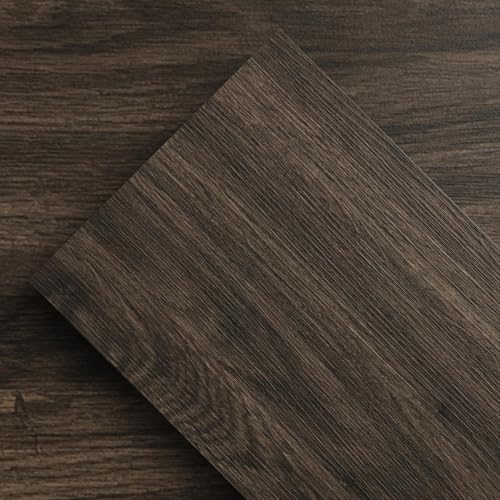
Best for: High-traffic basements and utility spaces needing a durable, easy-care floor. The waterproof surface resists spills and humidity, and the adhesive backing provides quick installation.
Why chosen: Realistic wood grain with embossed texture creates an authentic look, while multiple color options allow matching various decors. The adhesive is designed to get stickier with pressure for long-lasting hold.
Caution: Adhesion strength can vary by subfloor condition; ensure the surface is clean, dry, and flat for best results.
Buying Guide
Key considerations for choosing basement plank flooring:
- Moisture resistance: Prioritize fully waterproof cores and wear layers to prevent warping in damp spaces.
- Installation method: Peel-and-stick is fastest; interlocking systems offer reusability; consider tool availability and DIY experience.
- Subfloor condition: Ensure a flat, clean surface. Some products tolerate minor unevenness, others require leveling.
- Wood appearance vs. practicality: Wood-look finishes vary from matte to glossy; choose a look that suits the basement’s lighting and use.
- Durability and wear: For basements with high foot traffic or potential spills, select thicker wear layers and sturdy cores.
- Removability: If you plan to move or reconfigure the space, opt for removable or reusable options.
- Maintenance: Look for easy cleaning guidelines and resistance to stains, scratches, and humidity.
Practical Buyer’s Questions
- What is the easiest basement flooring to install? Peel-and-stick options typically require the least tools and time.
- Are waterproof tiles truly waterproof? Most vinyl plank options marketed as waterproof resist moisture well, but follow manufacturer guidelines for subfloor preparation.
- Can I install flooring over existing concrete basement floors? Yes, many products are designed for concrete, provided the surface is clean and level.
- How long do these floors last in basements? Durability varies by core material and wear layer; higher-end options generally offer longer life in damp spaces.
- Is it better to choose interlocking or peel-and-stick? Interlocking is reusable and great for configurations, while peel-and-stick is typically simpler for beginners.
- Will dark tones show marks? Dark finishes may show dust and scuffs more readily; regular cleaning helps maintain appearance.
FAQ
- Q: Are vinyl plank floors safe for pets in basements? A: Many vinyl planks are resistant to wear and moisture, with safe, non-toxic compositions, but check specific product details for your needs.
- Q: Do these floors require underlayment? A: Some require underlayment for moisture protection or sound absorption; follow product guidelines.
- Q: Can I install over uneven concrete? A: Minor imperfections can be addressed with leveling compounds; extremely uneven surfaces may require prep work.
- Q: Can I mix different wood tones in the same basement? A: Yes, many buyers mix tones for an intentional design; ensure transitions are clean and cohesive.
- Q: How should I clean vinyl plank floors? A: Use damp mops or manufacturer-recommended cleaners; avoid harsh chemicals that can degrade wear layers.
- Q: Do these floors come with warranty? A: Warranty details vary by product; review the seller’s terms for coverage and limitations.