Best Plaster Tape for Walls: Top 5 Drywall Joint Tapes for Smooth Repairs
When selecting plaster tape for walls, choose products that reinforce seams, resist cracking, and provide a clean, paint-ready finish. This guide highlights five reliable tapes suited for DIYers and pros alike, covering common needs from crack repair to hole patches. Each option is evaluated for best use cases, ease of application, and potential limitations.
| Product | Best For | Notes |
|---|---|---|
| LIOUXUE Drywall Joint Tape | Crack and seam repairs on walls and ceilings | Self-adhesive, heavy-duty fiberglass |
| XFasten Drywall Repair Mesh Tape | Wide patches and long-lasting repairs | Reinforced fiberglass with strong adhesive |
| FibaFuse FDW9018-U | Thin, concealed repairs on plaster/drywall | Paperless, open-fiber bond |
| LLPT Drywall Repair Fiberglass Joint Tape | High-variation walls and long-term repairs | Industrial-grade, self-adhesive |
| LYLTECH Drywall Joint Tape | High-density, self-adhesive patching | 100% fiberglass, strong alkali resistance |
LIOUXUE Drywall Joint Tape 1.97In x 180 Ft

Best for heavy-duty crack and seam repairs on walls and ceilings. This 1.97-inch by 180-foot fiberglass mesh tape is self-adhesive, allowing quick placement without joint compound. It resists cracking, alkali, and high temperatures, delivering durable repairs for indoor or outdoor use. Best for pros and DIYers who need reliable, long-lasting patches in plaster or drywall. A potential limitation is that larger repairs may still require finishing with joint compound for a seamless look.
XFasten Drywall Repair Mesh Tape

Best for long-running wall patches with a high-strength bond. This 6-inch by 90-foot fiberglass mesh tape features a reinforced backing and adhesive, offering up to decades of structural strength for seams and cracks. It’s designed for a straightforward, mess-free application without pre-applied joint compound. Choose this if you want a quick, reliable patch that maintains a professional finish. Limitation: can be less forgiving on very fine textured surfaces where edge blending matters.
FibaFuse FDW9018-U 6″ X 75′ Paperless Drywall Repair
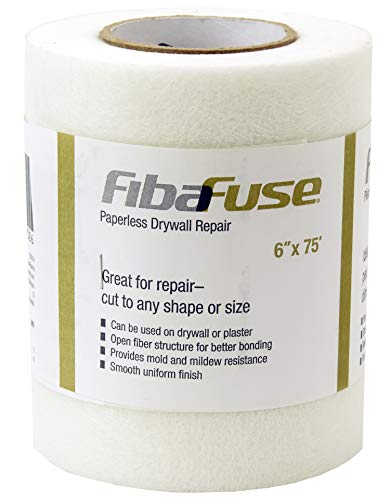
Best for a thin, nearly invisible finish. This white, paperless tape features an open-fiber construction that allows joint compound to flow through for a strong bond. Its wide fabric helps cover larger areas with less layering, making it suitable for plaster and drywall repairs needing a discreet look. Limitation: may require careful blending and sanding to achieve a flawless surface on highly textured walls.
LLPT Drywall Repair Fiberglass Joint Tape

Best for versatile crack and seam repairs across interior and exterior surfaces. This industrial-strength fiberglass mesh tape promises long-term support, resisting vibration, cracking, and shrinking. It sticks well to wall surfaces and is designed to hold up under putty and spackle, aiming for a permanent repair. Caution: ensure full coverage of at least 1 inch beyond the edges for optimal adhesion and seam strength.
LYLTECH Drywall Joint Tape-13 Mesh

Best for high-density fiberglass repairs with strong alkali resistance. This 1.88-inch by 180-foot tape uses 100% fiberglass and a self-adhesive backing for easy, repositionable application. It’s suited for difficult-to-reach seams and patches where a robust, long-lasting bond is needed. Limitation: high-strength mesh may be overkill for very small holes or minor cracks.
Buying Guide
Key considerations when choosing plaster tape for walls:
- Material type: Fiberglass mesh versus paperless options; fiberglass provides strength while paperless options can reduce visibility through finishes.
- Adhesion: Self-adhesive tapes simplify application, but some may require pre-priming or setting compound for best results.
- Surface compatibility: Interior walls, exterior applications, plaster, or cement surfaces may affect performance; check alkali resistance and curing compatibility.
- Patch size: For large holes or seams, choose wider tapes or those with reinforced backing to minimize tearing.
- Finish expectations: Thin or open-fiber tapes can yield a smoother finish with less sanding, while dense meshes may require more finishing to blend with textured surfaces.
FAQ
- What tape is best for plaster walls?
Fiberglass mesh tapes, especially self-adhesive variants, offer strong seam reinforcement and are widely used on plaster and drywall for durable repairs. - Can I use joint compound with self-adhesive tape?
Most self-adhesive tapes are designed to work without pre-applied joint compound, but applying joint compound over the tape is common for a smooth finish. - Is paperless tape better than regular tape?
Paperless or open-fiber tapes can provide better bond strength and concealment on certain surfaces, but the choice depends on project needs and texture. - How wide should drywall tape be for seams?
Wider tapes cover more area and reduce edge exposure, but 1.88″–2.0″ tapes are typical for standard seams; choose based on seam width and patch size. - Do I need sanding after applying tape?
Yes, a light sanding helps achieve a seamless finish, especially on textured walls where edges might show. - Are these tapes suitable for exterior use?
Some tapes are rated for exterior use, but always confirm the product’s environmental tolerance and corrosion resistance for outdoor applications.