Best Plastic Bonding Epoxy: Top Picks for Strong, Lasting Repairs
Choosing the right plastic bonding epoxy can simplify repairs around the home, workshop, or garage. This guide highlights five highly rated products that deliver strong adhesion, durability, and versatility for a range of plastics and other materials. Each option offers clear or water-resistant bonds, easy mixing, and practical cure times to suit quick fixes or longer-term projects.
The following table provides a quick snapshot of the selected products, including key strengths and typical use cases.
| Product | |||
|---|---|---|---|
| Gorilla 2 Part Epoxy, Clear Epoxy | GORILLA | Dries clear, 5 minute set, gap-filling | Household and automotive repairs |
| J-B Weld 8237 PlasticWeld | J-B Weld | Two-part epoxy putty, up to 600 psi, temp tolerant | Plastic repairs on ABS, PVC, CPVC, auto bumpers |
| VIKEYTIM 2 Component Adhesive | VIKEYTIM | 2-part putty, strong, heat and water resistant | Plastic, ceramic, metal, wood, glass repairs |
| Vicpricme Clear Epoxy Glue | vicpricme | Clear, 1:1 mix, 4600 psi tensile strength | General-purpose repairs for plastics, metal, glass |
| Bigbong Epoxy Resin Adhesive | Bigbong | 1:1 mix, 50 ml, clear bonding | Tile, stone, concrete, plastic joining |
Gorilla 2 Part Epoxy, Clear Epoxy
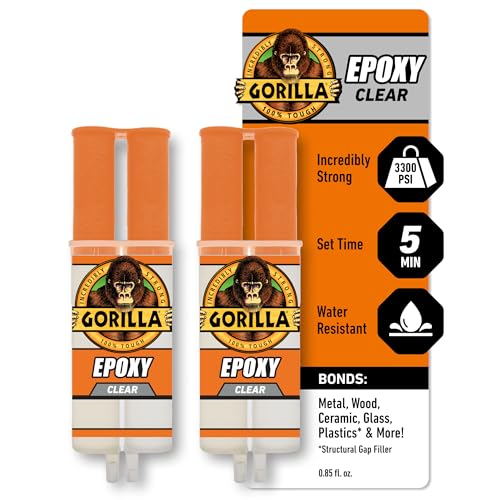
Gorilla’s 2 Part Epoxy provides a clear, durable bond suited for both household and automotive repairs. The kit features a five-minute set time, allowing quick repositioning and adjustments. It also acts as a gap filler, making it useful for bonding uneven surfaces or vertical applications where slip might occur. The clear finish ensures a neat, nearly invisible repair on many plastics and other substrates. The product is designed for a versatile range of materials, including metal, wood, and some ceramics, offering a convenient all-in-one solution for small to medium fixes.
J-B Weld 8237 PlasticWeld

J-B Weld PlasticWeld is a hand-mixable epoxy putty designed for repairing and rebuilding various plastic compounds and surfaces. It’s suitable for DIY repairs on ABS, PVC, CPVC pipes, auto bumpers, and more. After kneading the two-part formula, PlasticWeld takes about 25 minutes to set and cures fully in about three hours. Its off-white color blends with many plastics, and it offers a strong lap shear strength. The putty can be molded, shaped, sanded, drilled, and cut after curing, making it adaptable to irregular repair contours.
VIKEYTIM 2 Component Adhesive

VIKEYTIM’s 2-component epoxy putty is engineered for bonding and repairing a wide array of materials, including hard plastics, metal, stone, and wood. It forms a hard, durable surface when fully cured and resists heat, corrosion, and water. The putty is designed to be sanded, painted, drilled after curing, and typically reaches preliminary cure in about an hour with full cure around 24 hours. This versatility makes it suitable for both quick fixes and more substantial restorations in a workshop setting.
Vicpricme Clear Epoxy Glue

Vicpricme’s clear epoxy glue is a two-part, 1:1 mix that cures to a strong, transparent bond. It includes a syringe with a resealable cap, a static mixer, and a pusher, enabling consistent mixing and application. The product claims high-temperature resistance and a tensile strength around 4600 psi after curing, making it suitable for various repairs on metal, plastic, wood, and ceramic. The clear finish is ideal for visible joints or decorative projects where aesthetics matter.
Bigbong Epoxy Resin Adhesive
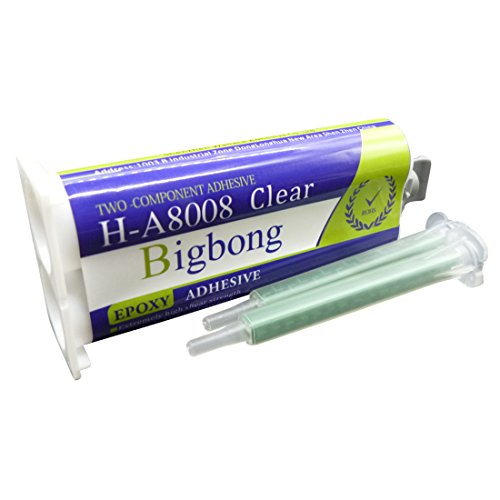
Bigbong offers a 50 ml, 1:1 epoxy system marketed for bonding concrete, tile, and various plastics. The clear formula is suitable for joining smooth and porous substrates alike, with a straightforward mixing ratio and included mixing nozzles. The compact syringe design supports controlled application for precise repairs, particularly in smaller projects where a resin bond is preferred over mechanical fasteners.
Buying Guide: Key Considerations for Selecting Plastic Bonding Epoxy
- Bonding surfaces: Check compatibility with plastics (ABS, PVC, CPVC) and other materials (metal, wood, ceramic). Some epoxies are formulated specifically for plastics, while others offer broader substrate compatibility.
- Mixing method: Decide between two-part syringes, putty sticks, or two-part liquids. Syringe systems can offer precise 1:1 mixing and convenient control, while putty formulations are forgiving and easy to shape.
- Set and cure times: Short set times (5–25 minutes) are beneficial for quick repairs but may limit repositioning. Longer cure times often yield stronger bonds but delay use.
- Transparency and aesthetics: Clear or color-matching epoxies are preferred for visible joints or decorative projects. A clear finish minimizes cosmetic impact on repairs.
- Strength and temperature resistance: Consider tensile strength (psi) and temperature tolerance for the intended environment. Some products withstand high heat or continuous exposure to elements better than others.
- Durability and flex: If the joint experiences vibration or movement, a more flexible or gap-filling epoxy may perform better than a rigid bond.
- Finish and sanding: If post-processing is required (sanding, painting), ensure the epoxy can be sanded and accepts paint or coatings after cure.
- Safety and cure byproducts: Follow manufacturer instructions for ventilation and handling, particularly for putty-like formulations or products with strong fumes.
When choosing an epoxy for plastic bonding, prioritize the balance between bond strength, cure time, and the substrate compatibility that aligns with your project needs. The options above provide a mix of quick-set epoxies, putty formulas, and clear bonds suitable for household repairs, automotive touch-ups, and craft or DIY applications.