Best Plastic Formwork for Concrete: Flexible, Durable Tools for DIY and Pros
Looking for plastic formwork that makes curved concrete projects easier and faster? This guide highlights top options designed for flexible shaping, repeated use, and reliable results. Best for DIY homeowners tackling walkways and edging, mid-range contractors needing reusable forms, and garden designers shaping curved features. The list focuses on durable HDPE/PE plastic forms that resist moisture, bending, and warping. Below, you’ll find concise product summaries, who each form is best for, and practical cautions to help you choose.
Buyer’s quick reference table:
| Product | Best For | Key Benefit | Limitation |
|---|---|---|---|
| A.M. Leonard BestPLUS CONform Concrete Form | Curved installations | Flexible, reusable for hundreds of pours | Best for curves; may require more setup for long straight runs |
| FULEIYA 3-Pack 13′ X 4″ Forms | Garden edging and pathways | Freely assembled, weather resistant | Thickness 1/4″ may limit heavy-duty loads |
| Walttools 4-Piece Flatwork & Curbs | Flatwork with curves | Durable, reusable, easy to bend | Set may require additional pieces for large projects |
| Timgle 5 Pcs 4 x 76 Inches | Small to medium edging projects | Quality PE, flexible to desired shape | Long lengths require careful handling |
| FULEIYA 3-Pack 13′ X 5″ Forms | Wide edging and garden beds | Freely assembled, folds to complex shapes | Similar limitations as other light-duty forms |
A.M. Leonard BestPLUS CONform Concrete Form

Best for curved installation projects, this form is noted for high reuse potential. It bends into tight curves and is designed to resist moisture absorption, reducing swelling and sticking in damp conditions. The flexible HDPE/PPE construction helps maintain shape across hundreds of pours, making it a solid choice for landscapers and homeowners shaping curved garden paths or decorative borders.
Who it’s best for: professionals handling curved layouts, homeowners planning frequent pour cycles, and any project where tight radius curves are required. Why selected: strong material resilience and reusable design support long-term workflows. Caution: curved-only setups may require precise alignment tools for seamless edges.
FULEIYA Plastic Concrete Forms For Walkway 13′ x 4″

This 3-pack provides long, adjustable edging forms with flexible 13-foot lengths, ideal for edging walkways, flower beds, and garden paths. Made from dense PE plastic, these forms resist weathering and corrosion, remain easy to demold, and are suitable for repeated use. The set’s modular design lets you combine units to adapt to project length and curvature.
Best for: DIYers and landscape contractors needing modular long runs with bendable contours. Why selected: combination flexibility and weather resistance support a variety of layouts. Limitation: thickness and joint connections may influence edge smoothness on ultra-tight corners.
Walttools Plastic Flex Forms For Flatwork & Curbs

These 4-piece forms are designed to shape curved edges and flatwork with consistent results. The heavy-duty, flexible plastic resists cracking and bending, making them suitable for repeated use in curving sidewalks, patios, and steps. They’re straightforward to bend and set before pouring, and they accommodate irregular layouts for custom work.
Best for: contractors needing dependable, reusable shaping guides. Why selected: balance of durability and flexibility supports both small and mid-size jobs. Caution: for very large straight runs, additional straight forms may be required to maintain edge uniformity.
Timgle 5 Pcs Plastic Concrete Forms For Walkway

This 5-piece set provides long edges (4 x 76 inches) in white polyethylene, offering flexibility and durability for garden walkways and edging. The large size supports efficient layout while remaining easy to handle for both pros and DIYers. The material is designed to withstand exposure and demold cleanly after pours.
Best for: edging and garden path projects with extended lengths. Why selected: long flexible runs reduce the number of joints and seams. Limitation: very long pieces can be cumbersome to align in tight spaces; consider segmenting for complex sites.
Walttools Set: Flatwork & Curbs, Ten Pieces
This ten-piece set emphasizes curved edge control for flatwork and curbs. The flexible, durable form material resists cracking and is designed for repeated use in shaping garden paths, patios, and edging. It’s easy to bend and stake into place before the concrete pour, helping achieve consistent results across multiple segments.
Best for: projects needing a larger continuous edge system with repeatable curves. Why selected: versatility and durability for ongoing renovations. Caution: ensure joints between pieces are well aligned to avoid slight edge variations.
Walttools Set: 10 Pieces, 5″ x 80′ Total
This set offers multiple 5-inch by 80-foot segments, enabling long, continuous edge runs with tight control over curves. The heavy-duty plastic is designed for multiple pours and repeated contouring, making it suitable for larger landscaping projects or commercial installations where edge quality matters.
Best for: larger outdoor projects requiring extended forms with consistent curvature. Why selected: extended run lengths reduce joints and potential edge variability. Caution: manage joint transitions to maintain uniform edges across lengthy installations.
FULEIYA 3-Pack 13′ x 5″ Forms
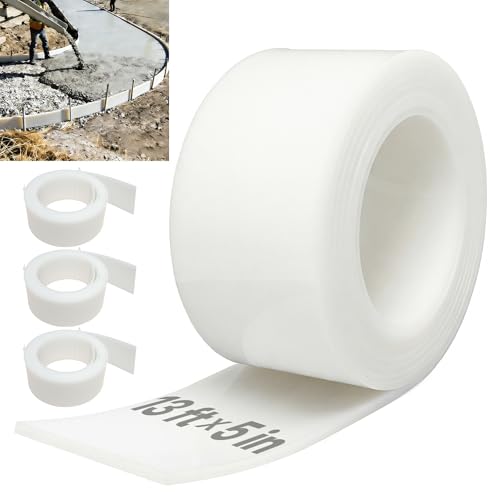
This trio offers wider edging options (13 feet long, 5 inches wide) with a flexible, 1/4 inch thickness. The forms can be assembled and combined easily to accommodate different project sizes, making them adaptable for both small courtyards and larger garden layouts. They bend to complex contours for garden edges and walkways.
Best for: gardeners and landscapers needing wider forms for expansive layouts. Why selected: combination versatility and simple assembly. Limitation: thickness may limit use for heavy-duty concrete pours where high rigidity is required.
Buying Guide: Key Purchase Considerations
What shape do you need to form? Choose forms that match your curve radius and edge direction. For tight curves, look for formats that clearly advertise bendability and radius capabilities. For long straight runs, consider longer segments to reduce joints and improve edge consistency.
Material matters. HDPE and PE plastics resist moisture, warping, and rust, improving longevity when exposed to weather and repeated pours. Thicker forms are stiffer and better for high-pressure pours; thinner forms are lighter and easier to maneuver for DIY projects.
Durability and reuse. If a project requires multiple pours, prioritize reusable, durable options with demonstrated flexibility. Check whether forms return to their shape after demolding and whether joints remain stable across uses.
Ease of setup. Look for forms that stake easily into place, align well with curves, and demold cleanly. Fast setup and reliable edge definition save time on site and reduce edge defects.
Project scale. For small gardens, compact 4–6 inch forms may suffice. For larger paths or driveways, 10–13 foot lengths reduce joint lines and speed installation. Ensure you have enough pieces to cover the intended area without excessive cutting.
Frequently Asked Questions
- What is plastic formwork used for in concrete projects?
- Are plastic forms reusable?
- Which form is best for tight curves?
- How do you choose the right size?
- Do these forms require special tools?
- Can these forms be used for professional projects?
Plastic formwork shapes concrete as it cures, creating edges, curves, and flat surfaces for sidewalks, edging, and decorative features.
Yes. Many HDPE/PE plastic forms are designed for repeated pours, resisting moisture and warping between uses.
Forms with flexible curves or curved radius capability, such as dedicated curved-edge sets, are best for tight radius projects.
Match the form length to your project run; longer pieces reduce joints but can be harder to maneuver in tight spaces.
Common stakes or supports are typically enough. Some sets may benefit from basic leveling tools to maintain edge uniformity.
Yes. They are designed for both DIY and professional use, especially in landscaping and garden path work where repeatable curvature is valuable.