Best Plastic Underlayment for Concrete: Durable Options for Curing, Vapor Barriers, and Floor Underlayment
The right plastic underlayment for concrete protects foundations, floors, and finishes from moisture, gases, and dust. This guide compares five top products to help buyers choose the best option for underlayment, vapor barriers, or concrete curing. It targets contractors, DIY builders, and homeowners needing reliable moisture protection and gas barriers for concrete projects. Below, you’ll find concise product highlights, best-use scenarios, and practical buying tips.
Product Comparison Snapshot
| Product | Best For | Key Benefit | Limitations |
|---|---|---|---|
| Film-Gard Construction Plastic Sheeting | General concrete protection and vapor barriers | Large roll for bigger projects; USA-made | Not EVOH gas barrier; standard moisture protection |
| Farm Plastic Supply 20 Mil Concrete Vapor Barrier (12′ x 10′) | Heavy-duty vapor barrier with gas protection | EVOH gas barrier mix; strong 20 mil thickness | Requires careful handling due to thickness |
| Farm Plastic Supply 20 Mil Concrete Vapor Barrier (12′ x 35′) | Large-area crawl spaces or long run underlayment | Same EVOH blend and 20 mil strength; extended coverage | Heavier roll; transportation and onsite setup |
| Crawl Space Vapor Barrier – 12 Mil (10′ x 25′) | Crawl space encapsulation and moisture control | Balanced 12 mil with dark Panda film design for moisture control | Less gas barrier protection than EVOH options |
| VBS SEALCORE+ 20 Mil Concrete Vapor Barrier | Premium vapor barrier with EVOH and broad uses | Strong 20 mil and EVOH blend for gas/moisture control | Generic brand label; availability varies |
Film-Gard Construction Plastic Sheeting
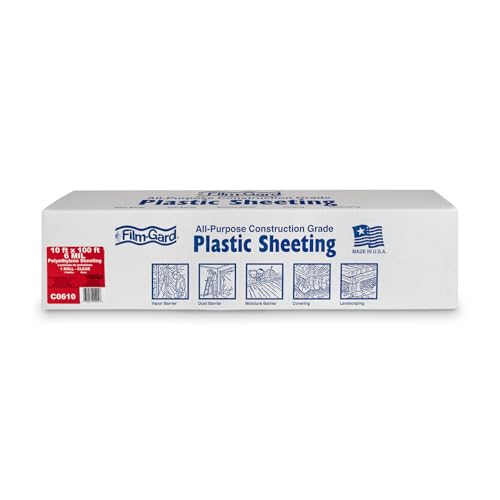
Best for: General moisture protection on concrete curing and vapor barrier needs. This 6 mil thick plastic sheeting is versatile for commercial projects and dust containment. It’s a value option when EVOH is not required. The roll size supports larger jobs by reducing the number of seams. The material is made in the USA, which can be important for buyers prioritizing domestic manufacturing. A practical choice for builders who want straightforward moisture and dust protection without specialized gas barriers.
Why selected: Its multi-purpose design and large format make it a reliable, cost-efficient option for typical concrete curing and dust control tasks.
Limitations: It does not include EVOH gas barrier properties, so it’s not the strongest choice for radon or methane gas concerns. If gas migration is a primary issue, consider EVOH blends or additional barriers.
Farm Plastic Supply 20 Mil Concrete Vapor Barrier (12′ x 10′)

Best for: Homes or commercial spaces needing robust vapor and gas barriers with EVOH protection. The 20 mil thickness provides a strong barrier against moisture and radon-like gases from the ground, making it suitable for vinyl plank or laminate underlayment. This product is particularly effective where gas migration is a concern and a durable barrier is required for long-term performance.
Why selected: The EVOH blend adds gas-blocking capabilities beyond standard polyethylene, which can improve indoor air quality and substrate protection in challenging environments.
Limitations: The heavier 20 mil roll can be cumbersome to handle on small sites; ensure proper planning for placement and cutting during installation.
Farm Plastic Supply 20 Mil Concrete Vapor Barrier (12′ x 35′)
Best for: Large-area underlayment and crawl space projects where extended runs are required. The longer width supports fewer seams, improving barrier integrity for extended installations. EVOH content continues to guard against gas migration from the ground into the structure.
Why selected: Provides the same advanced gas barrier features as the shorter roll but with more coverage per roll, making it efficient for bigger jobs.
Limitations: As with any heavy, long roll, shipping and site handling require adequate equipment and space for safe deployment.
Crawl Space Vapor Barrier – 12 Mil (10′ x 25′)

Best for: Crawl space encapsulation and moisture control where a balance of protection and ease of use is desired. The panda design helps manage light exposure, which can influence mold growth in shallow spaces. This option is suitable for budget-conscious projects that still require a stable vapor barrier.
Why selected: The 12 mil thickness provides adequate vapor blocking while remaining easier to handle than thicker options. The Panda film design can help reduce moisture intrusion in constrained areas.
Limitations: It offers less gas barrier performance than EVOH-containing products; for radon-prone sites, pair with additional barriers or higher-grade materials.
AstrivixDD Vapor Barrier Tape, 3 Rolls

Best for: Sealing seams and joints on vapor barriers and plastic liners. This roll pack provides high-strength adhesion and UV resistance for outdoor projects or spaces exposed to sunlight. It’s an essential companion to any plastic underlayment, ensuring a tight moisture seal along long runs or irregular seams.
Why selected: A dedicated vapor barrier tape helps to maximize the effectiveness of the underlying plastic layer by preventing moisture migration through taped seams.
Limitations: Tape performance depends on surface cleanliness and proper application; poor surface prep can reduce adhesion and seal integrity.
VBS SEALCORE+ 20 Mil Concrete Vapor Barrier

Best for: Projects needing a robust concrete vapor barrier with EVOH content for strong gas and moisture control. The 20 mil thickness provides a resilient barrier suitable for underlayment beneath flooring systems or crawl space encapsulation.
Why selected: EVOH-enhanced barrier can significantly reduce gas and moisture migration, improving long-term performance in challenging environments.
Limitations: Brand labeling and availability may vary; confirm compatibility with your specific flooring or structural needs before purchase.
Buying Guide: Key Considerations For Plastic Underlayment And Vapor Barriers
- Moisture vs. gas protection: If moisture control is the sole concern, standard polyethylene sheets may suffice. For radon, methane, or other ground gases, prioritize EVOH-containing barriers or additional protective layers.
- Material thickness: Thicker barriers (e.g., 20 mil) offer greater durability and gas resistance but are heavier and harder to handle. Lighter options (e.g., 6 mil) are easier to deploy on small or tight sites but provide less protection.
- Installation goals: Consider roll size, seam sealing needs, and whether tape or accessories are required. Larger rolls reduce seams but require more space for handling.
- UV exposure: Outdoor or exposed installations benefit from UV-resistant tape and materials rated for sunlight to prevent premature degradation.
- Compatibility with flooring: When used as underlayment, verify compatibility with flooring types (vinyl, laminate, wood) and whether additional adhesives or fasteners are needed.
- Regulatory standards: Look for products that meet test standards and independent lab verifications relevant to your project location and use case.
FAQ
- What is the best underlayment for concrete with gas concerns? EVOH-blended vapor barriers, such as 20 mil sheets, provide stronger gas barrier properties than standard polyethylene.
- Do I need a vapor barrier for concrete curing? Yes, to control moisture transfer and reduce efflorescence and surface imperfections in concrete.
- Can I use standard plastic sheeting for crawl spaces? Yes, for basic moisture control. For robust gas barriers, choose a thicker barrier with EVOH and consider a sealing tape kit.
- Is thicker always better? Generally, thicker barriers offer better durability and gas resistance, but consider project size, weight, and handling on site.
- Should I seal seams with tape? Yes, sealing seams improves barrier integrity; use a compatible vapor barrier tape with adequate adhesion and UV resistance.
- How do I choose between a large roll and multiple smaller rolls? Large rolls reduce seams and speed installation on big areas but require space for storage and setup; smaller rolls are easier to manage in tight spaces.