Best Pressure Tank Solutions for Home Water Systems and How to Pick One
Choosing the right pressure tank is essential for reliable home water pressure, pump longevity, and clean drinking water. This guide highlights top options, explains key features, and helps you compare tanks by size, construction, and compatibility. Each product listed below is chosen for its durability, NSF certifications, and suitability for residential well systems.
Summary of Selected Products:
- Red Lion RL34A 34-Gallon Vertical Pre-Charged Pressure Tank
- Amtrol WX-202 Well Pressure Tank
- WaterWorker HT-30B Vertical Pressure Well Tank
- Red Lion RL20A 20-Gallon Vertical Pre-Charged Tank
- Amtrol WX-203 Well-X-Trol Stand Well Water Tank
Red Lion RL34A 34-Gallon Vertical Tank

The RL34A is a vertical, pre-charged pressure tank designed to support well pump systems when the pump is off. It features a heavy-duty 20-gauge steel tank, a 304 stainless water connection with leak-safe technology, and a durable Butyl rubber diaphragm. It ships pre-charged to 20 psi, with final air pressure adjusted to two psi below the pressure switch cut-in. This combination supports steady water pressure and long-term system reliability.
Key considerations for this model include NSF/ANSI/CAN 61 and 372 certifications, which indicate suitability for safe, drinking water. Its construction uses a polypropylene liner, and the engineered diaphragm design reduces pulsation, helping extend pump life while maintaining consistent pressure across cycles. Installation requires knowledge of system pressure settings to ensure proper pre-charge alignment with your switch settings.
Amtrol WX-202 Well Pressure Tank
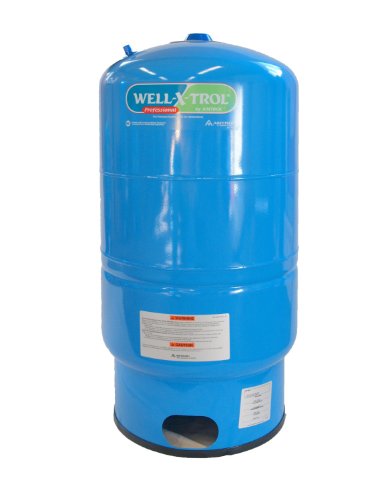
The WX-202 uses a high-strength steel shell with a virgin polypropylene inner liner designed to resist cracking, chipping, or peeling. A unique hoop ring seal helps secure the diaphragm and liner for added strength and reliability, making it a strong option for households with multiple taps or higher usage. Its robust construction supports longer service life and reduces the risk of water contamination from liner degradation.
Practical considerations include compatibility with standard residential well systems and the need to match the tank’s pre-charge to the pump’s cut-in pressure. The WX-202’s materials choices emphasize durability and long-term performance, especially in environments with fluctuating water demand. As with other tanks, correct installation and periodic checks of air charge are essential for optimal operation.
WaterWorker HT-30B Vertical Tank

The HT-30B is a 30-gallon vertical pressure tank with a 26-gallon reservoir capacity. It is NSF-listed under ANSI/NSF Std 61, and it uses a butyl diaphragm designed for flexibility without creasing, improving durability under pressure fluctuations. The polypropylene liner is designed to resist flaking, chipping, or imparting tastes or odors to the water, helping maintain water quality in households relying on well water.
For homeowners evaluating this option, the emphasis on a seamless diaphragm and non-flaking liner translates to more stable pressure and fewer maintenance concerns. The tank’s construction supports consistent performance across daily pumping cycles while maintaining water quality through its internal materials. Proper air charge and the correct pre-charge settings relative to the pump switch are essential steps during installation.
Red Lion RL20A 20-Gallon Vertical Tank

The RL20A shares many design cues with larger Red Lion models, including NSF/ANSI/CAN 61 and 372 certifications and a robust 20-gauge steel tank. It employs a 304 stainless steel water connection, a leak-safe design, and a Butyl diaphragm with a propylene liner. Like other pre-charged tanks, it ships pre-charged to 20 psi, with the final air pressure adjusted close to the pressure switch cut-in setting by the installer.
This size suits smaller homes or moderate well water usage where space is a consideration. The combination of durable tank materials and a compact profile makes it a practical choice for retrofit projects or new installations where a 20-gallon tank meets demand. Correct configuration of pre-charge and switch settings remains critical for optimal cycling and pump protection.
Amtrol WX-203 Well-X-Trol Stand Tank

The WX-203 model is a stand tank with a high-strength steel shell and a virgin polypropylene inner liner designed to resist cracking, chipping, or peeling. Its steel system connection is built to withstand aggressive water, making it a robust option for challenging water supplies. This model emphasizes reliability in environments where water quality or pressure challenges might be present, offering resilience over time.
When considering the WX-203, buyers should compare the stand design with floor-mounted options, ensuring the chosen mounting method aligns with space, plumbing layout, and maintenance access. As with all Amtrol products, confirming compatible pre-charge pressures and correct installation guidance will influence long-term performance and system stability.
Buying Guide: Key Factors To Consider
- Tank size and system demand: Bigger homes or higher water usage require larger tanks (e.g., 30–34 gallons) to smooth pressure and reduce pump cycling. Smaller homes may do well with 20–32 gallon options.
- Diaphragm versus bladder: Most residential tanks use a diaphragm (like Butyl) rather than a bladder. Diaphragms can offer durable performance and fewer seal failures when properly charged.
- Certification and water quality: NSF/ANSI/CAN 61 and 372 certifications indicate suitability for drinking water and safe materials. Consider these when the tank feeds into household taps.
- Pre-charge and switch settings: Tanks ship pre-charged (commonly to 20 psi). Final air charge must be set to a value two psi below the pressure switch cut-in to prevent short cycling and protect the pump.
- Material durability: Look for a steel shell, stainless steel connections, and quality liners to minimize corrosion, scaling, and wear over time.
- Installation considerations: Check space, mounting options (vertical vs. stand), and compatibility with your existing well pump, including nipple sizes and port connections (1″ FNPT, 3/4″ MNPT, etc.).
- Maintenance and replacement cycles: Higher-quality diaphragms and liners tend to require fewer replacements. Review manufacturer guidelines for inspection intervals and service life expectations.
- Water quality impact: Liner materials and diaphragms should resist any local water contaminants. If your water has high mineral content or acidity, prioritize durable construction and corrosion resistance.
- Whole-system compatibility: Match tank capacity with pump flow rate, pressure switch settings, and the home’s plumbing layout to optimize performance and energy efficiency.
- Warranty and support: Consider brands with clear warranty coverage and accessible customer support for troubleshooting and replacements.