Best Primer for Concrete Projects: Durable Bonding for Floors
Choosing the right primer is essential for achieving long-lasting adhesion on concrete surfaces. This guide highlights five top primers designed to improve bonding, prevent blistering, and prepare concrete for coatings, paints, or sealants. Each product listed here offers specific strengths, from low-odor formulas to-friendly environments, helping you select the best option for garages, basements, decks, and industrial floors.
| Product | Brand | Surface Focus | Key Benefit |
|---|---|---|---|
| BEEST Multi-Purpose Primer | BEEST | Concrete, Wood, Metal | High-adhesion bonding; low odor; safe for pets and humans |
| Liquid Rubber Multi-Purpose Primer | Liquid Rubber | Concrete, Wood, Various Substrates | Fast-drying, non-toxic, enhances adhesion |
| Rust-Oleum Concrete & Garage Floor Primer (2-Pack) | Rust-Oleum | Concrete Floors (previously painted or sealed) | Ready-to-use; no sanding; primes high-traffic floors |
| Perfect Primer Encapsulant | Perfect Primer | Old mastics, cutback glue, concrete floors | Encapsulates hazardous materials while priming for new coatings |
| Wadities RV Roof Primer | Wadities | EPDM, TPO, metal, concrete | Improves adhesion and weather resistance on mixed substrates |
BEEST Multi-Purpose Primer
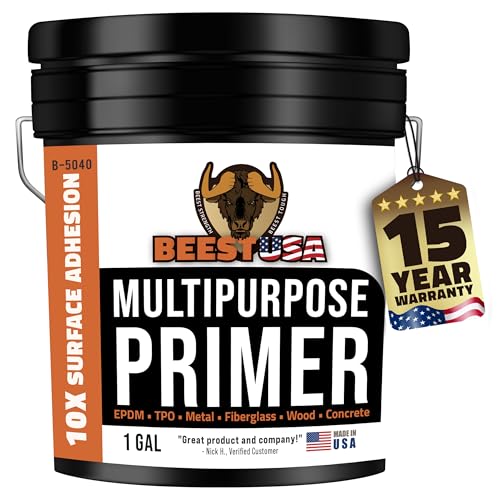
BEEST’s Multi-Purpose Primer is designed to boost adhesion across wood, concrete, decks, basements, planters, and more. The product emphasizes a strong adhesive bonding agent to improve surface readiness before applying sealants. It also claims to prevent blistering and peeling, extending the life of coatings on various substrates, including EPDM roofs and concrete.
This primer is marketed as environmentally friendly with ultra-low odor. The liquid application dries quickly and is easy to clean up, appealing to DIY projects and interior work where odor control matters. Its safe profile is highlighted for homes with pets and humans present during application.
Liquid Rubber Multi-Purpose Primer

Liquid Rubber offers a water-based, non-toxic primer that enhances bonding on concrete and wood among other substrates. It is designed to prevent blistering and to improve adhesion, which is beneficial when applying liquid rubber coatings or sealants over concrete surfaces. The primer is described as fast-drying and easy to apply with brushes, rollers, or spray equipment.
Users can apply one to two coats depending on the surface, with topcoat application recommended within 24 hours after the surface becomes tack-free. This flexibility makes it suitable for both small DIY projects and larger renovation jobs where timing matters.
Rust-Oleum 338806-2PK Concrete & Garage Floor Recoat Primer

This Rust-Oleum primer comes in a gallon size and is part of a two-pack. It is ready to use on interior or exterior concrete floors that have existing paint or sealant. The water-based formula primes without sanding or grinding and can cover up to 400 sq. ft. per gallon on smooth, previously sealed concrete floors. A topcoat is recommended after about six hours.
The product targets renovation projects where existing coatings need stabilization before applying new finishes. The no-sand requirement makes it convenient for quick refreshes on garage floors, workshops, or basements.
Perfect Primer Encapsulant

Perfect Primer combines encapsulation with priming, making it suitable over problematic surfaces like old mastics and cutback adhesives. It seals the substrate while preparing it to bond with new finishes such as epoxy, tile, self-leveling cement, or paint. The encapsulant component helps manage legacy flooring materials, odors, and stains.
Its multi-surface functionality covers floors, walls, and ceilings, enabling priming before a range of coatings. This can be valuable for renovations where removal of old materials is difficult or disruptive.
Wadities EPDM and TPO Primer

Wadities presents a white, multi-purpose primer designed for RV roofs but applicable to several substrates, including EPDM, TPO, metal, wood, and concrete. The primer aims to improve surface adhesion for coatings used on roof systems, offering a combination of safety, weather resistance, and smoothness. It emphasizes non-toxic, low-VOC properties and self-leveling traits that help achieve a uniform base for a durable topcoat.
Buying Guide: Key Purchase Considerations
- Surface compatibility: Match the primer to your substrate (concrete, wood, metal, EPDM/TPO, or a combination) to maximize adhesion and coating longevity.
- Ventilation and odor: If you’re working indoors, prioritize low-odor, low-VOC formulas to minimize health and comfort concerns.
- Bonding strength: For high-traffic or challenging surfaces, choose primers marketed for superior adhesion and blister resistance.
- Drying time and recoat window: Consider projects that need faster turnaround. Some primers dry quickly and allow topcoats within hours; others offer longer windows.
- Encapsulation vs. priming: If you deal with legacy materials (cutback glue, asbestos-containing materials), encapsulating primers provide safer, code-compliant preparation options.
- Application method: Brushes, rollers, and spray compatibility differ. Ensure the product supports your preferred method and equipment.
- Topcoat compatibility: Verify that the primer is designed to bond with your intended topcoat, whether epoxy, paint, tile, or concrete sealants.
- Environmental and safety claims: Look for products with pet- and human-friendly formulas if you have children and pets present during work.
Across these options, expect a balance between adhesion strength, ease of use, and safety. For concrete-focused prep, primers that emphasize concrete bonding and quick handling typically yield the most reliable results in residential and small commercial settings. When working on older flooring or surfaces with adhesives, encapsulant primers offer additional protection by isolating problematic materials while laying a solid foundation for subsequent coatings.