Best Primer for Fiberglass: Top Picks for Durable, Adherent Finishes
Choosing the right primer is essential when coating fiberglass surfaces, whether you’re refinishing a boat hull, RV roof, or a fiberglass repair. The primers below are selected for adhesion, UV resistance, and compatibility with common marine and exterior paints. Each option offers reliable bonding, ease of application, and suitability for above-waterline applications on fiberglass and related substrates.
| Product | Best For | Key Benefit |
|---|---|---|
| Rust-Oleum Marine Wood & Fiberglass Primer | Fiberglass and wood above waterline | Improved topcoat adhesion |
| TotalBoat Marine Topside Primer (White) | Fiberglass and wood topsides | One-coat coverage with durable undercoat |
| Wadities EPDM & TPO Primer (White) | RV roofs and multi-substrate surfaces | Versatile adhesion across rubber, wood, metal |
| Perfect Primer Encapsulant | Legacy flooring and problematic substrates | Encapsulates and primes in one step |
| Evercoat Feather Fill G2 Primer Surfacer | Fiberglass and composite surfaces | Excellent foundation, easy sanding |
Below are five products that stand out for fiberglass projects, with concise guidance on where each shines and how to apply them for best results.
Rust-Oleum Marine Wood and Fiberglass Primer

Rust-Oleum’s Marine primer is designed for fiberglass and wood surfaces above the waterline, forming a solid base coat to improve topcoat adhesion and durability. The primer dries to the touch in about an hour and covers roughly 100 square feet per quart, depending on surface texture and porosity. It’s suitable for marine applications where a reliable bonding layer is essential before applying epoxy, enamel, or polyurethane finishes. Surface preparation should include cleaning, light sanding, and removing any flaking paint or contaminants for best results.
TotalBoat Marine Topside Primer (White)

TotalBoat Topside Primer is a one-part marine primer designed for boats, providing a durable and flexible undercoat compatible with polyurethane and enamel topside paints. It’s formulated for use above the waterline on fiberglass, wood, gelcoat, and surfaces in good condition. A single thin coat can seal the surface, with a second coat added if higher build is needed. For larger imperfections, TotalBoat recommends using their TotalFair epoxy fairing compound before applying the Topside Primer. It can be applied by brush, roller, or spray, with appropriate PPE and ventilation.
TotalBoat Marine Topside Primer (White, Quart)
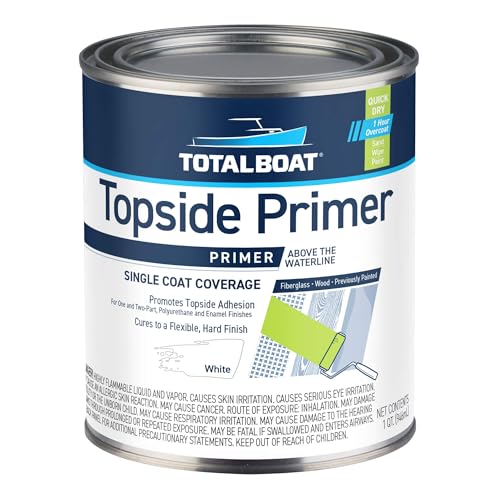
This TotalBoat option mirrors the one-coat coverage approach, delivering a durable undercoat for a range of topside paints. Like the white variant, it’s designed for fiberglass, wood, gelcoat, and cured finishes in good condition above the waterline. The product emphasizes ease of application and surface sealing in a single thin coat, with the possibility of a second coat if needed. Proper surface prep, breathable ventilation, and protection of skin and eyes during application are advised.
Wadities EPDM & TPO Primer White

Wadities offers a multi-purpose primer designed to enhance adhesion on a variety of substrates, including EPDM, TPO roofs, metal, wood, and concrete. This waterborne bonding primer is low in VOCs and non-toxic, making it safer for long-term use in RVs and marine projects. It’s formulated to smooth rough surfaces and create a reliable bond with the topcoat, reducing the risk of blistering and ensuring a uniform finish. Application is straightforward, with typical coverage dependent on surface porosity and application method.
Perfect Primer Encapsulant

Perfect Primer serves as both an encapsulant and a primer, designed for use over surfaces or mastics where old flooring materials exist. While not fiberglass-specific, its encapsulation properties can be advantageous when priming over problematic substrates before applying new finishes. It seals stains and odors, creating a clean surface for epoxy, tile, or paint. This makes it a versatile choice for remodeling projects that involve multiple material transitions, especially where legacy materials are present.
Evercoat Feather Fill G2 Primer Surfacer

Evercoat Feather Fill G2 is a premium polyester primer surfacer designed for fiberglass and composite surfaces. It provides an excellent foundation for subsequent coats and paints, with easy sanding using common grits (180–320). The formula emphasizes high adhesion and a smooth finish, reducing shrinkage and ensuring a stable base for topcoats. This makes it particularly suitable when refinishing fiberglass components that require a strong, dust-free sanding surface before final color coats.
Kelley Olympic Pool Gunzite Primer

Kelley Technical Coatings’ Gunzite Primer is a two-part epoxy primer designed for rough plaster, concrete, new gunite, fiberglass, or sandblasted surfaces on pools. It includes separate base and catalyst components for optimized cure and adhesion. Coverage is roughly 100–150 square feet per gallon, depending on surface condition. This primer is best for pool environments where chemical exposure and substrate variability demand a robust, durable bonding layer before applying epoxy or pool paints. Proper catalyst mixing and ventilation are essential during use.
Buying Guide: Key Purchase Considerations
- Substrate compatibility: Confirm fiberglass as the primary substrate and verify compatibility with your topcoat (urethane, enamel, epoxy, etc.).
- Water exposure: For marine or outdoor use, choose primers with UV stability and water resistance to minimize blistering and degradation over time.
- Adhesion and build: If you need a strong undercoat, prioritize primers marketed for high adhesion or one-coat coverage, or plan a second coat for extra build.
- Application method: Some primers support brush, roller, and spray; others may require specific equipment or tips. Ensure your setup matches the product’s guidance.
- Safety and VOCs: Look for low-VOC, non-toxic formulations when working in enclosed spaces or with sensitive occupants nearby.
- Surface preparation: Most primers require cleaning and light sanding; follow manufacturer steps to maximize adhesion and final appearance.
- Repair scenarios: For legacy materials or damaged substrates, encapsulants or multi-surface primers may offer advantages by sealing contaminants before topcoating.
- Match primer choice to your topcoat type (polyurethane, enamel, epoxy).
- Plan surface prep around the primer’s recommended guidelines for best adhesion.
- Consider multi-substrate primers if your project includes non-fiberglass materials.
- Account for environmental conditions: temperature, humidity, and ventilation impact cure times and film integrity.
- Estimate coverage using rough surface area and porosity to prevent under- or over-application.