Best Product to Kill Carpenter Ants: Top Options for Your Home
Carpenter ants can compromise wood structure and create persistent indoor problems. This guide highlights five effective consumer-grade products designed to kill carpenter ants and deter future activity. Each option targets both immediate colonies and long-term prevention, offering indoor and outdoor versatility to cover multiple scenarios.
Summary of chosen products
- Spectracide Terminate Termite And Carpenter Ant Killer (1.33 gallons) with AccuShot Sprayer
- BASF Advance Carpenter Ant Bait Granules, 8 oz
- TERRO Ant Killer Bait Stations T300B (12 count)
- Terro T600 Ant Dust Powder Killer (1 lb)
- Harris Carpenter Ant Killer & Termite Control Treatment (128 oz)
Spectracide Terminate: Comprehensive Indoor-Outdoor Ant Solution

Spectracide Terminate provides broad-spectrum control for termites, carpenter ants, and other wood-destroying insects. The product works for indoor use and extends protection to the home foundation, delivering up to nine months of residual control indoors and on surrounding structures. It also targets carpenter bees on contact, making it a versatile choice for property-wide prevention. The AccuShot Sprayer helps apply the solution precisely where ants are active, reducing waste and exposure. This dual-action approach supports immediate elimination and longer-term deterrence.
BASF Advance Carpenter Ant Bait Granules

This ready-to-use bait targets carpenter ant colonies by leveraging ants’ social feeding behavior. The granules attract foragers, who then share the bait with nestmates, delivering colony-wide effects. With abamectin as the active ingredient (0.011%), the product offers delayed action that encourages foragers to transport bait back to the colony. It is suitable for both indoor and outdoor use, and its larger grit sizes help more ant species pick up the bait, enhancing effectiveness against a range of household ants, including carpenter ants.
TERRO Ant Killer Bait Stations T300B

Terro’s liquid bait system delivers rapid worker ant activity reduction as foragers bring bait back to the colony. The ready-to-use stations can be placed along baseboards, corners, and counters—areas where ants frequently travel. This indoor-focused method aims to curb activity quickly and reduce the chance of re-infestation by attacking the source through trophallaxis, the process of food sharing within ant colonies. The T300B setup supports convenient, discreet placement and ongoing monitoring.
TERRO T600 Ant Dust Powder: Long-Lasting Residual Control
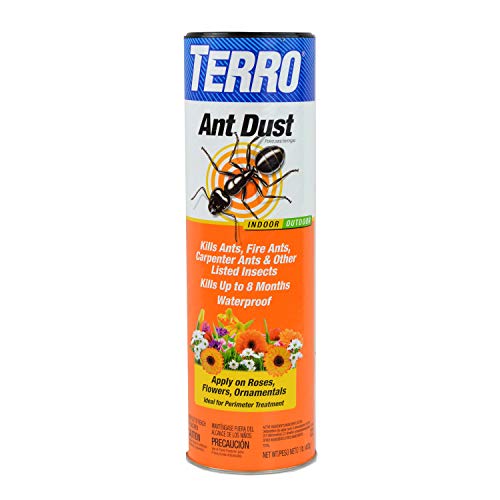
Terro’s T600 dust powder is designed for indoor and outdoor use, delivering fast contact kill for ants, including carpenter ants, as well as other insects like roaches and spiders. Its waterproof formula resists rain, making it suitable for exterior applications where ant access occurs. The residual effect can extend for several months, offering ongoing protection without frequent reapplication. Dust formulations are well-suited for cracks, crevices, and hidden pathways often used by carpenter ants.
TERRO T1901SR Ready-To-Use Carpenter Ant Killer Aerosol
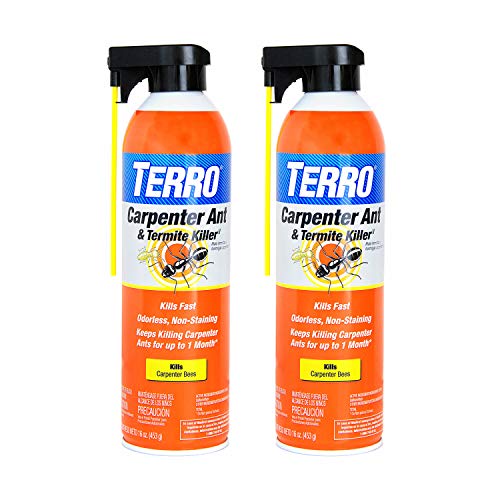
This two-pack aerosol delivers fast on-contact kills for carpenter ants, termites, and carpenter bees. It provides a quick surge of control and a residual effect that helps deter re-infestation for up to about a month. The two-way spray nozzle enables broad coverage or targeted application into cracks and crevices where carpenter ants feed and nest. This option complements other treatments by providing immediate, localized intervention.
Harris Carpenter Ant Killer & Termite Control Treatment

Harris offers a ready-to-use formula with a trigger sprayer that supports precise application in active areas. The product targets carpenter ants and termites on contact and provides protection for up to a month after initial treatment. The odorless, non-staining formula helps minimize indoor disruption while delivering rapid results, making it a practical option for homeowners seeking straightforward, no-muss control that can be reapplied as needed.
Buying Guide: Key considerations for killing carpenter ants
- Scope of infestation: Consider whether the problem is localized or widespread across walls, foundations, and outdoor paths. A combination approach (baits for colonies and contact sprays for foraging trails) often yields the best results.
- Product type and mode of action: Baits target the colony by exploiting social feeding, while sprays and dusts offer immediate kill and residual protection. A mix can address both worker ants and the colony.
- Indoor vs. outdoor use: Carpenter ants travel between structures and wood. Choose products suitable for both environments to cover entry points, utility penetrations, and damaged wood near foundations.
- Residual duration: Some products offer long-lasting protection indoors (months), while others provide rapid control with shorter residuals. Align with the expected level of maintenance.
- Application method and ease: Ready-to-use baits and sprays reduce setup time. Look for user-friendly applicators that minimize contact with treated areas and pets or children.
- Safety and labeling: Review safety data, active ingredients, and whether the product is labeled for carpenter ants specifically. Adhere to label directions for safe use around homes and pets.
- Integrated approach: For severe or recurring infestations, consider professional inspection. Combining baits, aerosol treatments for cracks, and perimeter barriers can create comprehensive protection.
- Cost and coverage: Compare the amount of product per container and the expected coverage area. Cost-per-use matters for ongoing prevention efforts.
- Monitoring plan: After initial treatment, monitor activity along baseboards, entry points, and any new foraging trails to assess effectiveness and need for follow-up applications.
These options reflect a range of active ingredients and delivery methods designed to address carpenter ant problems with practical, home-use solutions. When selecting products, consider the specific growth stage of the colony, the severity of activity, and the layout of the home to decide how to combine baits, sprays, and dusts for optimal results.