Best Refractory Caulk for Fireplace and Hearth
Choosing the right refractory caulk or cement is essential for safe, durable fireplace and stove installations. This guide highlights select pre-mixed cements, mortars, and sealants designed to withstand high temperatures, seal gaps, and extend the life of fireboxes, bricks, and liners. The following five products are chosen for their heat resistance, ease of use, and suitability for interior fireplace applications. A quick summary table follows to help you compare key specs at a glance.
| Product | Brand | Type | Max Temp | Use Case |
|---|---|---|---|---|
| Rutland Refractory Cement 64 Oz | RUTLAND PRODUCTS | Pre-Mixed Cement | Up to 2600°F (interior use) | Gaps between firebricks, mortar-like joints |
| HOUSEBOND Instant-Setting Refractory Cement 10 oz | HOUSEBOND | Refractory Mortar | Up to 3200°F | Repair, fill, and construct fireplaces, stoves, chimneys |
| SOLIDLAND Refractory Mortar – 3.5 LBS | SOLIDLAND | Dry Mix Mortar | Up to 3056°F | Firebricks, joints, and fireproof bonds |
| Tenon Refractory Mortar – 10 Pounds | Tenon | Mortar | Up to 2550°F | Fireplaces, fire pits, chimneys, brickwork |
| Stanley 2700F High Temp Black Sealant | STANLEY | Sealant / Fire Caulk | Up to 2700°F | Fireplace surrounds, stoves, chimneys, grills |
Rutland Refractory Cement 64 Oz
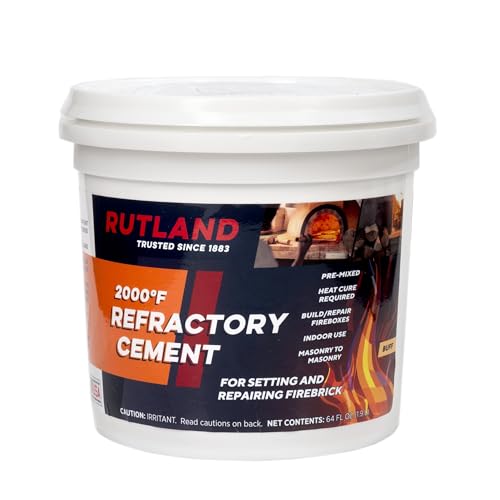
Rutland Refractory Cement is a ready-to-use, pre-mixed cement designed for interior use in fireboxes. Its thick, smooth consistency makes it well-suited for mortar-like joints between firebricks and for filling small gaps. The product adheres well to masonry and is formulated to handle typical interior fireplace environments. While easy to apply, users should follow curing and setup guidelines to ensure proper bonding and long-term performance.
HOUSEBOND Instant-Setting Refractory Cement

Housebond’s instant-setting mortar is designed for rapid repair and assembly, handling temperatures up to 3200°F. Its rapid hardening saves time and reduces emissions during construction. The formula emphasizes durability, resisting aging and cracking, and it’s intended for use in fireplaces, stoves, chimneys, and furnaces. This product is ideal for professionals and DIYers looking for a fast, solid bond with a long service life.
SOLIDLAND Refractory Mortar – 3.5 LBS
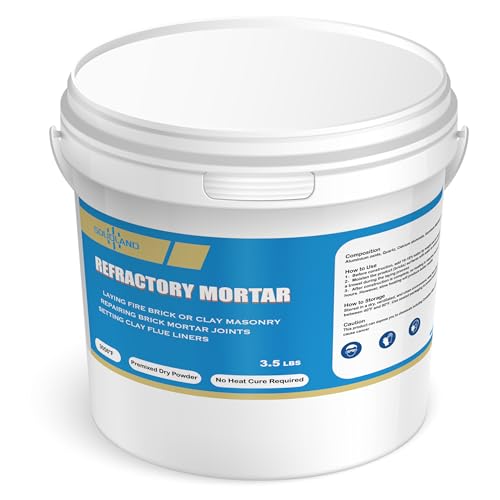
SOLIDLAND Refractory Mortar is a fine dry mix designed for precise bonding between firebricks and other refractory materials. When mixed with water, it yields a smooth paste that fills joints and gaps, forming a durable, gas-tight bond. This product is suitable for constructing or repairing furnaces, kilns, fireplaces, chimneys, and related fireproof assemblies, with a focus on long-term stability in high-heat environments.
Tenon Refractory Mortar – 10 Pounds

Tenon Refractory Mortar is a ready-to-use mix that only requires water. It’s designed for indoor or outdoor fireplaces, fire pits, and chimneys, including clay flue liner setups and parging. The product provides about one hour of working time before hardening, enabling you to shape and fill joints with confidence. It’s suitable for repairing or building high-heat structures with dependable performance up to 2550°F.
Stanley 2700F High Temp Black Sealant

Stanley’s high-temperature sealant is a fire caulk rated, non-flammable solution designed for sealing around fireplaces, stoves, and chimneys. It bonds to brick, stone, metal, concrete, and mortar, delivering a robust fire barrier. With a heat tolerance up to 2700°F, it suits indoor and outdoor applications where direct flame exposure is possible and a flexible, paintable finish is desirable for aesthetic compatibility.
Buying Guide: Key Considerations For Refractory Fireplace Applications
- Temperature range: Match the product’s maximum operating temperature to your fireplace or stove’s heat profile. Higher temps yield greater long-term reliability in high-use areas.
- Application type: Decide between pre-mixed cement, dry mortar, or sealant based on the task—gap filling, mortar joints, or a fireproof seal around components.
- Curing and hardening: Some products cure quickly while others require longer setting times. Consider your project timeline and safety during curing.
- Indoor versus outdoor use: Interior fireboxes have different moisture and exposure levels than outdoors; choose accordingly for durability and code compliance.
- Ease of use: Pre-mixed products simplify mixing and application, while dry mortars may require precise water ratios and mixing.
- Bonding strength and shrinkage: Look for formulations that resist cracking and shrinkage over time to minimize rework.
- Compatibility: Ensure the product adheres to common fireplace substrates like brick, concrete, stone, and metal components.
- Health and safety: Follow ventilation and curing guidelines; some blends generate dust or fumes during handling and setting.
For best results, prepare the surface by cleaning dust and debris, dampening where appropriate, and applying with the recommended trowel or nozzle technique. Cure according to the manufacturer’s instructions, and perform a post-install inspection to verify a solid seal and uniform coverage. Always consult local building codes and manufacturer guidelines when replacing firebox linings or major structural elements.