Best Refractory Cement for Fireplaces: High-Temp Mortars for Masonry
Find durable, heat-resistant mortars and cements designed for fireplace repairs and high-heat areas. This guide highlights top options for common fireplace needs, from small crack repairs to large firebox rebuilds. Suitable buyers include homeowners repairing chimneys, masonry hobbyists, and contractors needing reliable, pre-mixed or ready-to-use formulations. The table below compares five selected products to help you choose quickly based on use case and heat tolerance.
| Product | Best For | Max Temp | Mix Type | Note |
|---|---|---|---|---|
| Rutland Dry Mix 211 10 lb | Fireplace brick repair | 2550°F | Dry mix, air-cure | No heat cure needed |
| Rutland Dry Mix 211 2.5 lb | Small gaps/joints | 2550°F | Dry mix, air-cure | Mix with water per instructions |
| Furnace Cement Premixed | High-heat patches | 2732°F | Premixed | Fast-setting, easy seal |
| Rutland Refractory Cement 64 oz | Medium repairs | Not stated in data | Pre-mixed | Interior use only |
| Rutland Fireplace Mortar Cartridge | Small to moderate repair joints | Not stated in data | Mortar cartridge | Heat-curing required |
Rutland Dry Mix 211 Refractory Mortar 10 Pound
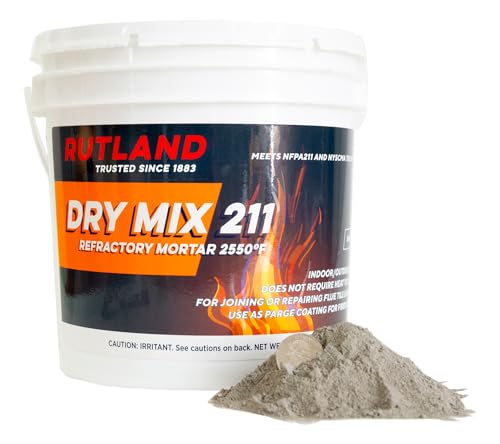
Brand: Rutland Products. Features: rated up to 2550°F (1400°C); does not require heat to cure; suitable for indoor and outdoor use. This dry-mix mortar is designed for repairing fireplace bricks, fire pits, kilns, forges, and pizza ovens. Best for homeowners needing a high-temperature patch that cures in air. Caution: ensure proper mixing with water per instructions and avoid over-application where excessive thickness could affect cure time.
Rutland Dry Mix 211 Refractory Mortar 2.5 Pound

Brand: Rutland Products. Features: ideal for joining or repairing fire brick and masonry flue tile in gas or wood fireplaces and stoves; mix ratio: 2.5 lbs of dry mortar to 8 oz water; air-cure only. Best for small repairs or patching joints; better for precise, limited-area work. Caution: ensure proper ventilation during mixing and curing indoors.
Furnace Cement – Premixed Refractory Cement

Brand: Professional Soma Fix. Features: rated up to 2732°F; fast-curing, sets within minutes; forms a durable, fireproof seal for high-heat areas like fireplaces, furnaces, and stoves. Best for immediate patches and sealing joints where quick turnaround is needed. Caution: intended for high-heat areas; verify substrate compatibility before use.
Rutland Refractory Cement 64 Oz
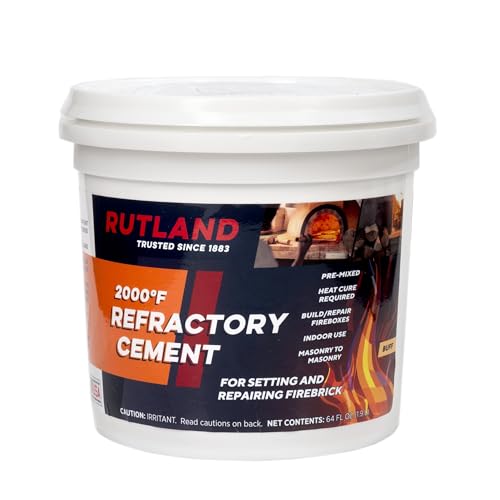
Brand: Rutland Products. Features: fiber-reinforced, ready-to-use premixed cement; sticks easily to masonry in the firebox for small gaps; interior use only. Best for filling gaps between firebricks and minor repairs; better for quick, no-mix applications; caution: interior use only, avoid exterior exposure unless specified.
Rutland Fireplace Mortar Cartridge, 10.3-Ounce

Brand: Rutland Products. Features: gray version available; designed for repairing small chips or cracked firebrick, re-pointing mortar joints, and bonding firebricks; interior use only; requires heat to cure. Best for precise, small-scale mortar work; choose this if you need a refillable cartridge with ready-to-use consistency. Caution: heat-curing requirement means curing conditions must be controlled.
Buying Guide
What heat rating do you need?
High-temperature cements and mortars vary in maximum rated temperature. For classic fireplaces, look for formulations that withstand at least 2550°F (1400°C) or higher when possible. For wood stoves or chimneys with frequent heat exposure, select products rated for the highest stable temperatures to reduce cracking.
Do you prefer premixed or dry mix?
Premixed cements like Furnace Cement and Rutland 64 oz offer quick setups with less mess. Dry mixes (e.g., Rutland Dry Mix 211) require water and air curing but may be more economical for larger jobs. Consider project size, tool access, and desired workflow when choosing.
Indoor vs outdoor use
Most products labeled for interior use are suitable for fireboxes and chimneys; outdoor use is possible for some formulas but verify guidance. If the repair involves exterior surfaces or harsh weather, select a product explicitly rated for outdoor exposure.
Repair scope and surface compatibility
Small gaps or cracked joints are well-suited to salvageable cartridges or mortar patches. Large voids or custom shapes may benefit from castable or fiber-reinforced cements that fill and harden into a sturdy brick pattern or patch mold.
Cure time and application method
Air-curing mortars cure as they are exposed to air, while premixed cements set quickly after application. Dry mixes require proper water mixing and air exposure. Follow manufacturer instructions for cure times to ensure long-term durability.
Safety and handling considerations
Wear protective gear during mixing and application. Some products emit fumes during curing; ensure adequate ventilation. Keep products away from children and pets during curing and storage.
Summary of selection rationale
- Best for large repairs and ease of use: Furnace Cement Premixed.
- Best for small, precise repairs: Rutland Fireplace Mortar Cartridge.
- Best value for bulk repairs: Rutland Dry Mix 211 10 lb.
- Best for medium joints in fireboxes: Rutland Refractory Cement 64 oz.
- Best for joining or repairing fire brick: Rutland Dry Mix 211 2.5 lb.
FAQ
- What is the typical temperature rating I should look for in fireplace cement? – Look for products rated up to 2550°F (1400°C) or higher when possible to ensure durability in high-heat zones.
- Do dry mix mortars require heat to cure? – No heat curing is required for many dry mixes; they cure in air after water is added per instructions.
- Can these products be used outdoors? – Some can; verify product labeling for indoor vs outdoor use before applying to exterior surfaces.
- Is premixed cement easier for beginners? – Yes, premixed options reduce mixing steps and mess, but may be more expensive per unit than dry mixes.
- Should I cure firebrick patches immediately or allow a gradual cure? – Follow manufacturer guidelines; some products cure quickly, while others require longer air exposure for full strength.
- Can these cements bond to metal or stone surfaces? – Some products offer multi-surface bonding; check product data to confirm compatibility for non-brick substrates.