Best RH Meter for Concrete: Top 5 Picks for Accurate in-Slab Moisture Testing
The best RH meter for concrete helps you detect moisture accurately in slabs using in-situ probes and ASTM F2170 methods. This guide focuses on in-depth, non-destructive or minimally invasive options suitable for contractors, flooring installers, and inspectors. Each product below is chosen for reliability, compatibility with F2170, and ease of use on job sites.
Summary table of selected products:
| Product | Best For | Key Advantage |
|---|---|---|
| Lignomat RH/KS Package | Contractors needing ASTM F2170 compliant RH testing | In-depth RH measurement with durable probes |
| Wagner Meters Rapid RH L6 Smart Sensors (5 Pack) | Bulk testing on large slabs | Simple, reliable L6 sensors with improved RH performance |
| Rapid RH L6 Starter Kit+ (Fahrenheit) | Complete on-site testing | Includes readers, loggers, and drill bits |
| Tramex CME5 | Non-destructive quick checks | Analog meter for instant readings |
| Lignomat VersaTec Kit | Versatile wood and concrete testing | Pin, pinless, and RH modes in one kit |
Lignomat RH/KS Package — Concrete RH Testing

Best for contractors who need ASTM F2170 compliant humidity testing in concrete slabs. The RH/KS package provides a robust in-situ probe method for evaluating moisture, with accurate RH, dew point, and ambient temperature readings for comprehensive site analysis. The kit is designed for long-term use in professional environments, emphasizing reliability and repeatable results.
Who it’s best for: professionals performing in-slab RH tests on large or multiple slabs. Why selected: it aligns with ASTM F2170, supports thorough moisture analysis, and offers durable probes for repeated use. Caution: ensure proper calibration and probe maintenance to preserve accuracy over time.
Wagner Meters Rapid RH L6 Smart Sensors — 25 Pack

Best for large-scale testing with bulk sensor replacement. These L6 Smart Sensors are designed for use with the Rapid RH evaluation system and offer improved technology for responsiveness, particularly in high relative humidity environments. The 25-pack option supports rapid, repeated tests across many locations on a single project.
Who it’s best for: installers performing frequent, repeated in-slab RH tests. Why selected: bulk sensor availability reduces downtime and supports faster data collection. Caution: sensors require compatible starter kit or readers for use; verify compatibility before purchase.
Rapid RH L6 Concrete Moisture Test Starter Kit+ (Fahrenheit)

Best for complete on-site moisture testing with a Fahrenheit display. This starter kit includes 5 L6 smart sensors, a Fahrenheit Total Reader with Bluetooth, two ambient recorders, and a drill bit. It provides a full setup for accurate, documented RH testing in line with ASTM F2170.
Who it’s best for: contractors needing a turnkey testing solution with data connectivity. Why selected: comprehensive kit minimizes missing components and streamlines field data capture. Caution: Fahrenheit model means Celsius readings require a separate configuration or adapter.
Wagner Meters Rapid RH L6 Smart Sensors — 5 Pack

Best for smaller projects or test deployments. A 5-pack of L6 sensors provides a cost-effective option for limited slab testing without committing to a larger kit. It maintains the same reliability and compatibility as larger sets with user-friendly data capture.
Who it’s best for: smaller labs or single-slab installations. Why selected: cost-efficient entry into the L6 testing ecosystem. Caution: ensure you have compatible readers or loggers to pair with these sensors.
Rapid RH Total Reader with Bluetooth — Fahrenheit

Best for field data management and reporting. The Total Reader provides a digital display and Bluetooth to connect with data apps for streamlined documentation. It is Fahrenheit-only in this listing but pairs with compatible sensors and loggers for accurate RH testing on job sites.
Who it’s best for: professionals who value immediate readouts and digital record-keeping. Why selected: Bluetooth reporting simplifies data transfer and archiving. Caution: Celsius needs a separate model; confirm unit compatibility before purchase.
Tramex CME5 Concrete Moisture Encounter
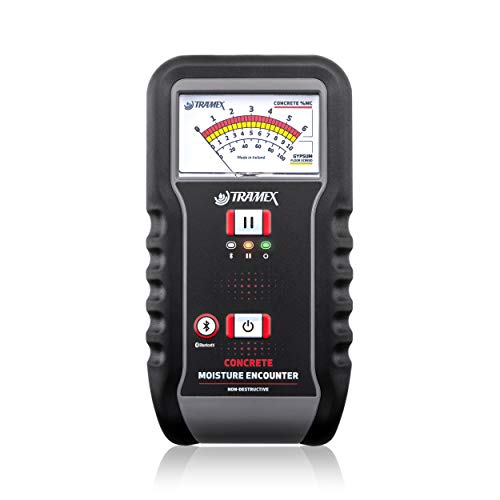
Best for quick, non-destructive moisture checks in concrete floors, slabs, and screeds. The CME5 provides an analog moisture meter reading with a focus on rapid baseline testing in line with standards. It can be a practical first step before deeper RH testing.
Who it’s best for: site supervisors seeking immediate, non-destructive moisture cues. Why selected: simple operation and immediate readings. Caution: not an RH-specific meter; use alongside RH probes for in-depth analysis.
Lignomat VersaTec Kit — Pin, Pinless, RH
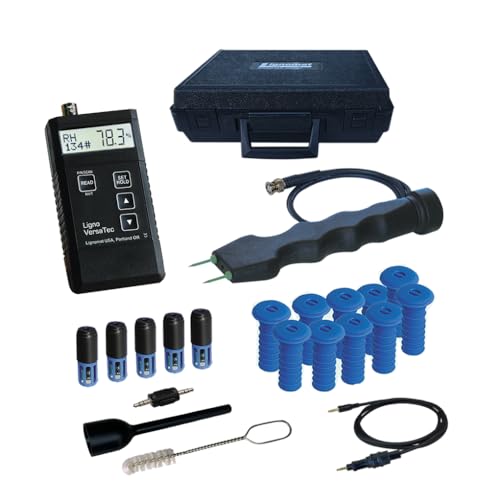
Best for professionals needing a versatile moisture meter that covers wood and concrete. The VersaTec kit combines pin, pinless, and RH capabilities with a BluePeg probe and accessories to address multiple materials and testing depths. It supports ASTM F2170 compliance for concrete humidity testing.
Who it’s best for: floor installers and inspectors requiring a multi-material moisture solution. Why selected: flexibility across materials reduces the number of separate devices. Caution: ensure proper calibration for both wood and concrete readings to avoid cross-material errors.
Buying Guide: Concrete RH Testing Essentials
What to consider when choosing an RH meter for concrete:
- Test method and standard compliance: Choose devices that align with ASTM F2170 for in-slab RH testing and ASTM F2659 for moisture content when applicable.
- Probes and depth: In-situ RH probes allow deeper testing inside slabs; consider the maximum measurement depth and whether you need reusable probes or disposable sensors.
- Measurement capabilities: RH, dew point, and temperature readings enable comprehensive site analysis. Bluetooth or data logging helps with reporting.
- Ease of use: kits with clear instructions, quick-start guides, and reliable readers reduce field errors and downtime.
- Durability and reclaimability: job-site durability and long-term availability of replacement sensors or probes affect total cost of ownership.
- Material compatibility: if testing multiple materials (concrete, wood, screeds), prefer a kit that covers all required substrates to avoid multiple devices.
Practical buyer questions
- What is the difference between pin and pinless moisture meters? — Pin meters measure moisture at a specific point, while pinless meters assess embedded moisture without creating a hole.
- Do I need ASTM F2170 compliance for every project? — For professional flooring and slab installations, ASTM F2170 compliance is highly recommended to ensure consistent RH data across sites.
- Can I use the same probes on different slabs? — Reusable probes can be used across multiple projects, but verify calibration and probe integrity between uses.
- Is Bluetooth data logging essential? — Bluetooth or digital logging simplifies data management and reporting, especially for large projects or client delivery.
- What depth should I test in typical slabs? — Common depths range from surface to about 3/4 inch (20 mm) for initial checks; deeper testing may be needed based on slab composition.
- When should I choose a non-destructive meter like CME5? — Use non-destructive meters for quick screening before committing to in-depth RH testing with probes.
Frequently asked questions
- What is the standard for concrete RH testing? Answer: ASTM F2170 governs in-situ RH testing in concrete slabs using probes and calibrated sensors.
- Can RH testing affect flooring installation timing? Answer: Yes, acceptable moisture levels must be confirmed before flooring installation to prevent failures.
- What should be included in a typical testing kit? Answer: An RH meter, reusable in-situ probes, a reader, and accessories such as drill bits or adapters, plus the necessary documentation to support test results.
- Are there risk factors for inaccurate RH readings? Answer: Temperature fluctuations, probe calibration issues, and improper depth measurement can introduce errors; follow standard procedures.
- How often should RH probes be replaced? Answer: Replace or recalibrate probes according to manufacturer guidelines and field usage to maintain accuracy.