Best Roll-on Metal Primer Solutions for Rust and Outdoor Metals
Finding the right roll-on primer for metal surfaces helps prevent rust, improve topcoat adhesion, and extend the life of equipment and vehicles. This guide highlights five durable options suited for automotive, industrial, and household metal projects. Best for quick-to-apply, high-build primers are typically oil- or epoxy-based and advertise rust prevention, curing times, and coverage. Below are five products chosen for a range of budgets and metal conditions, with clear guidance on who benefits most from each option.
Quick comparison
- Rust-Oleum 7780502 Stops Rust Clean Metal Brush On Primer — Best for small to medium metal projects requiring brush-on control.
- Rust Converter & Metal Primer by LISRUX 141 fl oz — Best for heavy rust and long-term protection with conversion chemistry.
- Rust-Oleum 280151 Farm & Implement Enamel Primer — Best for farm/industrial equipment with large-area coverage.
- Optiflow Epoxy Primer Starter Kit by Eastwood — Best for DIY automotive frames and body panels needing epoxy durability.
- 4-in-1 Rust Converter & Metal Primer 34 fl oz by LISRUX — Best for versatile, heavy-duty rust protection in one bundle.
Rust-Oleum Stops Rust Clean Metal Brush On Primer
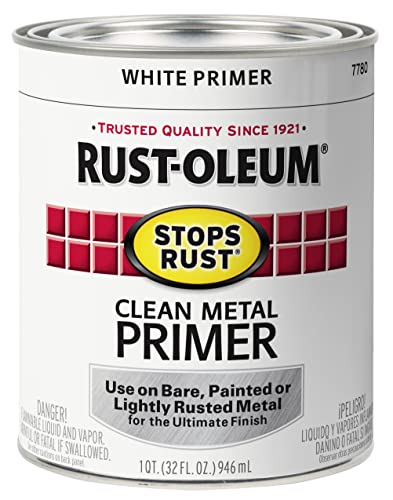
Best for: small to medium metal projects where brush-on application is preferred. The oil-based formula provides durable rust prevention and strong topcoat adhesion. It dries to the touch in 2-4 hours and covers up to 90 sq. ft., making it suitable for fences, gates, or metal furniture.
Why selected: It offers direct brush-on control with good corrosion resistance and broad surface compatibility (wood, metal, concrete, masonry).
Caution: Oil-based primers can require mineral spirits for cleanup and may need adequate ventilation during application.
Rust Converter & Metal Primer, 141 Fl Oz Black Rust Inhibitor

Best for: heavy rusted metal surfaces and industrial or automotive applications requiring a long-lasting rust preventive coating. This one-component product seals water and air, inhibiting oxidation with heat resistance up to 350℉.
Why selected: It combines rust conversion with a protective primer, reducing the need for multiple products. Suitable for machinery, marine, and construction projects where rust is severe.
Caution: Large-volume packaging requires careful surface preparation and adequate ventilation during application and curing.
Rust-Oleum Farm & Implement Enamel Primer Quart

Best for: farm and industrial equipment like tractors, trailers, and lawn mowers that require robust rust protection and wide coverage. Dries in 2-4 hours and covers up to 130 sq. ft. per quart.
Why selected: It’s designed specifically for heavy-use outdoor gear and implements, with a formula aimed at resisting wear and environmental exposure.
Caution: Suitable mainly as a primer; heavy equipment may require subsequent topcoats for color or extra durability.
Optiflow Epoxy Primer Starter Kit
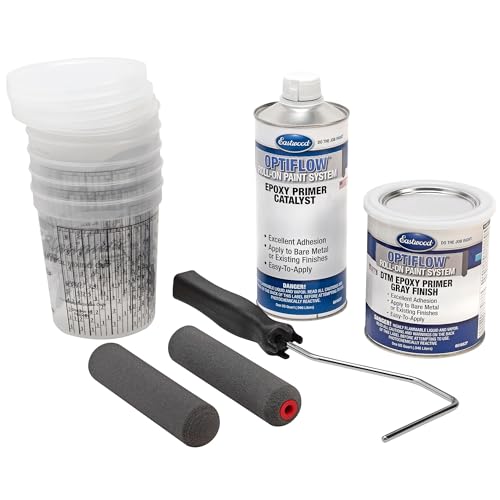
Best for: automotive frames, body panels, and other small projects needing a durable epoxy finish. Kit includes gray primer, activator, rollers, and mixing supplies, producing 2 quarts of roll-on epoxy primer.
Why selected: Epoxy primers deliver strong adhesion and chemical resistance, suitable for bare steel, aluminum, fiberglass, and body filler.
Caution: Epoxy systems require proper mixing ratios and clean work surfaces to prevent curing issues; follow kit instructions carefully.
4-in-1 Rust Converter & Metal Primer

Best for: versatile rust protection on various metal surfaces with a single product. The 34 oz container combines rust conversion, priming, and corrosion resistance.
Why selected: Suitable for automotive, machinery, marine, and construction use where rust needs immediate treatment and priming in one step.
Caution: Larger volumes may require multiple coats for uneven rust or heavily pitted areas; ensure proper surface cleaning first.
Buying Guide: Key Considerations for Metal Primer Selection
- Surface condition: Is rust already present, or will you apply over bare metal? Choose rust converters for active rust and primers for clean metal.
- End use: Indoor furniture, outdoor equipment, or automotive parts demand different durability and UV resistance.
- Application method: Brush-on, roll-on, or spray primers affect coverage, texture, and cure time. Roll-on epoxy options are ideal for larger panels.
- Topcoat compatibility: Check whether the primer is designed to accept enamel, acrylic, or polyurethane topcoats for best adhesion.
- Ventilation and cleanup: Oil-based primers require solvents; epoxy primers require precise mixing and cleanup with appropriate products.
- Coverage and cure time: Plan for the project area and how quickly you’ll need a tack-free or fully cured surface.
Frequently Asked Questions
- What is the difference between rust converter and primer?
– Rust converters chemically convert rust into a stable compound, while primers provide a coating foundation for the final paint. Some products combine both functions. - Can I use primer directly on heavily rusted metal?
– In many cases, yes, but some rust may require conversion or rust removal prior to priming for best adhesion. - Do epoxy primers require special preparation?
– Yes, clean and degrease surfaces, remove loose rust, and follow mixing instructions to ensure proper curing. - How long should primer dry before topcoating?
– Dry times vary by product; typically 15 minutes to a few hours, with full cure over 24 hours for many epoxies. Follow the product’s directions. - Is a spray primer better than a brush-on primer for metal?
– Sprays offer even coverage on large areas; brush-on primers give control on corners and edges, but may require more labor. - Can I use these primers on wood or concrete?
– Some products advertise multi-surface use; always verify the label for compatibility with non-metal substrates.