Best Rollers for Peel and Stick Tile: A Practical Buyer’s Guide
When installing peel-and-stick tile, a quality roller is essential to ensure a clean, bubble-free bond and a smooth, professional finish. This guide highlights rollers and related smoothing tools that are best suited for peel-and-stick tile projects, from small bathroom backsplashes to larger floor areas. The recommended picks cover extended handles for leverage, durable materials, and tools that help eliminate air bubbles. Ideal buyers include DIYers tackling small-to-moderate tile jobs, contractors seeking efficient levers for large installations, and homeowners upgrading interiors with quick, durable tile solutions.
Summary table of selected products:
| Product | Best For | Key Benefit |
|---|---|---|
| Peachtree Extendable Heavy Duty Roller | All-purpose heavy-duty tile and floor projects | 27″ extendable handle for maximum leverage |
| POWERTEC 71033V Extendable Roller | Vinyl, laminate, and large tile installations | Diesel/Die-cast second handle for extra leverage |
| POWERTEC 71033 Extendable Roller | Vinyl, LVP, and wall coverings | Segmented roller design for even pressure |
| FOSHIO Heavy-Duty Aluminum Dual Silicone Roller | Vinyl flooring and tile with smooth finish | Dual silicone rollers prevent marks, durable aluminum |
| WRAPXPERT Wallpaper Smoothing Tool Kit | Peel-and-stick wallpaper and tile backsplashes | Comprehensive smoothing tools for bubbles and seams |
Peachtree Extendable Heavy Duty Roller
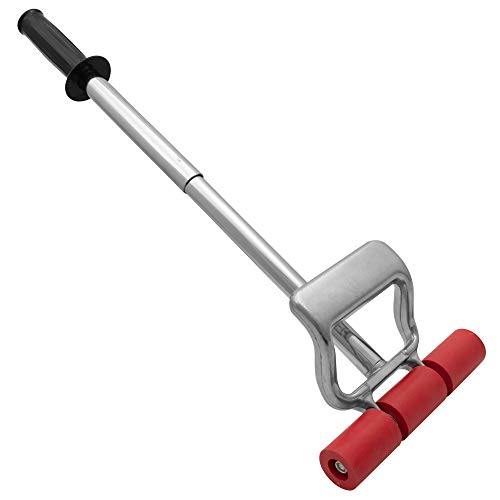
The Extendable Heavy Duty Roller by Peachtree Woodworking Supply uses a segmented roller system and a robust leverage handle to apply steady pressure across large areas. It excels on linoleum, carpet, tile, wall coverings, laminates, and veneer projects. The extendable handle increases from 17 inches to 27 inches, enabling greater leverage and easier work for tough installations. The ergonomic rubber grip provides comfort during long sessions. Best for DIYers handling moderate to large flooring projects or wall coverings where extra leverage is needed. Caution: heavier use requires proper handling to avoid fatigue and ensure precise alignment on small patches.
POWERTEC Extendable Floor And Wall Roller (71033V)

This POWERTEC model features a heavy-duty 27-inch extendable roller with a die-cast second handle for added leverage. Its 7.5-inch width keeps the tool compact yet powerful for vinyl flooring, tile, linoleum, and wall coverings. The segmented roller design helps distribute pressure evenly along the entire length, reducing edge irregularities. Best for professionals or serious DIYers who need consistent, even pressure on large-area installations. Limitation: larger projects may require two-person operation for optimal control on very expansive layouts.
POWERTEC Extendable Roller (71033)

This variant mirrors the 71033V with an extendable 17″ to 27″ handle and 7.5″ wide roller for versatile use on vinyl flooring, tile, and wall coverings. The design emphasizes even pressure via its segmented roller action and a second die-cast handle for leverage. Best for projects where extended reach and leverage are useful, such as larger peel-and-stick tile installations or wall applications. Caution: ensure the roller is clean and free of debris to prevent imprinting on delicate tile surfaces.
FOSHIO Heavy Duty Aluminum Dual Silicone Roller

FOSHIO’s roller uses heavy-duty aluminum construction and dual silicone rollers to apply uniform pressure without leaving marks. The dual-roller setup helps eliminate air bubbles and ensures a smooth, wrinkle-free finish for vinyl planks, linoleum, tile, and wall coverings. Best for installations where a mark-free appearance matters and where long periods of rolling are required. Limitation: silicone rollers can be slower to react on very rough textures; for stubborn bubbles, additional rolling passes may be needed.
WRAPXPERT Wallpaper Smoothing Tool Kit

This kit focuses on smoothing and seam work for peel-and-stick wallpaper, but its toolkit is applicable to tile backsplashes and large peel-and-stick installations where air bubbles and seam work are concerns. Includes a large teal squeegee and a hobby knife with multiple blades for precise cuts, making it useful for trimming and finishing edges on tile sheets that resemble wallpaper sheets. Best for detailed finishing in small spaces or for users who value a dedicated seam tool alongside a smoothing tool. Caution: designed primarily for wallpaper; ensure compatibility with tile-backed sheets before use on tile installations.
Buying Guide: Key Considerations For Peel-And-Stick Tile Rollers
- Leverage and reach: Extended handles (17″ to 27″) reduce strain and improve pressing force, especially on larger floors or walls.
- Roller type and material: Segmented rollers provide even pressure; silicone rollers minimize marks. Aluminum construction offers durability for frequent use.
- Roller width: Wider rollers cover more area per pass but may be harder to control on small patterns. A 7.5″ width is common for balance and control.
- Secondary handles: A die-cast second handle can provide extra leverage for stubborn installs, but ensure it locks securely for safety.
- Surface suitability: Ensure the roller material is compatible with peel-and-stick tile adhesives and backing materials to avoid residue or damage.
- Supplemental tools: Smoothing tools, seam rollers, and bubble removers improve finish quality, especially on complex layouts or backsplashes.
- Durability vs. cost: Heavy-duty tools can be more expensive but may reduce install time and improve results over time.
Frequently Asked Questions
- What is the best roller for peel-and-stick tile installations?
– A roller with extendable leverage, like the Peachtree or POWERTEC models, is best for larger areas, while silicone or segmented rollers reduce marking and ensure even pressure. - Is a wide roller better than a narrow one for tile?
– Wider rollers cover more area per pass but can be harder to maneuver in tight corners. A 7.5″ width is a balanced choice for many projects. - Should I use a second handle for leverage?
– Yes, a second handle can dramatically improve leverage on tough jobs, particularly on large floors or dense adhesives. - Can smoothing tools replace a dedicated tile roller?
– Smoothing tools aid in finishing and bubble removal, but a dedicated roller often provides better consistent pressure across the surface. - Are silicone rollers better than rubber for tile applications?
– Silicone rollers typically leave fewer marks and resist wear, making them preferable for delicate or higher-end tile finishes. - What maintenance is required for these rollers?
– Clean the roller surface after use to remove adhesive residues. Inspect for wear on the roller and handle joints before storage.