Best Room Dividers for Nursery: Privacy, Flexibility and Style
Answering the search for a nursery room divider, these options provide privacy, define play zones, and fit a range of budgets and spaces. Best for renters and small apartments are no-drill or folding options; for growing nurseries, four-panel wood or fabric screens offer a sturdy, stylish solution. This guide highlights five top picks, explaining who each is best for and why they stand out.
| Product | Best For | Why It Stands Out |
|---|---|---|
| HOMSCREENER Room Divider 6FT (4 Panel) | Parents seeking stable, wrinkle-resistant privacy | Durable steel frame, wide feet, upgraded 240g fabric with PA coating |
| Roundhill Oriental Shoji 4 Panel | Stylish, lightweight room privacy | Natural wood frame with fiber glass-like “rice paper” panels |
| JAUZVIL 71” W Single Panel | Customizable, flexible layouts | Height-adjustable, removable feet, opaque fabric for privacy |
| Kecreque 4 Panel Privacy Screen | Versatile, stable divider with multiple shapes | 4 panels, long bases, flexible direction changes |
| SUNALLY 6FT Folding Privacy Screens | Mobile, wheeled privacy for studios or dorms | Lockable wheels, 240gsm fabric for opacity |
HOMSCREENER Room Divider 6FT

Best for: Parents needing a sturdy, long-term privacy screen for nurseries and shared bedrooms. This 4-panel unit offers a taller, more expansive layout for defining play areas or nursing corners. The heavy-duty steel frame resists warping, while extra-long feet improve stability on varied floors. The 240g polyester fabric with PA coating enhances privacy, wrinkle resistance, and cleaning ease—a practical feature for daily nursery use.
Why selected: A balance of durability, privacy, and ease of use. The folding hinges allow quick reconfiguration, and the large maximum size makes it suitable for larger nurseries or multi-use spaces. Caution: Ensure floor clearance for folding and avoid high-traffic areas that could snag the fabric over time.
Roundhill Oriental Shoji 4 Panel Screen

Best for: A light, decorative privacy solution that blends into a calm nursery aesthetic. The four-panel design uses a natural wood frame with fiber glass-like rice paper panels to create a soft, diffused barrier without heavy obstructions.
Why selected: This option is ideal for parents who want a stylish divider that complements wood tones and pastel palettes. It’s easy to move and folds flat for storage. Caution: It’s lighter and may be less stable in busy rooms or on uneven floors, so placement away from high-traffic zones is recommended.
JAUZVIL 71” W Single Panel
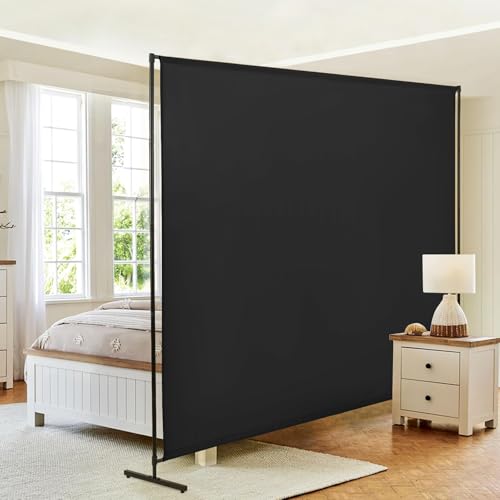
Best for: Rooms needing a custom privacy height and flexible layout but with a single, tall panel approach. Height adjustability supports technical needs like changing a sleeping nook or dressing area within a small footprint.
Why selected: The adjustable height and removable feet provide versatile placement on different floor types. The premium no-see-through fabric ensures maximum privacy, which is crucial in shared bedrooms. Caution: As a single-panel option, it covers less width than four-panel models, so plan spacing accordingly.
Kecreque 4 Panel Privacy Screen

Best for: Families wanting flexible directional layouts and assured privacy in mixed-use spaces like nurseries that double as playrooms or guest areas.
Why selected: The four-panel arrangement supports customizable shapes, enabling room zoning without permanent installation. The powder-coated metal frame and wider bases reduce tipping risk. Caution: Assembly and alignment require careful tightening to maintain stability across configurations.
SUNALLY 6FT Folding Privacy Screens

Best for: Mobile nurseries or multi-use spaces like studios and dorms where temporary room separation is needed. The rolling design ensures easy relocation and flexible layout planning.
Why selected: Lockable wheels prevent accidental movement, and the 240gsm fabric with PA coating provides strong privacy and durability. Caution: If fabric arrives with wrinkles, airing out is recommended, as some staining or creasing may occur during transit.
Buying Guide
What space and needs should guide your choice? Consider these factors:
- Privacy vs. openness: Heavier fabric and multi-panel designs offer better privacy, while lighter wood or paper-like panels create an airy feel suitable for decorative zones.
- Stability and safety: Look for wider bases and sturdy frames. For active nurseries, folding or wheeled designs with locking mechanisms reduce tipping risks.
- Space and layout: Measure room dimensions to decide whether a 4-panel setup fits your area or if a single tall panel works better for a corner partition.
- Portability: If you frequently rearrange rooms, choose foldable, wheeled, or no-drill options that are easy to move and store.
- Maintenance: Water-resistant or easily wipe-clean fabrics simplify daily care in nurseries where spills occur.
Practical tips for setup and care
- Place dividers away from doorways to minimize foot traffic tangling with the panels.
- Coordinate with nursery furniture colors to maintain a cohesive look.
- Check stability after rearranging panels to ensure no wobbling or gaps that may compromise privacy.
FAQ
- What is the best room divider for a small nursery?
A compact, lightweight 4-panel divider or a single tall panel can maximize privacy without clutter. - Are no-drill options reliable for rental spaces?
Yes, no-drill or freestanding designs are ideal for rentals, ensuring walls remain intact. - Can these dividers be used as permanent walls?
Most are designed as temporary partitions; assess stability if used as semi-permanent walls. - Which material offers the best privacy?
- Opaque fabrics (high-density polyester) provide stronger privacy than lighter materials like rice paper-style panels.
- How should I clean fabric dividers?
Wipe with a damp cloth or follow the fabric care instructions provided by the manufacturer.