Best Rosin Core Solder for Electronics: Top Picks for 2025
Choosing the right rosin core solder is essential for reliable electrical connections, whether you’re repairing a hobby project or assembling a small electronics kit. This guide highlights five widely used tin-lead rosin core wires that balance flux content, diameter, and melting point for common soldering tasks. Each product includes practical details to help you compare performance and suitability for your projects.
Summary Table of Selected Products
| Product | Brand | Cadence (Diameter) | Flux Content | Typical Use |
|---|---|---|---|---|
| MAIYUM 63-37 Rosin Core Solder Wire 0.6 mm | MAIYUM | 0.6 mm | 1.8% | Pocket-size, general electrical soldering |
| AUSTOR 60-40 Rosin Core Solder Wire 0.8 mm | AUSTOR | 0.8 mm | 2.0% | Heats evenly, suitable for larger joints |
| MAIYUM 63-37 Rosin Core Solder 0.8 mm 50 g | MAIYUM | 0.8 mm | 1.8% | Compact pack for field use |
| Kester 44 63/37 0.031” | Kester | 0.031” | RMA Rosin | Electronics work, compact tube |
| HGMZZQ 60/40 Rosin Core 0.8 mm | HGMZZQ | 0.8 mm | 2.2% | Low melting point, easy flow |
MAIYUM 63-37 Rosin Core Solder Wire, 0.6 mm

The MAIYUM 63-37 solder wire uses a tin-lead 63/37 alloy with a rosin core flux content around 1.8%. The wire diameter is 0.6 mm, making it suitable for precision work on small boards and components. With a compact 100 g gross weight, it’s convenient for portable use and field repairs. This combination delivers reliable wetting while minimizing flux splatter during soldering.
Common applications include electrical soldering on PCB traces, connectors, and wire-to-board joints where neat, clean finishes are desired. The rosin flux helps prevent oxidation during the soldering process and supports consistent joint formation. The smaller diameter is ideal for fine-pitch components, though it may require slightly longer passes for larger copper areas.
Pros: good balance of flow and ease of use, pocket-friendly size. Cons: slightly lighter flux percentage may require thorough cleaning on some tasks.
AUSTOR 60-40 Rosin Core Solder, 0.8 mm
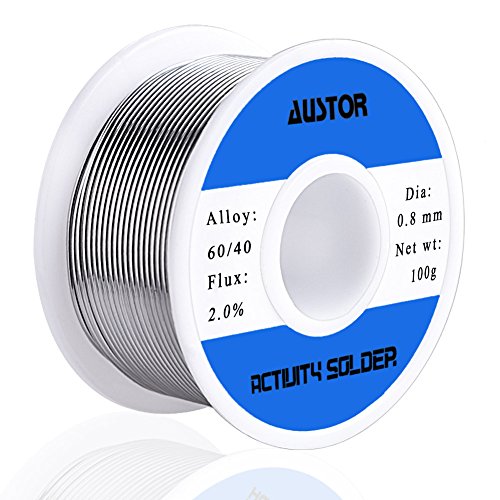
The AUSTOR solder uses a traditional Sn60/Pb40 alloy with a rosin flux content around 2.0% and a wire diameter of 0.8 mm. It offers smooth flows and even heating, which helps create reliable joints on larger or moderately dense PCB areas. The 100 g weight is typical for tradespeople who need steady supply without frequent restocking. The melting point range is around 185°C to 190°C, providing predictable work behavior for common electronics tasks.
Ideal uses include repairing power supplies, audio equipment, and hobby kits where moderate joint size is expected. The broader diameter can speed up work on less densely packed boards, reducing bridging risk. As with most rosin core solders, post-solder cleaning is recommended for optimal electrical performance.
Pros: reliable flow and even heat distribution; Cons: slightly higher flux content may require more thorough cleaning in sensitive assemblies.
MAIYUM 63-37 Rosin Core Solder Wire, 0.8 mm, 50 g
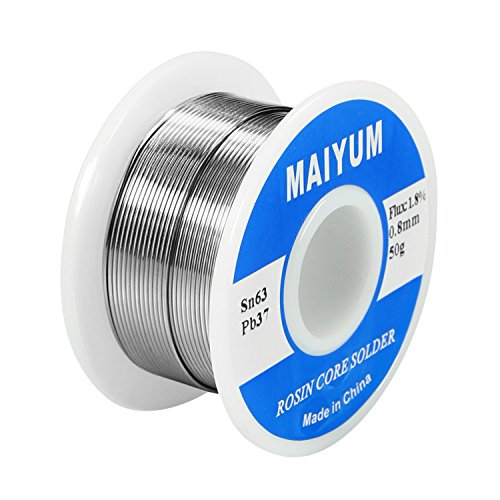
This MAIYUM variant uses 63/37 tin-lead with a rosin core flux around 1.8% and a 0.8 mm diameter in a compact 50 g spool. The smaller weight is convenient for quick repairs or field work, and the 0.8 mm size provides a balance between high current capacity and fine control for moderate-sized components. The flux helps reduce oxidation during soldering and promotes strong, reliable joints on electronics boards.
Suitable for a wide range of everyday electronics tasks, including wire-to-board connections and small connectors. If you frequently work on portable devices, this option provides compact storage without sacrificing performance. Cleaning after soldering remains a best practice to ensure long-term reliability.
Kester 44 Solder Wire, 63/37, 0.031”

The Kester 44 offers a classic 63/37 tin-lead ratio with a rosin flux (RMA) and comes in a compact one-ounce tube. At about 0.031” (0.8 mm) diameter, it suits electronics work that demands precise control and good joint formation in tight spaces. TekLine Supply repackaging indicates consistent performance and reliability across many electronics repair tasks. This is a staple choice for hobbyists and technicians alike.
Benefits include excellent wetting on copper pads and fine-pitch components. Its small tube size makes it easy to store and transport. The rosin flux requires standard post-solder cleaning to maximize corrosion resistance and electrical contact quality.
HGMZZQ 60/40 Rosin Core Solder, 0.8 mm

HGMZZQ’s 60/40 tin-lead alloy with a rosin core flux around 2.2% provides a slightly lower melting point, facilitating easier soldering of small electronic assemblies. The wire diameter is 0.8 mm, and the package weight is 50 g, making it suitable for quick projects and touch-ups. The formulation emphasizes smooth flow and strong joints, with a focus on efficient heat transfer for faster work.
This option is well-suited for hobbyists and professional technicians who need reliable performance at a reasonable price. As with other rosin-core solders, cleaning after use helps ensure long-term durability and corrosion resistance of joints.
PNECK 60/40 Rosin Core Solder, 1 lb, 1/8″ (3 mm) 450 g

The PNECK solder uses the common Sn60/Pb40 alloy with a 2% rosin core flux, designed to prevent oxidation during soldering and eliminating the need to apply extra flux. It has a low melting point around 361°F (183°C) and heats quickly and evenly, which helps minimize thermal stress on components. The 1 lb package and 3 mm diameter make it a practical choice for frequent or larger-volume soldering tasks.
Ideal for power boards, automotive electronics, or interiors of consumer devices where consistent, repeatable solder joints are essential. Cleaning after soldering improves joint longevity and reduces the possibility of flux residues affecting performance.
TOWOT 63-37 Rosin Core Solder, 1.0 mm, 50 g

TOWOT’s rosin core solder features Sn63 Pb37 with flux content around 1.8%, in a 1.0 mm diameter for faster bridging across larger joints or thicker copper traces. The 50 g packaging is compact for fieldwork or small shop use. This combination is designed to deliver smooth flow, fast soldering and robust joints with a relatively low melting point suitable for everyday electronics assembly.
Consider this option for projects that involve mid-density boards or when you need a balance between speed and control. Ensure proper ventilation during use due to rosin flux fumes and clean post-solder for best results.
AIM Solder 60/40 Rosin Core, 0.062 inch, 1 lb

AIM’s rosin core solder uses a traditional 60/40 tin-lead alloy with a rosin core flux, packaged in a 1 lb spool and a 0.062 inch (1.5 mm) diameter. The alloy composition yields reliable, predictable flow and solid joint formation on a wide range of electronics tasks, including printed circuit boards and connectors. The melting point sits around 183°C-188°C, offering a practical balance between heat input and soldering speed.
Suitable for electrical repairs on PCBs, radios, motors, and household appliances. This option is a solid all-rounder for general electronics work, with a long-standing track record in soldering performance. As with others in this category, consider cleaning flux residues to maximize longevity of connections.
Buying Guide: Key Considerations for Rosin Core Solder
- Alloy composition: The 63/37 ratio (Sn63 Pb37) offers fast wetting and strong joints on many electronics projects, while 60/40 (Sn60 Pb40) provides a slightly different melting profile that some technicians prefer for larger joints.
- Diameter and weight: Smaller diameters (0.6–0.8 mm) provide precision control for fine-pitch components, while 1.0 mm and larger can speed up soldering on moderately dense boards. Weight affects portability and how often you replace spools.
- Flux content: Rosin core flux prevents oxidation during soldering. Flux percentages around 1.8–2.2% are common; higher flux can improve flow but may require more cleaning afterward.
- Melting point and heat behavior: Lower melting points reduce thermal stress on components but may require careful temperature control to avoid cold joints. Higher melting points can be advantageous for larger joints or heat-sensitive assemblies.
- Cleaning needs: Rosin residues are generally inert but can be mildly corrosive over time if left uncleaned. Plan for post-solder cleaning in sensitive devices.
- Packaging and availability: For professionals, larger spools (like 1 lb) reduce replacement frequency; hobbyists may prefer smaller packs (50 g or less) for portability.
- Application scope: Consider whether you primarily work on PCBs, audio gear, or power electronics, and select a solder with appropriate alloy, flux, and diameter accordingly.
When selecting a rosin core solder, the decision often comes down to joint size needs, board density, and how often you solder. These five options cover common preferences, from pocket-friendly 50 g spools to larger 1 lb packages, and from finer diameters suitable for delicate work to broader diameters that speed up assembly on less dense boards. Always follow safety guidelines for leaded solders and work in a well-ventilated area.