Best Rubber Flooring for Basement: Durable, Quiet Protection for Your Space
The basement is a key area for workouts, storage, and workshops. Choosing the right rubber flooring helps protect concrete, dampen noise, and provide a stable workout surface. This guide highlights five top rubber-based flooring products ideal for basements, balancing durability, ease of installation, and user safety. Below you’ll find quick product previews, followed by detailed sections and a practical buying guide to compare options.
| Product | Type | Use Case | Notes |
|---|---|---|---|
| SUPERJARE 0.56″ Thick 12 Pcs | Interlocking Mats | Home gym, equipment protection | High-density EVA with rubber top; low odor; strong grip |
| PRAISUN 0.6″ Thick 12 Pcs | Interlocking Mats | Garage or basement workouts | Three-layer laminate; excellent shock absorption |
| AIRHOP 0.56″ Thick 12 Tiles | Interlocking Mats | Home gym, equipment protection | Dual-layer rubber top with EVA foam; secure locks |
| IncStores 3/8 Inch Thick Roll | Rubber Flooring Roll | Basement, garages, heavy equipment | Made in USA; wide rolls for edge-to-edge coverage |
| VEVOR Diamond-Plate Roll | Rubber Flooring Roll | Basement, workshops, garages | Diamond plate pattern; 3 mm thick; water-resistant |
SUPERJARE Rubber Top Interlocking Mats

These mats feature an upgraded dual-layer construction with a high-density EVA foam base and a sturdy EPDM rubber top. The rubber surface provides better floor traction and grip, reducing slipping during workouts while remaining cushioned for lifts and jumps. A notable advantage is reduced rubber odor compared with older formulations, and the soft foam layer contributes to noise and vibration damping, which can help keep a basement gym neighbor-friendly.
Flooring Inc 1/4″ Rubber Flooring Roll
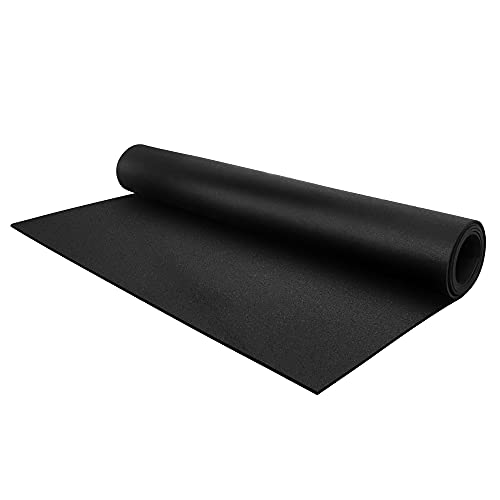
This 4’ x 10’ roll uses premium recycled rubber, offering durable, moisture-resistant protection for home gyms, sheds, and garages. It’s designed for easy trimming around walls and corners, enabling edge-to-edge coverage with minimal seams. The product emphasizes resilience against heavy equipment, tools, and daily wear, making it suitable for rooms with foot traffic and equipment movement.
Sorbus Wood Grain Foam Tile (Not chosen)

Note: This option uses EVA foam tiles with a wood-grain look and interlocking edges. While not pure rubber, it offers cushioned comfort and decorative appeal for multi-purpose basements like playrooms or home studios. It may be a viable lighter-duty option where ultra-heavy equipment is not used.
AIRHOP 0.56″ Thick Interlocking Mats

Airhop mats combine a rubber top with a dense EVA foam base in a 12-tile layout, totaling 48 square feet. They emphasize a secure interlock system to prevent shifting during workouts, with improved grip and shock absorption. The setup is straightforward, making it a practical choice for basements needing quick installation and reliable performance for weight lifting and HIIT workouts.
IncStores 3/8 Inch Rubber Flooring Roll

This 4’ x 10’ rolled rubber flooring option focuses on durability and broad coverage. The roll design minimizes seams and provides a cohesive surface that’s easy to clean and maintain. It’s well-suited to basement spaces that host heavy equipment and require long-lasting protection against scuffs, scrapes, and impact from weights and machines.
VEVOR Diamond-Plate Rubber Roll

The VEVOR rubber flooring roll features a 3 mm thick SBR rubber with a diamond-plate texture that adds grip and reduces rolling under vehicles or heavy equipment. It’s designed for multi-scene versatility—from garages to gyms—providing durable, waterproof performance and easy maintenance in basement environments where moisture control matters.
Buying Guide: Key Purchase Considerations
- Thickness and layering: For basements with heavy equipment, choose thicker mats (0.6″ or 0.56″) or roll flooring with a tough top layer to maximize impact protection and durability.
- Interlocking vs. rolls: Interlocking tiles offer modularity and easier replacement, while rolls provide edge-to-edge coverage with fewer seams. Consider room shape, budget, and installation time.
- Material composition: Rubber tops with EVA foam bases deliver good shock absorption and grip, while pure rubber mats emphasize durability and moisture resistance. Odor, cleaning, and maintenance vary by material.
- Sound and vibration: Foam and rubber composites dampen noise and vibrations, which is important for basement living spaces adjacent to other rooms or apartments.
- Moisture resistance: Basements can be damp. Look for water-resistant surfaces, especially for rolls and diamond-plate textures that minimize moisture issues.
- Edge trimming and customization: Some options offer easy trimming around walls; others rely on precise room measurements to minimize seams. Plan for cutting tools and installation time.
- Foot traffic and equipment weight: If you plan to move heavy machines or drop weights, prioritize dense rubber or high-density EVA tops to prevent tearing or indentations.
- Maintenance: Most rubber and EVA combinations are easy to wipe down. Consider stain resistance and cleaning routines to keep floors looking new.
- Installation skill level: Interlocking tiles are beginner-friendly, while rolls may require cutting and seam sealing. Factor in available tools and assistance.
This selection provides a mix of interlocking mats and rolls to suit basement gyms, workshops, and multi-use spaces. Each product aims to balance durability, comfort, and ease of installation while addressing common basement flooring challenges such as moisture, vibration, and weight-bearing needs.