Best Rubber Mats for Basement Floor: Durable, Quiet Protection for Your Space
Choosing the right rubber or rubber-top mat system can transform a basement from a cold, loud space into a functional workout area, workshop, or play zone. The mats below combine durability, grip, and easy maintenance, making them suitable for garages, home gyms, and recreational rooms. This guide highlights five top picks that balance shock absorption, moisture resistance, and simple setup.
| Product | Brand | Size / Coverage |
|---|---|---|
| ProsourceFit Puzzle Exercise Mat ½ in, 24 in x 24 in tiles (36 tiles) | ProsourceFit | 24″ x 24″ x ½” • 144 Sq Ft |
| ProsourceFit Puzzle Exercise Mat ½ in, 24 in x 24 in tiles (12 tiles) | ProsourceFit | 24″ x 24″ x ½” • 48 Sq Ft |
| SUPERJARE 0.56″ Thick 12 Pcs 48 Sq Ft Mats | SUPERJARE | 12 Pcs • 48 Sq Ft |
| PRAISUN 0.6″ Thick 12 Pcs 48 Sq Ft Tiles | PRAISUN | 24″ x 24″ • 48 Sq Ft |
| Flooring Inc 1/4″ Tough Rubber Flooring Roll (4’x10’) | IncStores | 4’ x 10’ Roll |
Across these options, you’ll find a mix of interlocking tiles with EVA foam bases, dual-layer rubber top constructions, and ready-to-roll sheets. They’re designed to protect concrete floors from impacts, reduce noise, withstand moisture, and remain easy to clean—ideal for basements used for workouts, workshops, or kids’ activities.
ProsourceFit Puzzle Mat Set — 36 Tiles
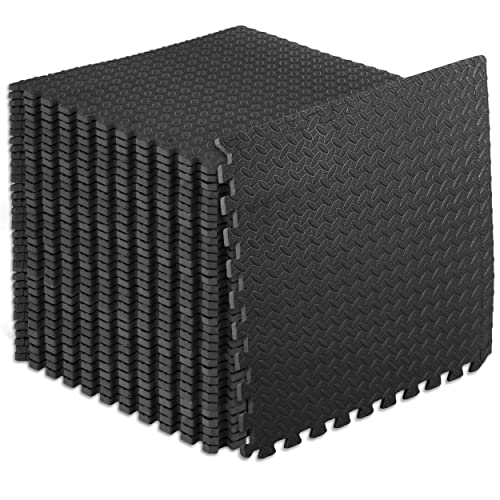
These ½-inch EVA interlocking tiles provide protective flooring for home gyms, kids’ play areas, and garages. The non-skid texture helps keep tiles in place, while the water-resistant design supports easy cleaning. The tiles connect quickly for a modular setup and disassemble just as easily for storage. Suitable for light to moderate equipment and high-traffic activity areas.
ProsourceFit Puzzle Mat Set — 12 Tiles

The ½-inch EVA interlocking tiles offer a compact, budget-friendly option for smaller basements or testing a mat system in a lower-traffic area. Like the larger set, these tiles are water-resistant and easy to clean, with a non-skid surface that helps reduce movement during workouts or kids’ activities.
SUPERJARE 0.56″ Thick Rubber Top Mats

This set features a high-density EVA foam base with a rubber top for heavy equipment support. The textured, grip-enhanced surface reduces slipping, while the cushion minimizes impact and noise. It’s suitable for weight lifting, HIIT, and general basement workouts, and is designed to minimize odor.
PRAISUN 0.6″ Rubber Top Mats

With a 0.6-inch thickness and a three-layer build (rubber top, adhesive layer, and EVA foam), these mats offer solid shock absorption and strong weight-bearing capacity. The rubber surface is water-resistant and easy to wipe clean, while the textured surface provides grip to minimize movement during workouts and high-impact movements.
Flooring Inc 1/4″ Rubber Flooring Roll
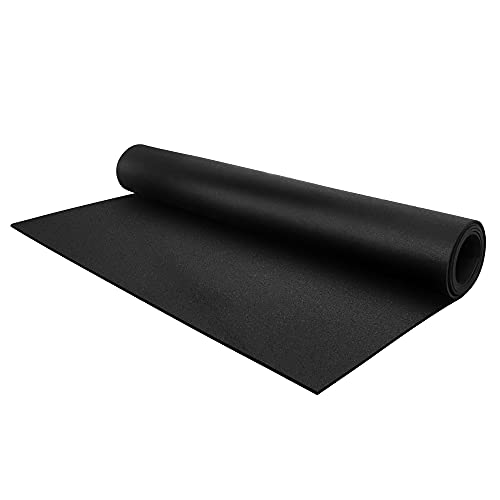
This roll provides a seamless, durable surface for entire basement areas. Made from recycled rubber, it’s designed for easy installation and long-lasting performance. Roll-out installation minimizes seam gaps, while its moisture resistance helps protect concrete floors and equipment beneath heavy use.
Buying Guide
Key considerations when choosing rubber mats for a basement floor include material composition, thickness, interlocking vs. roll formats, and your intended use. Each option below offers trade-offs:
- Material and grip: Rubber-top mats with EVA foam bases excel at weight-bearing workouts and high-traffic areas, delivering traction and vibration dampening. Foam-only tiles prioritize comfort and ease of cutting, suitable for lighter activities.
- Thickness and durability: Thicker mats (0.6″ or more) absorb more impact and reduce noise but may be heavier or bulkier to install. Lighter ½” tiles are easier to handle but provide less cushion for heavy lifts.
- Interlocking vs. roll: Interlocking tiles enable modular layouts and easier replacement of individual tiles. Rolls offer a seamless surface with fewer seams, suitable for larger, uninterrupted areas.
- Moisture and cleaning: For basements with humidity or potential moisture, choose mats with water resistance and easy cleaning surfaces. Foams with rubber tops tend to resist moisture better than plain foam.
- Usage scenarios: If you plan to move equipment frequently, tiles are practical for quick reconfiguration. If you want a large, continuous workout area, a roll may be more suitable.
- Odor and ventilation: Some rubber products may emit odors initially. Look for low-odor or SGS-certified options if air quality is a concern.
- Maintenance and durability: Consider wear from heavy weights and sharp edges. Rubber tops resist dents and tears better than sole-layer foams in intense workouts.
With these options, consumers can tailor a basement flooring system to fit budget, space, and activity level. For mixed use—workouts, kids’ play, and light garage tasks—tile systems like the ½-inch EVA interlocks offer flexibility and easy replacement. For dedicated gym space or high-impact routines, rubber-top mats with thicker profiles deliver enhanced durability and longer-term protection for concrete floors.