Best Rubber Paint for Basement Walls: Durable Solutions for Basements and Foundations
Choosing the right rubber-based or rubber-modified coating for basement walls can dramatically improve water resistance and long-term durability. This guide highlights five top options designed to seal, protect, and flex with changing temperatures and moisture. Each product page includes a summary of key features, compatibility notes, and practical tips for use in basements and foundational walls. Read on to compare membranes, paints, and sealants that help prevent water intrusion while offering flexible performance over time.
Summary Table of Selected Products:
style=”display:block;margin-top:6px;”>
| Product | Brand | Type | Ideal For | Capacity |
|---|---|---|---|---|
| Liquid Rubber Basement and Foundation Repair Sealant (5 Gallon) | Liquid Rubber | Waterproof Sealant & Crack Filler | Basements, foundations, indoor/outdoor use | 5 Gallon |
| Ames Block & Wall Liquid Rubber Waterproofer (1 Gallon) | AMES | Waterproofing Coating & Sealant | Basements & foundations | 1 Gallon |
| KILZ Basement & Masonry Waterproofing Paint (White, 1 Gal) | KILZ | Waterproofing Paint | Porous concrete/masonry walls | 1 Gallon |
| KILZ 1-Part Epoxy Acrylic Concrete & Garage Floor Paint (Slate Gray, 1 Gal) | KILZ | Epoxy Acrylic Floor Paint | Basement floors, garages, porches | 1 Gallon |
| Liquid Rubber 5-Gallon Kit + Caulk & Geotextile | Liquid Rubber | Full Waterproofing Kit | Comprehensive basement sealing projects | 5 Gallon Kit |
Liquid Rubber Basement and Foundation Repair Sealant – 5 Gallon

Liquid Rubber’s foundation sealer forms a permanent waterproof membrane designed for basement waterproofing and foundation leak repair. It offers high elasticity (up to 900% elongation) to resist active leaks and moisture. The product is positioned as a complete basement waterproofing system, capable of bonding with concrete, masonry, wood, metal, and other foundation surfaces. This makes it suitable for DIY projects as well as professional applications, including self-leveling concrete scenarios. It emphasizes flexibility across temperatures to prevent future cracking and water intrusion.
Ames Block & Wall Liquid Rubber Waterproofer (1 Gallon)
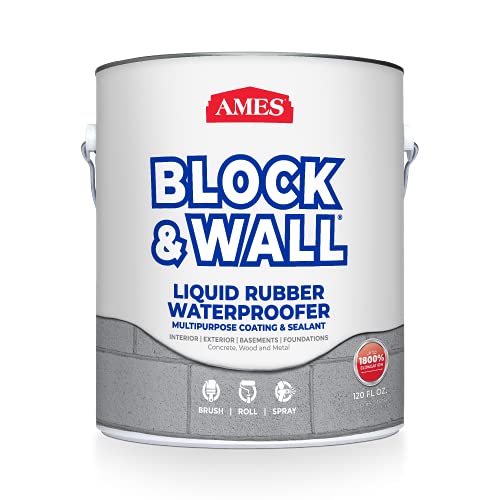
AMES Block & Wall Liquid Rubber Waterproofer is a white, ready-to-use coating designed to seal porous concrete and masonry surfaces. While marketed for basements and foundations, it serves as a flexible moisture barrier that adheres to various substrates. It is a practical choice for homeowners seeking a straightforward waterproof layer that remains flexible in changing temperatures. The product’s weight and origin notes provide context for usage and application, particularly on interior or exterior basement walls where moisture is a concern.
KILZ Basement and Masonry Waterproofing Paint (White, 1 Gal)
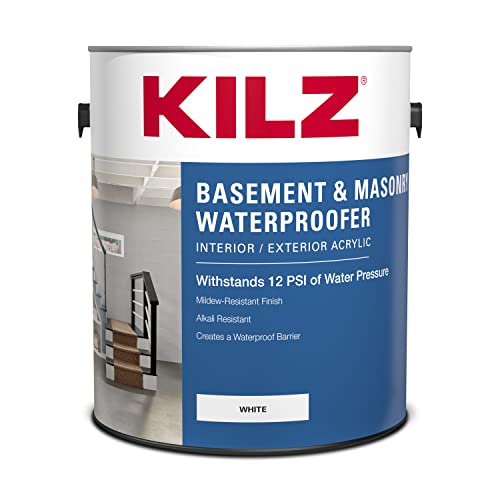
This KILZ product is formulated to waterproof and seal porous concrete and masonry surfaces both indoors and outdoors. It uses nanotechnology to form a moisture barrier while offering an alkali-resistant coating for durability. It is designed for properly prepped and cured basement walls and other masonry surfaces. The guidance specifies avoiding active leaks and certain application methods, making it important to plan for inspection and surface preparation before use.
KILZ 1-Part Epoxy Acrylic Concrete & Garage Floor Paint (Slate Gray, 1 Gal)

Designed for durability on concrete floors, this KILZ product combines epoxy and acrylic components to resist hot tire pickup, scuffing, cracking, and fading. It is suitable for basement floors, garages, porches, driveways, and pool decks. The coating promises a satin finish with long-lasting protection, and it is intended for properly prepared porous concrete, masonry, stone, and brick. Not recommended for vertical surfaces or hydrostatic conditions.
Liquid Rubber 5-Gallon Kit With Caulk & Geo Textile

This kit bundles a 5-gallon Liquid Rubber foundation sealer with a 4-pack of 10.2-ounce caulk tubes and a 4″x160′ geotextile roll. The combination is intended to support comprehensive basement sealing projects, offering both membrane protection and auxiliary materials for crack filling and moisture management. It emphasizes a complete approach beyond a single coat, reinforcing repairs in areas prone to leakage and movement.
Liquid Rubber Multi-Purpose Primer (1 Gal)

The Liquid Rubber Multi-Purpose Primer is designed to improve adhesion on concrete and wood, boosting bond strength for subsequent coatings. It’s fast-drying and easy to apply, suitable for various substrates encountered in basement projects. The primer is typically used before applying a topcoat or sealant to optimize long-term performance and minimize blistering or peeling in damp environments.
EVOLVE All Purpose Whites Latex Flat Interior Paint (5 Gal, Alabaster)
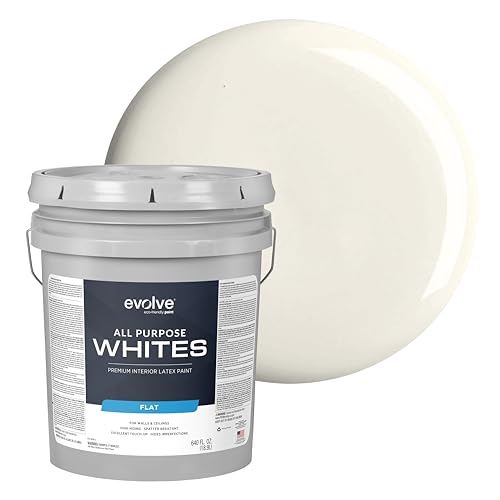
EVOLVE All Purpose Whites is a latex flat interior paint designed for walls and ceilings, offering easy touch-ups and uniform coverage. While not a waterproofing product, it can be used as a finishing coat after a waterproofing step to provide a clean, bright look to basement interiors. The product is advertised as eco-friendly with a focus on high hiding power and quick drying, suitable for frequent repaints in living or storage spaces within basements.
Buying Guide: Key Purchase Considerations
- Waterproofing vs. waterproof coatings: Determine whether you need a membrane-style sealant (more flexible, potential to fix active leaks) or a surface coating (more decorative, with moisture barrier properties).
- Surface compatibility: Check substrate compatibility—concrete, masonry, wood, metal, or a combination. Ensure the product adheres well to basement walls or foundation surfaces in your home.
- Flexibility and elongation: Look for high elongation (e.g., 900%) in sealants or coatings to accommodate movement and temperature changes without cracking.
- Crack filling vs. sealing: Distinguish products that fill occasional cracks from those that primarily seal active leaks. Some products are hybrids offering both.
- Application method and curing: Review whether a brush, roller, or spray is recommended, and plan the cure time and recoat window to minimize disruption in living spaces.
- VOC and safety: For indoor use, consider low-VOC formulas and non-toxic components, especially in occupied basements or living spaces.
- Durability and longevity: Assess expected lifespan, resistance to alkali, and resistance to humidity or freeze-thaw cycles common in basements.
- Maintenance and recoat: Some coatings require priming or a specific topcoat; verify if a primer is needed for best adhesion and long-term performance.
- Cost and coverage: Compare coverage rates per gallon and overall project cost, including primers, caulks, or textile accessories if the kit is chosen.
When choosing among these options, consider the severity of moisture issues, the area to be treated, and whether you need a primary waterproofing membrane or a finishing paint. For active leaks, a robust sealant with high elasticity is typically preferred. For cosmetic basements, a combination of a waterproofing membrane plus a finishing coat can provide both protection and aesthetics.