Best Sanding Sponges for Drywall: A Comprehensive Guide to Smooth Finishes
Choosing the right sanding sponge for drywall can dramatically affect dust control, finish quality, and time on the job. The following article spotlights top contenders that balance durability, versatility, and ease of use for American homeowners and professionals alike. Each product is evaluated for wet and dry sanding, edge access, and tolerance for joint compounds and primers. Use this guide to compare options and pick the best sanding sponge for your drywall projects.
| Product | Brand | Grit Range | Best For |
|---|---|---|---|
| Marshalltown QLT Drywall Sanding Sponge | QLT By Marshalltown | Wet/Dry sponge with abrasive and soft side | Low-dust finishing and residue removal |
| 3M Drywall Sanding Sponge 9095DC | 3M | Dual grit: Medium to Fine | Joint compound smoothing and contour work |
| Romeda 8-Pack Sanding Sponge | Romeda | 60/80/120/220 | Versatile, washable blocks for multiple surfaces |
| 3M Angled Sanding Sponge CP-042 | 3M | Fine | Crevices, corners, and detailed sanding |
| Bates- Sanding Sponge 8 pcs | Bates Choice | 120 | Durable, ergonomic grip for flat and contoured surfaces |
Drywall work benefits from sponges that combine a durable abrasive surface with a flexible, residue-removing side. The products below cover a range of needs—from compact, angled blocks for corners to larger, multi-grit sets for whole-wall finishing. Consider compatibility with wet sanding, ease of cleaning, and how well each sponge tackles joint compounds and primer coats. The selections reflect common drywall tasks in American homes and professional sites.
Marshalltown QLT Drywall Sanding Sponge Overview
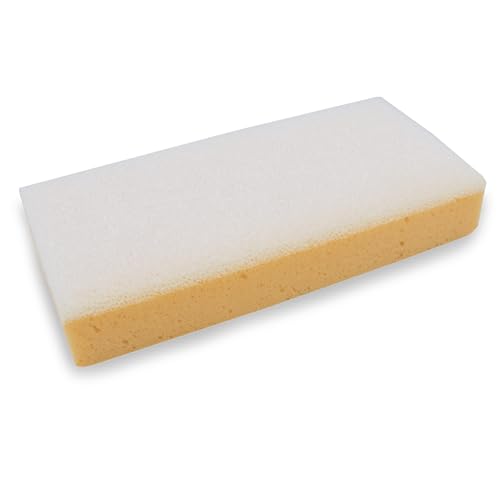
The Marshalltown QLT Drywall Sanding Sponge offers a professional-grade option for drywall sanding. Its abrasive side is optimized for wet sanding, which helps minimize dust, while the soft sponge side aids in removing residue and achieving lower-dust results on dried surfaces. This dual-function design makes it well-suited for smoothing joint compounds while controlling cleanup on the job site. The smaller size works well for contouring around irregular shapes and edges, helping to minimize gouging and creating a consistent finish.
Key considerations for this product include dust control, residue management, and the balance between abrasion and sponge flexibility. The dual-sided approach reduces the need to switch tools mid-project, potentially saving time on both cutting in joints and final passes. Depending on your project, you may pair this sponge with wet sanding techniques to achieve a refined, paint-ready surface.
3M Drywall Sanding Sponge 9095DC-NA

3M’s drywall sanding sponge features dual grit design with medium grit for material removal and fine grit for smoothing. The flexible sponge supports both flat sanding and curved contours, making it versatile for patching and finishing compound. This block is well-suited for joint compound work, helping to remove high spots without scouring the surrounding drywall surfaces.
Consider the practical benefits of a dual-grit sponge: faster progress on larger patches with the medium grit, followed by finer passes to achieve a seamless final layer. The flexibility of the sponge helps it to maintain consistent contact across uneven surfaces, which can improve the uniformity of your finish. For best results, use light pressure and a consistent motion to avoid gouges in the drywall.
Romeda 8-Pack: Versatile Drywall Sanding Sponges

Romeda’s eight-pack provides four grit levels (60/80/120/220) across multiple colors, with two blocks per grit. The design emphasizes high-density sponge materials that resist tearing and maintain shape under repeated use. These blocks are reusable and washable, aligning with budget-conscious projects and long-term use. The assortment lets you tailor your approach: roughing down patches with 60/80 grit, smoothing with 120 grit, and final passes with 220 grit for a refined surface.
Versatility stands out here: the blocks are suitable for drywall, wood finishing, metal prep, and priming surfaces. The color-coding helps keep grit organization straightforward on busy job sites. When transitioning between surfaces, clean or rinse blocks to reduce embedded dust and particles that could scratch the finish. This set is a solid all-around option for homeowners tackling multiple rooms or DIY enthusiasts finishing a basement or garage remodel.
3M Sanding Sponge Block: Extra Large Angle

This extra-large 3M sanding sponge block is designed for general sanding tasks across wood, paint, metal, plastic, and drywall. It features a fine grit on a durable, flexible foam as part of the 910PSA line. The sponge is rinseable and reusable, enabling repeated usage across multiple projects without a significant drop in performance. It’s especially helpful for large flat areas where a broad, even stroke is preferred to minimize swirl marks and maintain consistent finish quality.
When choosing a block of this size, assess the surface area you’ll cover in a single pass and whether you need more maneuverability in tight corners. For drywall, pair with light pressure and controlled strokes to gradually remove ridges and feather joint lines without thinning the paper or creating halos around patches.
3M Angled Sanding Sponge CP-042
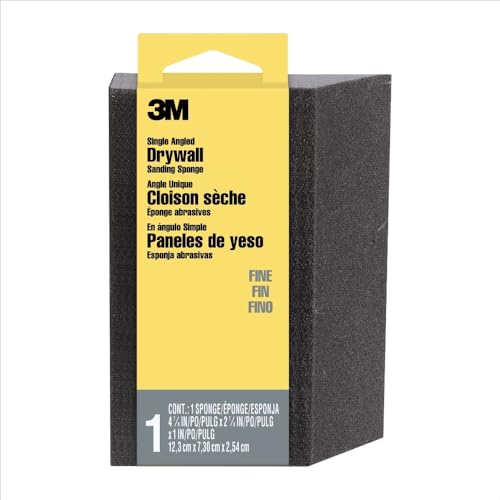
The 3M Angled Sanding Sponge excels at sanding in crevices and corners. Its fine grit is suitable for mid-to-fine smoothing of joint compounds and surface prepping before primer. The angled design makes it easier to reach tight areas around doors, window frames, and baseboards where a standard block might be less efficient. It’s washable and reusable, which supports ongoing project needs and multiple room renovations.
From a performance perspective, angled sponges are particularly useful when you want to preserve flat surfaces while targeting edges and corners with precision. For drywall professionals, this can mean fewer touch-up passes after mudding and better overall control when finishing ceilings and high walls where standard sanders struggle to reach.
Bates- Sanding Sponge 8 Pieces: Durable and Ergonomic

The Bates Choice 8-pack provides a balanced mix of flat and angled sponges, all at 120 grit. The ergonomic design focuses on comfortable handling during extended sanding sessions, a factor that reduces hand fatigue on larger drywall projects. Durable construction supports repeated use while maintaining edge integrity and consistent performance across flat and contoured surfaces. A reliable option for painters and DIYers who want a predictable, repeatable finish.
In practice, the Bates set is ideal for smoothing surfaces ahead of painting and for sanding joint compound to a uniform level. The mixed shapes help you tackle both large planar sections and smaller, contoured zones without switching tools frequently. Keep an eye on sponge wear, and rinse or replace as needed to preserve performance.
S&F Stead & Fast: 4 Grits For Wide Applications
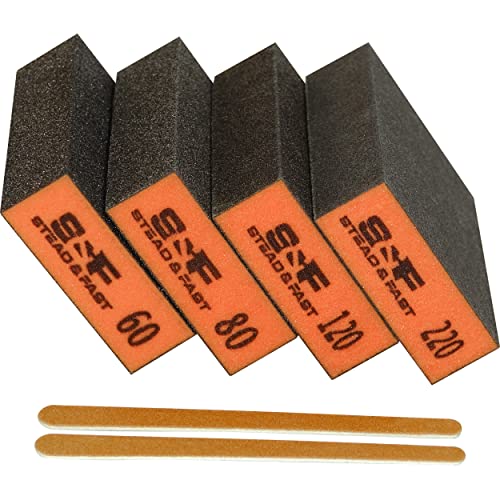
Stead & Fast offers a four-grit sanding sponge block set designed for a broad range of tasks from wood stripping to final finishing. The high-density European foam provides durability, while aluminum oxide abrasive delivers reliable cutting action across 60, 80, 120, and 220 grit. This makes the set versatile for drywall prep, woodworking, metal finishing, and surface refinishing. It’s particularly useful when transitioning between rough patches and final smoothing in one project.
When selecting this set, consider whether you need an all-purpose option that can handle finishes across multiple materials or if you primarily work with drywall. The range from coarse to fine grit means fewer tool swaps and a smoother workflow from initial mud removal to final feathering of edges.
Buying Guide: Key Purchase Considerations For Drywall Sanding Sponges
Grit range and surface finish compatibility are the core considerations. Dual-grit and multi-grit sponges save time by covering rough and fine work in a single tool set, while single-grit sponges specialize in a particular phase of the process. Wet sanding capabilities help control dust and reduce scratches, but dry sanding remains effective for rapid material removal and texture flattening.
Flexibility vs. rigidity matters for access to corners and curved surfaces. Angled sponges or blocks with ergonomic grips can significantly reduce fatigue on longer projects. If you’re tackling larger wall areas, larger blocks or blocks with soft backing will distribute pressure more evenly. For intricate trim, corners, and edges, look for angled designs or smaller, contoured sponges.
Material quality and durability influence long-term costs. High-density foam reduces tearing and maintains shape after repeated use, while durable abrasives withstand wear without rapid dulling. Writable color-coding or clear grit labeling can help keep your workflow organized on busy sites.
Wet vs dry usage is a practical decision. Wet sanding minimizes dust and can improve surface finish, but some jobs benefit from dry sanding to quickly flatten edges or feather patches. Always compare the project requirements with the sponge’s recommended usage to maximize efficiency and results.
Cleaning and reuse are important for value. Sponges that rinse clean without losing integrity can extend their lifespan between projects. Reusable options reduce waste and lower overall material costs on longer remodels or frequent drywall work.
Brand reputation and availability matter for consistent results. Trusted brands like 3M, Romeda, Bates Choice, and Marshalltown offer reliable performance and broad distribution, which helps when you need replacements or additional units for a growing project.