Best Saw Blade for Melamine: Top Picks for Clean, Precise Cuts
Melamine and veneered plywood demand blades that minimize chipping and deliver pristine edges. The following selections emphasize Hi-ATB or TiCo carbide blends, solid coatings, and precise tooth geometry to reduce tear-out on melamine, laminates, and similar surfaces. Each blade is designed for 10″ to 12″ saws with common arbor sizes, offering smooth finishes and longer edge life in cabinetmaking, cabinetry, and refinish work.
| Product | Diameter | Teeth | |
|---|---|---|---|
| Freud LU80R010 | 10″ | 80 | Hi-ATB geometry for splinter-free cuts in melamine |
| Freud LU79R010 | 10″ | 80 | Premium TiCo carbide blend with clean veneers and laminates |
| CMT P10080 | 10″ | 80 | Crosscuts with flawless finish, low kerf and plate thickness |
| Freud LU79R007 | 7-1/4″ | 60 | Hi-ATB for fine finish on melamine and veneered plywood |
| Diablo D0860X | 8-1/4″ | 60 | Perma-Shield coating for reduced gumming and longer life |
These selections cover a range of common cabinetmaking tasks, from precise face-frame cuts to fine edging on melamine laminates. The list emphasizes blades with clean edge geometry, durable carbide blends, and coatings designed to minimize heat-related residue and edge wear.
Freud LU80R010: 10″ Ultimate Plywood & Melamine Blade
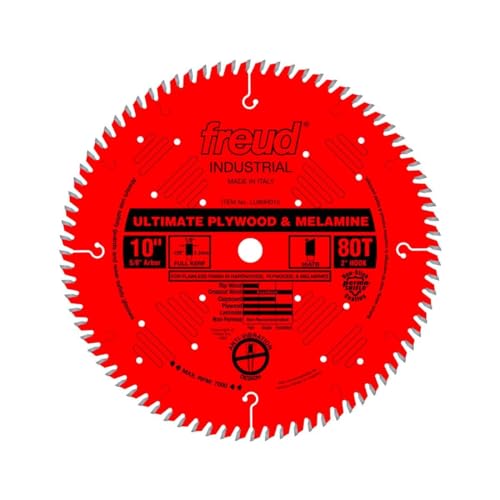
Features include a 5/8″ arbor, 10″ diameter, 80 teeth, and a Hi-ATB grind. The TiCo Hi-Density carbide crosscutting blend supports maximum performance and edge retention, while the Hi-ATB tooth design minimizes splintering on melamine and veneer. This blade is designed for clean, finish-ready cuts in plywood and laminated surfaces, making it a strong all-around choice for cabinetry work where edge quality matters.
Freud LU79R010: Premium Melamine Crosscut Blade

Designed for ultra-smooth, chip-free edges on veneered plywood, melamine, laminates, and crosscuts in solid wood. This blade uses a TiCo carbide blend with a Hi-ATB tooth geometry to reduce tear-out and provide consistent, polished edges. It is well-suited for finish carpentry and cabinetmaking, offering durable performance across challenging melamine substrates.
CMT P10080: Melamine & Ultra Finish Saw Blade

This blade targets crosscuts with a 0.094″ kerf and 0.063″ plate, delivering a precise cut with minimal tear-out on melamine and laminates. The 80-tooth configuration and 10″ diameter work well for smooth edge finishes in cabinetry, with an angled cut optimization for two-sided laminates and veneer materials.
Freud LU79R007: 7-1/4″ Thin Kerf Melamine Blade

With a 7-1/4″ diameter and 60 teeth, this blade prioritizes a thin kerf for less material waste and smoother finishes on melamine and plywood. The Hi-ATB grind and premium TiCo carbide blend help maintain edge integrity during high-precision cuts, making it a good option for fine finish work and trims where a smaller blade is required.
Freud LU97R012: 12″ Double-Sided Laminate/Melamine Blade

This blade features a 1″ arbor, 12″ diameter, and 96 teeth with a TiCo Hi-Density carbide laminate blend. The triple chip grind (TCG) tooth design and a negative hook angle are tailored for long life in production settings, particularly when working with laminate sheets and melamine panels in higher volumes.
Buying Guide: Key Considerations For Melamine Blades
- Tooth geometry: Hi-ATB (High Alternate Top Bevel) blades reduce tear-out on delicate melamine and veneered surfaces by providing a shearing action that minimizes chipping. For laminated two-sided sheets, a blade with a refined ATB or TCG grind helps keep the finish clean.
- Kerf width: Thin-kerf blades waste less material and require less power, reducing heat buildup that can cause edge chipping. For finish work, a kerf around 0.087″ to 0.098″ is common; heavier kerfs can provide stiffness for demanding cuts but may cut slower.
- Carbide blend: TiCo Hi-Density carbide blends offer a balance of edge retention and toughness, which is beneficial for finishing tasks on melamine and laminates. Premium blends extend blade life under repeated cuts in hard surfaces.
- Coatings: Perma-Shield or similar non-stick coatings reduce gum buildup and heat, which helps maintain cut quality and blade longevity on melamine and other composites.
- Diameter and arbor: Ensure the blade matches your saw’s diameter and arbor size (common options are 10″ with 5/8″ arbor or 12″ with 1″ arbor). If your saw supports multiple blades, consider a versatile selection that covers 7-1/4″ to 12″ tasks.
- Application specificity: Some blades are optimized for veneer cutting, others for laminates or pure melamine. If your primary project involves melamine panels, prioritize blades marketed for melamine and veneered plywood with clean finish claims.
- Maintenance: Keep blades clean and free of resin buildup. A dull blade with dings increases tear-out risk. Periodic inspection helps maintain consistent edge quality over time.
- Safety considerations: Always use proper blade guards, feeds, and PPE. Verify compatibility with your saw’s safety features, especially when using higher tooth counts for delicate materials.
When selecting a melamine blade, align the blade’s design with the exact material you typically encounter—melamine laminates, veneered plywood, or solid wood with lamination. The blades listed here cover a spectrum from 7-1/4″ to 12″ diameters and 60 to 96 teeth, offering options for finish quality, production efficiency, and finish carpentry tasks. For most hobbyists and professionals focusing on clean melamine edges, blades with Hi-ATB geometry, TiCo carbide blends, and protective coatings tend to perform best across common sheet materials.