Best Saw Blades to Cut Epoxy: A Practical Guide for Clean, Safe Results
Epoxy resin is prized for its strength and clarity, but cutting it requires choosing the right blade to prevent chipping, heat build-up, or surface damage. The following guide reviews five blades well-suited for epoxy and related plastics, metals, and composites. Each option balances kerf width, heat resistance, and tooth design to deliver smooth cuts with manageable maintenance.
Product Quick Reference
| Product | Brand | Best For | Key Advantage |
|---|---|---|---|
| FOXBC 10-Inch Saw Blade 100-Tooth TCG | FOXBC | Thin and thick epoxy sheets, aluminum and non-ferrous metals | High-density tungsten carbide for durability |
| Casaverde 2pc/Lot 4 in Super Thin Diamond Porcelain Saw Blades | Casaverde | Porcelain, ceramic, dense plastics | Diamond segments for tough materials |
| CMT 222.080.10 Industrial Plexiglass And Plastic Saw Blade | CMT ORANGE TOOLS | Plexiglass, acrylics, plastics | Smooth finish with anti-melt performance |
| WHIRLWIND USA LSS 7 Inch Diamond Blade | WHIRLWIND USA | Concrete, stone, masonries; tough plastics | Hot-pressed diamond density for rigidity |
| WEN BL1080 10-Inch 80-Tooth Carbide-Tipped | WEN | Wood and composite materials; occasional plastics | Ultra-fine kerf for clean, precise cuts |
FOXBC 10-Inch Saw Blade 100-Tooth TCG for Aluminum and Non-Ferrous Metal Cutting
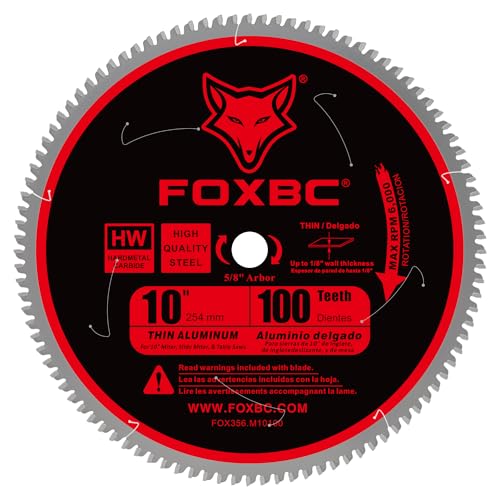
The FOXBC blade is a 10-inch, 100-tooth TCG (tip geometry) blade engineered for cutting aluminum and other non-ferrous metals. Its thin kerf of 0.095 inches minimizes material removal in a single pass, which helps reduce heat generation when cutting epoxy composites and other plastics. The 5/8-inch arbor is common on many miter and chop saws, making it a flexible choice for shops that work with a variety of epoxy and metal materials. The carbide composition provides wear resistance and long blade life, which is beneficial when cutting reinforced epoxy resins or coated plastics that can dull standard steel blades quickly.
Application notes: Use with slow-to-moderate feed rates to keep heat in check; avoid aggressive cutting in very thick epoxy sections that can heat rapidly. The blade excels in making clean cuts on thin to medium-thickness aluminum and similar materials, which translates well for clean edges on certain epoxy composites used in hobby and light industrial projects.
Casaverde 2pc/Lot 4 in Super Thin Diamond Porcelain Saw Blades
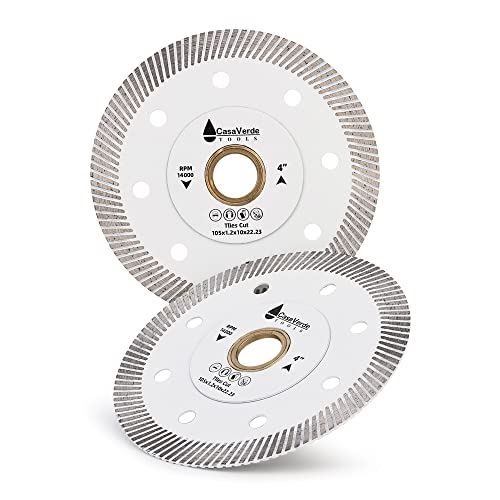
Casaverde offers a compact diamond blade option designed for dry or wet cutting. While marketed for porcelain and dense ceramics, the diamond segment construction makes these blades effective for certain epoxy-based composites and hard plastics that resemble ceramic hardness. With a 10mm rim height and a 1.2mm segment thickness, the blade provides a low kerf and steady cut geometry that can help minimize heat buildup and edge chipping in epoxy sheets or panels with tough coatings. The 7/8″-5/8″ arbor compatibility supports a range of small- to mid-size saws, which is convenient for tabletops or benchtop cutting setups used for epoxy projects.
Practical tip: When cutting epoxy with a diamond blade, maintain water cooling if using a wet-cut process, and avoid dry-start sparks by pre-scoring the cut line on thick epoxy to guide the blade.
CMT 222.080.10 Industrial Plexiglass and Plastic Saw Blade

The CMT Plexiglass and Plastic blade is purpose-built for cutting plastics such as Plexiglass, acrylics, and other sheet plastics commonly used in epoxy-based fabrication. Its design emphasizes a smooth finish with minimal melting, which is crucial when slicing epoxy resin panels that can warp or become gummy with heat. With a 0.110 kerf and a 0.087 plate thickness, this blade reduces resistance and preserves edge integrity, helping to deliver clean, glass-smooth edges on epoxy panels or overlay plastics. The 5/8-inch bore matches standard saws, making it a straightforward upgrade for epoxy-focused projects.
Applications include trimming plastic enclosures, cutouts for epoxy countertops, and clean-through cuts in laminated resin materials where heat management and edge quality are priorities.
WHIRLWIND USA LSS 7 Inch Diamond Blade

The WHIRLWIND USA LSS 7 Inch Diamond Blade features a diamond segment design optimized for hot-press and high-density diamond midsections. While marketed for stone and masonry, its diamond segments offer strong performance on dense plastics and epoxy composites that behave similarly to hard ceramics under cutting stress. The 10mm segment height and robust arc geometry provide steady cutting action with reduced blade drift, which is beneficial for maintaining edge quality on epoxy sheets or filled resins. Dry or wet cutting capability expands its versatility in workshop environments where moisture control varies.
Usage guidance: For epoxy cutting, ensure the workpiece is well clamped and consider a gentle feed rate to minimize heat and edge fraying. This blade is well-suited for precision cuts in thick epoxy blocks or slabs used in prototyping and manufacturing settings.
Buying Guide: Epoxy Cutting Blade Considerations
- Material compatibility: Epoxy and resin composites vary in hardness. Look for blades with carbide tips or diamond segments to withstand the abrasive nature of epoxy fillers and reinforcing fibers.
- Kerf width: A thinner kerf reduces material removal and heat generation, helping prevent softening or gumming of epoxy edges. However, very thin kerfs may wear faster in tough resins; balance with blade durability.
- Tooth geometry and grit: Finer teeth yield smoother edges on epoxies and plastics, while coarser teeth can remove material quickly but risk chipping the surface. For epoxy, a mid-range tooth count with polished rake angles can yield cleaner cuts.
- Arbor compatibility: Check the bore size (commonly 5/8 inch) and ensure your saw’s arbor matches. Adapters are available if needed, but using the correct arbor preserves blade integrity.
- Wet vs dry cutting: Wet cutting helps dissipate heat and reduces edge melting in plastics and epoxy. If your saw supports water cooling, prefer damp-cut blades or damp-cut practices for longer life and cleaner edges.
- Blade life and maintenance: Epoxy and reinforced plastics can dull blades faster depending on fillers and regrind. Carbide-tipped and diamond blades generally offer longer life under mixed-use conditions.
- Safety and airflow: Cutting epoxy releases fine dust and particles. Use a dust collection system or shop vacuum and wear eye and respiratory protection during operation.