Best Reciprocating Saw Blades for Aluminum: Top Metal Cutting Blades
Choosing the right sawzall blade for aluminum can improve cuts, reduce heat buildup, and extend blade life. This guide reviews five proven options designed to cut aluminum and other metals efficiently, with attention to blade durability, tooth design, coating, and vibration control. Each blade is evaluated for performance, compatibility, and value to help American DIYers and professionals select the best blade for aluminum tasks.
Summary of chosen products
| Product | Brand | Type | Key Benefit |
|---|---|---|---|
| DW4813 | DEWALT | Bi-metal 6″ 24 TPI | Durable, U.S.-made blade with long life |
| DS0608CF10 | Diablo | Carbide Teeth 6″ 8 TPI | Carbide-tip durability for thick metal |
| R678HM | EZARC | Carbide 6″ 8 TPI | 50x life vs bi-metal, tough metals |
| DS0908CF | Diablo | Carbide Teeth 6″ 8 TPI | Extreme metal cutting, high carbide edge |
| RM618 | BOSCH | Bi-metal 6″ 18 TPI | Thin-kerf for clean cuts in sheet metal |
DEWALT Reciprocating Saw Blades, 6-Inch 24 TPI

DEWALT’s DW4813 blades use bi-metal construction that blends spring steel with high-strength teeth, delivering flexibility and durability for aluminum and other metals. The 24 TPI configuration is optimized for clean, fast cuts through thin to medium gauge aluminum without excessive heat buildup. Manufactured in the U.S. with global materials, these blades emphasize a robust cutting edge and longevity.
Diablo Steel Demon Carbide 6″ 8 TPI Blades

Diablo DS0608CF10 blades feature carbide-tipped teeth and a Perma-Shield coating to resist heat and gumming. The 8 TPI tooth geometry is designed for clean, precise cuts in medium metal applications, with an oversized blade body that reduces vibration for straighter results. This combination supports aluminum and other metals where heat management matters.
EZARC Carbide Reciprocating Blade R678HM Endurance
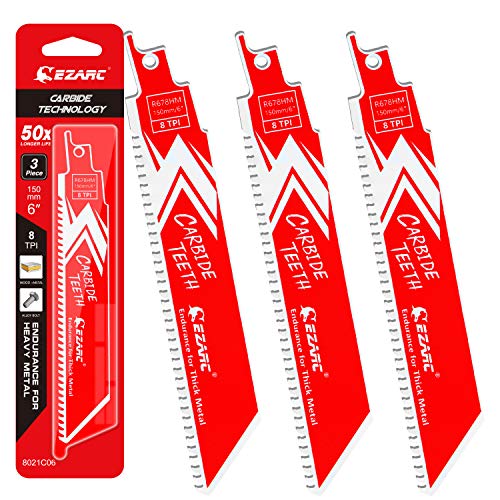
EZARC’s R678HM uses carbide technology intended to deliver up to 50x longer life than traditional bi-metal blades. Its 8 TPI design targets tough metals, including high-strength alloys, stainless steels, and other hard materials. The blade is engineered for easy cuts in demanding applications, offering improved durability and cutting performance when aluminum is involved.
Diablo Steel Demon 6″ Caride Teeth DS0908CF

This Diablo blade is designed for extreme metal cutting with a TiCo Hi-Density carbide edge. Its Perma-SHIELD non-stick coating helps resist heat and prevent gumming, while the enhanced carbide tip connection offers strong impact resistance. It is suitable for thick aluminum sections and other hard metals that require robust carbide performance.
EZARC Bi-Metal Cobalt Sabre 6″ 14TPI R626PM+ (5-Pack)

EZARC’s cobalt-infused blades provide higher heat resistance for heavy metal cutting, with a hard cobalt edge designed to maintain sharpness when cutting sheet metal, metal pipes, and profiles. The 6-inch 14TPI configuration offers a balance of fast cutting and fine finishes, particularly useful for aluminum sheet and mild steel tasks.
BOSCH RM618 6-Inch 18T Metal Cutting Blades
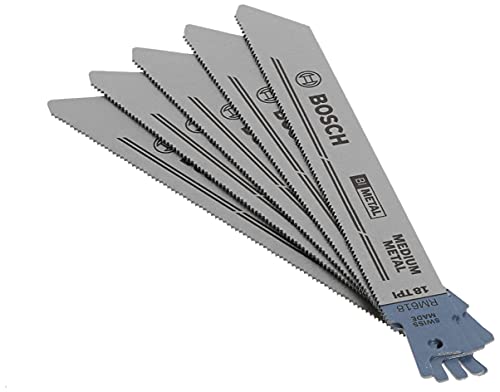
BOSCH RM618 blades are designed for sheet metal cutting with a thin-kerf body and bi-metal construction. The 18 TPI tooth configuration reduces snagging and provides cleaner cuts in ferrous and non-ferrous metals, including aluminum. They are well-suited for professional metal fabrication tasks where precision matters.
Buying Guide: Key Considerations When Choosing Aluminum-Cutting Blades
- Tooth geometry: Higher TPI blades (e.g., 18 TPI) deliver smoother cuts in thin aluminum, while lower TPI blades (e.g., 8-10 TPI) remove material faster in thicker aluminum but may roughen surfaces.
- Carbide vs bi-metal: Carbide-tipped teeth last significantly longer in hard metals and alloys but come at a higher upfront cost. Bi-metal blades provide more flexibility and are often sufficient for general aluminum work.
- Coating: Perma-Shield or similar non-stick coatings reduce heat buildup and gumming, improving life and performance in aluminum cutting.
- Blade body and vibration: Oversized or reinforced blade bodies help minimize vibration, yielding straighter cuts and better control when cutting aluminum profiles.
- Thickness and thickness tolerance: Thin-kerf blades minimize material waste and require less power, which is helpful when cutting aluminum in portable tools.
- Application range: Consider whether the blade is optimized for sheet metal, pipe, or structural aluminum, as tooth design and blade strength vary with application.
- Tool compatibility: Confirm your reciprocating saw uses standard 1/2 inch or 1/4 inch shank blades and matches the blade length (commonly 6 inches) for best performance.
Selecting the right blade depends on the aluminum task at hand—from thin sheet metal to thick profiles. Carbide blades excel in hard alloys and repeated cuts, while bi-metal options offer dependable performance for typical aluminum projects. Coatings and blade geometry further influence heat management and cut quality, so evaluate both the material and the environment where the tool will be used.