Best Sealant for Gas Pipe: Top Picks for Safe, Leak-Free Joints
Answering the question, the best sealants for gas pipe joints are non-hardening, soft-set products that remain pliable, resist vibration, and are safe for potable systems when applicable. This guide highlights five reliable options and who they’re best for, from high-vibration environments to simple residential gas line work. Each product is evaluated for compatibility with metals and plastics, ease of breakout, temperature range, and potential cautions to consider before buying. The following table summarizes the featured products and their key strengths for quick comparison.
| Product | Best For | Notes |
|---|---|---|
| RectorSeal No. 5 25790 | Soft-setting, potable water seals | Lead-free, metal-free, easy breakout |
| RectorSeal Tru-Blu 31631 | High vibration and thermal cycling | Fast-dry, PTFE enriched |
| RectorSeal No. 5 25631 | Soft-setting, lead-free for general use | Contains no metal; easy breakout |
| Gasoila Soft-Set | Versatile metals and plastics, extreme temps | Wide temperature range; non-hardening |
| RectorSeal T Plus 2 23710 | Non-hardening, PTFE enriched use | Made in USA |
Buyer note: for gas line work, prioritize non-hardening, leak-preventing formulas that resist vibration and temperature changes. Consider whether you need PTFE enrichment or metal-free formulations, and whether a faster or slower dry time better fits the installation scenario.
RectorSeal No. 5 25790 Pipe Thread Sealant

Best for potable water systems and general threaded connections that require a soft-set, non-hardening sealant. This formula lubricates and protects threads while allowing easy breakout without thread damage. It contains no metal and is suitable where metal-free performance matters. Best for quieter, maintenance-friendly joints in residential or light commercial gas-related piping where metal contamination must be avoided. Caution: ensure the sealant remains within its container and does not dry out before application.
RectorSeal Tru-Blu 31631 Pipe Thread Sealant

Best for high-vibration environments and thermal expansion/contraction scenarios. This fast-dry, PTFE-enriched sealant offers robust performance where joints experience frequent stress or movement. It’s a good choice for metal-to-metal connections in gas lines subject to ambient temperature shifts. Limitation: the fast-dry nature may not suit long assembly windows where adjustments are needed.
RectorSeal No. 5 25631 Pipe Thread Sealant

Best for lead-free, metal-free applications where safe breakout is a priority. This version mirrors the soft-set, slow-drying characteristics of RectorSeal No. 5 while explicitly avoiding any metal content. Choose this if your project requires a potable-water-friendly, non-metal sealant with dependable lubricating properties. Caution: verify compatibility with any pre-existing coatings or tapes on joints.
Gasoila Soft-Set Pipe Thread Sealant

Best for metals and plastics across a broad temperature range. This non-hardening paste resists leakage under vibration and pressure changes, making it ideal for both plumbing and HVAC projects, including gas lines in controlled environments. It remains pliable from -100°F to 600°F, which helps in outdoor or exposed installations. Limitation: its thick viscosity may require more effort to apply in tight threading spaces.
RectorSeal T Plus 2 23710 Pipe Thread Sealant
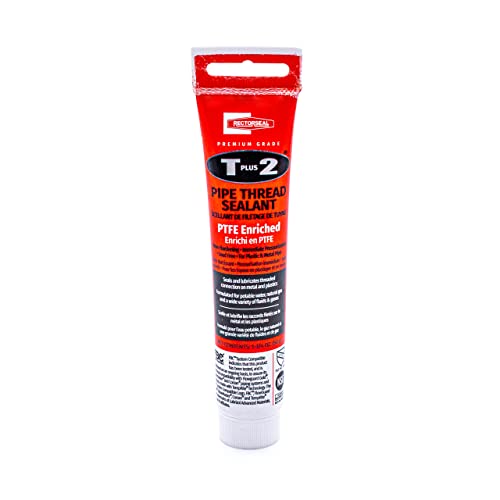
Best for non-hardening, PTFE-enriched needs with synthetic fibers for added strength. This product is suited for regular threaded connections that require dependable sealing with easy disassembly. It’s a good pick where metal-free formulation and PTFE enrichment are desired. Caution: not all installations benefit from fiber-reinforcement; assess whether plain soft-set options suffice.
Buying Guide
What to consider when choosing a gas-pipe sealant:
- Non-hardening vs. hardening: For gas lines that may require future disassembly, non-hardening formulas ease maintenance.
- Metal content: Metal-free options reduce contamination risk in potable-systems and certain regulatory contexts.
- PTFE enrichment: PTFE can improve performance in high-mibration or high-temperature scenarios; weigh the need for friction reduction and chemical resistance.
- Temperature range: Extreme environments benefit from seals that stay pliable from very cold to very hot conditions.
- Application window: Some products cure or set faster; ensure your work pace aligns with the product’s dry time.
- Compatibility: Verify compatibility with metals (copper, steel) and plastics (PVC, CPVC, ABS) present in the piping system.
- Breakout ease: If future maintenance is anticipated, choose a formulation that offers easy thread breakout without damage.
Frequently Asked Questions
- What type of sealant is best for gas pipes?
Non-hardening, soft-set sealants are typically preferred because they seal tightly while allowing easy disassembly without damaging threads.
- Should I use a metal-free sealant for gas lines?
Metal-free options are advantageous when contamination must be avoided or when joining potable-water capable systems.
- What does PTFE enrichment do?
PTFE reduces friction and improves performance under vibration and thermal cycling, beneficial in dynamic piping environments.
- Are there seals suitable for extreme temperatures?
Yes, products like Gasoila Soft-Set cover a wide range (-100°F to 600°F) for harsh conditions.
- Can these sealants be used on plastics like PVC or CPVC?
Many are compatible with plastics, but always check the product features for specific plastic compatibility.
- Is a faster-drying sealant better?
Faster-drying seals can speed up installation but may reduce adjustment time. Choose based on project needs.