Best Sealer for Concrete Patio: Top Picks for Long-Lasting Protection
Answering common questions about protecting concrete patios, this guide highlights five top sealers that provide durable water resistance, color enhancement, and lasting protection against freeze-thaw, salt, and wear. Best for outdoor patios, driveways, and walkways, these selections fit DIY projects and professional jobs alike. The table below compares core details to help you choose quickly.
| Product | Finish | Best For | Key Benefit |
|---|---|---|---|
| MasonryDefender Deep Penetrating Sealer | Clear, breathable | New or unsealed concrete | Invisible protection, water beading |
| Armor AR350 Low Gloss Wet Look | Low gloss, wet look | Color enhancement on pavers & concrete | Drastic color enhancement with durable finish |
| McKinnon Concrete & Paver Sealer | Semi-gloss wet look | Stone, brick and concrete surfaces | Rich, natural-looking color depth |
| MasonryDefender Stamped Concrete Sealer | Clear satin | Stamped or stained concrete | Cleans, protects without altering color |
| DOMINATOR Concrete Sealer | Natural look, zero sheen | Driveways and pavers | Penetrating protection with no film |
MasonryDefender Concrete Sealer — Deep Penetrating Water Repellent
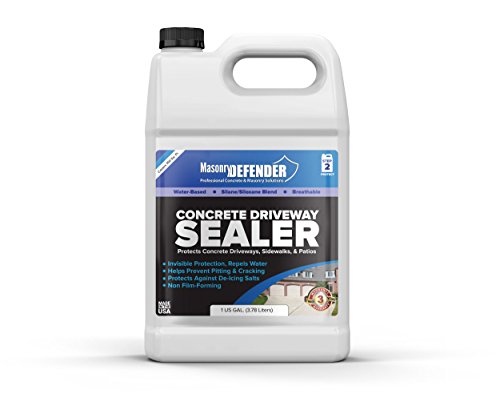
Best for: New or lightly sealed concrete surfaces on patios and walkways. This deep-penetrating sealer uses silane-siloxane technology to repel water while allowing the concrete to breathe, preventing moisture-related damage. It helps resist pitting, cracking, salts, freeze-thaw cycles, and efflorescence stains. Choose this if you want a clear, non-glossy finish that preserves the natural look of concrete and provides durable outdoor protection.
Why selected: The clear, breathable film blocks water ingress without changing color. Suitable for driveways and patios where a low-profile appearance matters. A caution: water beading indicates effectiveness, but maintenance may be needed after multiple seasons of heavy wear.
Armor AR350 Low Gloss Wet Look Concrete Sealer

Best for: Exterior concrete and pavers requiring noticeable color enhancement. This professional-grade, solvent-based sealer produces a dramatic wet look, darkening surfaces and providing long-lasting protection. It is well-suited for patios and walkways where a richer appearance is desired and where surfaces experience foot and light vehicle traffic.
Why selected: The product offers a strong color boost and durable finish that resists UV, water, and abrasion. Limitation: being solvent-based, it may require proper ventilation and cleanup; not ideal for indoor use or areas needing a natural, matte finish.
McKinnon Concrete & Paver Sealer — Semi-Gloss Wet Look

Best for: Professional-grade sealing on concrete, pavers, brick, and natural stone for outdoor areas like patios and pool decks. It provides a semi-gloss wet look that deepens color and adds a durable protective coating accommodating outdoor UV and weather exposure.
Why selected: It’s UV-resistant and suitable for both indoor and outdoor use, offering a balance between aesthetic enhancement and long-term protection. Limitation: a higher gloss level may not suit all design preferences; test a small area first.
MasonryDefender Stamped Concrete Sealer — Clear Satin

Best for: Decorative concrete with stamps or color stains. This clear satin finish adds a durable protective layer without changing the color of stamped surfaces, helping preserve the look of your patio or walkway.
Why selected: It guards against color fade and provides a satin sheen that enhances texture. Caution: the satin finish will be visible; ensure it aligns with your design goals for the space.
DOMINATOR Concrete Sealer — Natural Look, Water-Based

Best for: Driveways, pavers, and surfaces where a natural look and penetrating protection are preferred. This water-based sealer bonds below the surface with silane-siloxane technology to prevent cracking, spalling, and staining without leaving a film.
Why selected: It provides durable, invisible protection that won’t peel or yellow. Limitation: because it is water-based, coating thickness and recoat intervals may influence long-term protection; follow recommended reapplication timing for best results.
Buying Guide: Key Considerations For Concrete Patio Sealers
- Finish preference: Do you want a clear, satin, or glossy look? Affects aesthetics and maintenance needs.
- Surface material: Concrete, stamped concrete, pavers, or natural stone; some sealers are formulated for specific textures.
- Water behavior: Do you need a penetrating, breathable seal or a surface film? Penetrating sealers prevent moisture ingress while preserving texture.
- UV and weather resistance: Outdoor patios demand UV stability to avoid color fade and degradation.
- Indoor vs outdoor use: Some products are optimized for exterior use; avoid indoor-only formulas for outdoor patios.
- Ease of application: DIY-friendly rollers and sprayers vs. professional-grade methods.
- Recoat frequency: Some sealers require reapplication every few years; consider maintenance intervals.
- Safety and VOCs: Check ventilation needs and environmental impact, especially for enclosed spaces.
Frequently Asked Questions
- Q: Do penetrating sealers prevent all water damage? A: They repel water at the surface and inside the pores, reducing moisture-related damage but cannot stop all water exposure in extremely conditions.
- Q: Can I apply a clear sealer over an existing color-enhancing sealer? A: In many cases, yes, but test a small area first to confirm compatibility and finish. Some products require re-priming.
- Q: How long should patio sealers cure before use? A: Cure times vary; follow product guidelines. Typically 24 to 48 hours before light traffic and longer before heavy use.
- Q: Is a gloss finish better for durability? A: Durability depends on formulation; gloss sealers can look more protective but may require more frequent maintenance in high-traffic areas.
- Q: Should I seal stamped concrete differently from plain concrete? A: Yes. Stampable or color-treated surfaces often require sealers that protect color and texture without causing gloss uniformity.
- Q: Can sealers help with efflorescence? A: Some formulations resist efflorescence through moisture control, but treatment may require cleaning and moisture management beforehand.