Best Smallest Portable ACs for RVs That Deliver on Comfort
Finding a compact, efficient cooling solution for RV living spaces can be a challenge. The following 5 portable air conditioners are among the smallest and most versatile options for RV use, offering built-in dehumidification, adaptable modes, and easy mobility. Each product below is selected for portability, cooling performance, and RV-friendly features like lightweight design, multiple operating modes, and simple installation. Use this guide to compare compact units suitable for tight RV spaces without sacrificing comfort.
Summary Of Chosen Products
- Antarctic Star Portable Air Conditioner 8,000 BTU — Compact, 3-in-1 (cool/dehumidify/fan) with remote and wheels.
- EnjoyCool Portable Air Conditioner for Camping — Ultra-light, 14 lbs, 2380 BTU cooling, ideal for small RV areas.
- InhuiVolt Portable Air Conditioner — 14.3 lbs, compact tent/RV unit, 89°F to 75°F cooling in cramped spaces.
- EUHOMY 8,000 BTU Portable AC — 3-in-1 with easy install and washable filter; compact dimension.
- Countrymod 12V DC RV Air Conditioner — 10,000 BTU with inverter design and ultra-low noise for mobile use.
Antarctic Star 8,000 BTU Portable AC for RVs

The Antarctic Star 8,000 BTU portable unit is designed for rooms up to 350 sq ft with a compact footprint. It combines cooling, dehumidification, and a fan in one device, and includes a 24-hour timer for scheduled cooling. Its inverter technology helps reduce noise and energy use, while built-in handles and 360° wheels support easy repositioning around an RV interior. The unit supports a broad temperature range from 62ºF to 86ºF, making it adaptable to varying RV climates. A remote control and a washable filter simplify daily use and maintenance.
Key considerations for RV use: Size and weight remain manageable for mobile setups. The 350 sq ft capacity is generous for many RV living areas, though positioning near a window or vents may influence efficiency. The 55 dB operating level is typical for portable units and helps minimize campground disturbances.
EnjoyCool Portable Air Conditioner for Camping
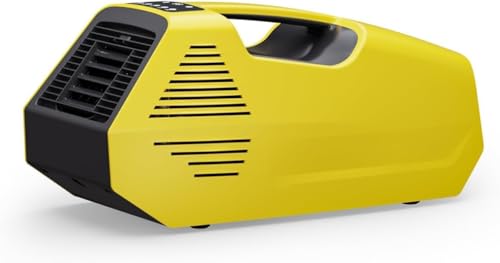
EnjoyCool emphasizes ultra-portability. This 14-pound unit offers rapid cooling for small spaces up to 43 sq ft, which makes it well-suited for compact RV cabins or sleeping pods. It showcases a 2380 BTU cooling capability, a simple touch control panel, and four modes (Strong, Cooling, Sleep, and Fan). The compact design and ergonomic handle support effortless transport between the cab, living area, and sleeping quarters. While it’s built for basic cooling, it excels where weight and space are at a premium in RV life.
RV balance: It’s ideal as a supplemental unit or for very small nooks rather than a full-room replacement. Power consumption is a practical factor for off-grid or battery-based setups, and this model’s modest cooling range aligns with limited space cooling needs.
InhuiVolt Portable AC For Tents And RVs
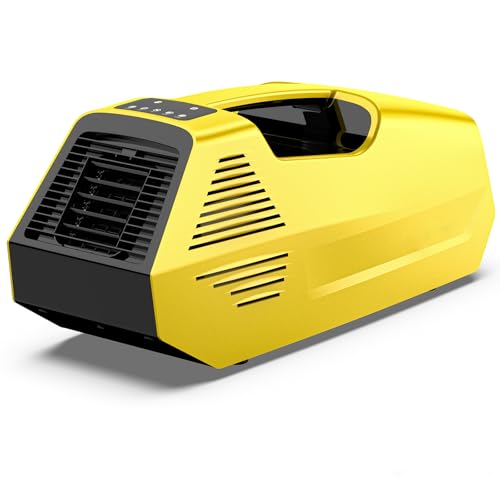
InhuiVolt markets a compact, travel-friendly unit designed for outdoor and small interior cooling in RVs. At about 14.3 pounds, it features a lightweight form factor with a user-friendly ergonomic handle. It promises rapid cooling in tight spaces (up to 43 sq ft), with a temperature range from 60.8°F to 89.6°F. An adjustable air vent and low noise operation help maintain comfort without disturbing other RV occupants. This unit is suitable as a supplementary cooler for sleeping areas or screen rooms adjacent to the RV.
Pros for RV living: The ultra-portable design makes it simple to move for sleep environments or outdoor shelter cooling. The lower cooling capacity is a trade-off for its portability, so plan to pair it with a larger unit if you need room-wide cooling.
EUHOMY 8,000 BTU Portable AC — 3-in-1

EUHOMY’s 8,000 BTU portable offers a balanced blend of cooling power and practicality for RV interiors. As a 3-in-1 unit, it doubles as a dehumidifier and a fan, helping manage moisture and air circulation in compact spaces. It includes a 24-hour timer and a remote for convenient control from bed or seating areas. The unit is designed for simple, tool-free installation and features a washable filter. With a CEER of 6.1, it emphasizes efficiency without sacrificing performance.
RV-oriented notes: The compact dimensions and wheels support versatile placement, from the driver’s cab to the living area. The ability to run in dehumidify mode can be valuable in damp or humid environments, improving comfort in confined RV spaces.
Countrymod 12V DC RV Air Conditioner

The Countrymod 12V DC RV AC unit targets mobile cooling with inverter technology and 10,000 BTU of cooling capacity. It is designed to run efficiently on limited power, consuming around 0.3 kWh per hour, and claims extended run times on battery power. The design emphasizes quiet operation (45–55 dB), distributing cold air evenly to avoid direct, uncomfortable blasts. This unit is particularly appealing for RVers who rely on inverter power or solar while traveling on the road.
Trade-offs for RV use: Higher BTUs provide robust cooling, but inverter power compatibility and battery availability become critical. The ultra-low noise profile helps in nighttime use within compact interiors, though installation in a non-ducted roof space may require appropriate mounting considerations.
Buying Guide: Key Purchase Considerations For RV Use
- Size, weight, and portability: For tight RV spaces, prioritize units under 15 pounds with integrated wheels and handles. Consider a two-unit strategy—one main AC for daytime cooling and a smaller, portable model for sleeping areas or exterior shelter.
- BTU rating vs space: Match BTU capacity to your RV square footage. Too much cooling in a small space can lead to cycling inefficiencies, while too little may require running multiple devices.
- Power options: Inverter-ready or 12V capable models are ideal for boondocking. Verify power consumption per hour and how it pairs with built-in batteries or solar setups.
- Energy efficiency: Look for units with CEER or Energy Star-relevant metrics. Efficient models save battery life and reduce generator use on the road.
- Ventilation and moisture control: In addition to cooling, consider dehumidifier functions for damp climates. A 24-hour timer and remote control add convenience in RV layouts where reach can be limited.
- Installation and maintenance: Choose units with simple, tool-free installation and washable filters to minimize downtime. Consider the need for a window exhaust kit and whether venting routes suit your RV’s layout.
- Noise and comfort: Quieter modes (often under 55 dB) improve sleep and daytime livability in small cabins. Consider airflow patterns to avoid direct blasts in beds or seating areas.
- Durability and portability: Look for robust handles and wheels that tolerate RV movement and campground terrains. Flexible placement options help adapt to seasonal layouts or seasonal travel schedules.