Best Solar Power Kits for Home, Education, and Off-Grid
Exploring solar power kits can help families, students, and outdoor enthusiasts tap renewable energy with hands-on projects. This guide highlights five standout kits that balance educational value, portability, and real-world usefulness. Each product includes a quick snapshot and practical application notes to help you compare options for classrooms, hobby projects, or off-grid setups.
| Product | Brand | Focus | Use Case |
|---|---|---|---|
| 4 in 1 Solar Power & Electric Motor STEM Kits | CYOEST | Education & STEM | Classroom or family STEM projects |
| ECO-WORTHY 200 Watt Starter Kit | ECO-WORTHY | Starter Off-Grid | RV, camper, trailer, cabin |
| ECO-WORTHY 9.36KWH Solar Power System | ECO-WORTHY | All-in-One Off-Grid | Home or cabin backup |
| ZeroKor Portable Generator 300W | ZeroKor | Portable Power | Outdoor adventures, camping |
| Renogy 400W Premium Kit | Renogy | Grid-Tied / Off-Grid | Efficient home or shed system |
4 in 1 Solar Power & Electric Motor STEM Kits

The CYOEST 4 in 1 Solar Power & Electric Motor STEM Kits offer four distinct solar-powered projects: a solar car, a solar fan, a wind-powered car, and a wooden plane. Each model is individually packaged, with a magnetized screwdriver and detailed instructions to simplify assembly. This kit is designed for ages 8–12 and aligns with classroom or family STEM activities, making it a practical introduction to solar-powered engineering and renewable energy concepts.
ECI Power 100W 12V Solar Power Kit

The ECI Power kit combines a 100W mono-crystalline solar panel with a 12V LiFePO4 battery, plus a PWM charge controller and essential cabling. It’s designed as a compact off-grid solution for RVs, trailers, campers, and other small energy needs. The system emphasizes longevity and cost efficiency with a focus on safe, reliable lithium power suitable for hobby projects and practical energy storage.
Lucky Doug Solar Power Kits Toys
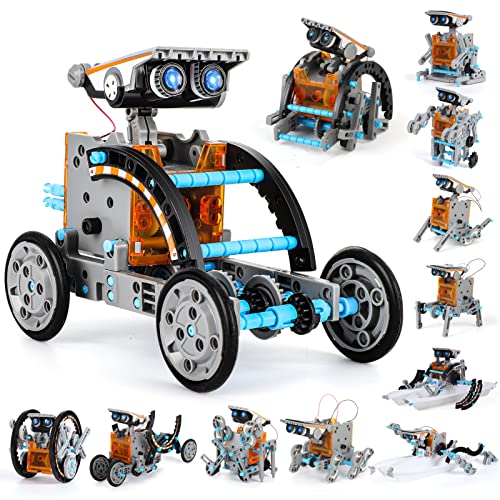
The Lucky Doug 12-in-1 Solar Robot Kit provides a broad exploration of solar-powered robotics. With more than a dozen build options, it reinforces STEM learning through hands-on assembly and operation under sunlight. The kit is designed for ages 8–13 and encourages experimentation with solar propulsion, mechanical design, and problem-solving, making it a versatile educational tool.
Portable Solar Generator, 300W by ZeroKor

The ZeroKor 300W portable solar power station pairs a foldable 60W solar panel with a lithium battery and multiple outlets, including two 110V AC outlets, USB ports, and a DC port. It includes an SOS flashlight and supports recharging via solar, wall AC, or car power. This kit is aimed at outdoor use, camping, and on-the-go power needs, offering a compact solution for day trips and emergency readiness.
Renogy 400 Watt Premium Kit

The Renogy Premium Kit includes four 100W panels, a 40A MPPT charge controller, a Bluetooth module, mounting hardware, and a comprehensive wiring kit. The system emphasizes high-efficiency MPPT tracking and robust build quality, designed for easy installation and long-term durability. It’s suitable for grid-tied or off-grid configurations and supports expansion with additional panels or components.
Buying Guide: Key Purchase Considerations And Comparisons
When choosing a solar power kit, consider the following factors to match your needs:
- Power requirements: Determine how much wattage you need for your devices or appliances. Lightweight kits may suffice for phone charging, while home backup or RV setups require higher capacities.
- System type: Starter kits are ideal for beginners and educational use, while premium kits target home energy independence or off-grid living. Hybrid options blend solar with mains power for reliability.
- Battery chemistry: LiFePO4 batteries offer longer life and safety advantages over traditional lead-acid, with higher cycle counts and stable performance.
- Panel quality and efficiency: Higher-efficiency panels perform better in limited space and low-light conditions; check warranties and panel construction (aluminum frame, tempered glass).
- Charge controller: MPPT controllers maximize energy harvest, particularly in-variable sunlight. PWM controllers are simpler and usually cheaper but less efficient.
- Portability vs. permanence: Portable generators and small kits suit outdoor activities; larger, mountable systems are better for stationary homes or vehicles.
- Expandability: If growth is possible, choose kits that allow future expansion with additional panels, batteries, or inverters.
- Support and safety: Look for clear instructions, warranty terms, and safety certifications. Classroom or family kits benefit from guided projects and safety recommendations.
In sum, select a kit that aligns with your intended use—education, off-grid living, or portable power—while prioritizing durability, safety, and future expansion potential.