Best Soldering Iron for Small Electronics: Top Picks for Precision Repairs
Choosing the right soldering iron for small electronics involves balancing heat control, tip options, and workspace efficiency. The following five products are designed to deliver quick heat, stable temperatures, and compact forms ideal for circuit boards, wearables, and other tight spaces. Each entry includes a brief look at capabilities, plus practical notes on usability for hobbyists and professionals alike.
| Product | Brand | Key Strength |
|---|---|---|
| YIHUA 926 III 60W LED Display Soldering Iron Station Kit | YIHUA | Digital PID control, sleep and calibration, space-saving design |
| Soldering Iron Kit, 60W, 5 Interchangeable Tips (Q-MING) | Q-MING | Fast heat-up, adjustable temps, energy-saving switch |
| Soldering Iron Kit, 80W, 110V | Liouhoum | Ultra-fast heating, wide temp range, clear digital display |
| Fanttik T1 Max Soldering Iron Kit | Fanttik | Cordless option with rapid heat and intelligent sleep modes |
| Plusivo Soldering Iron Kit, 60W, 5-in-1 | Plusivo | All-in-one starter set, good for beginners and DIY |
The products above span traditional but feature-rich stations and compact, modern kits. They are broadly suitable for repairing smartphones, wearables, small PCBs, LED fixtures, and other electronics that demand precise temperature control and reliable heat delivery. Read on to see how each option stacks up for small-format work, followed by a concise buying guide to help you compare key purchase considerations.
YIHUA 926 III 60W LED Display Soldering Station
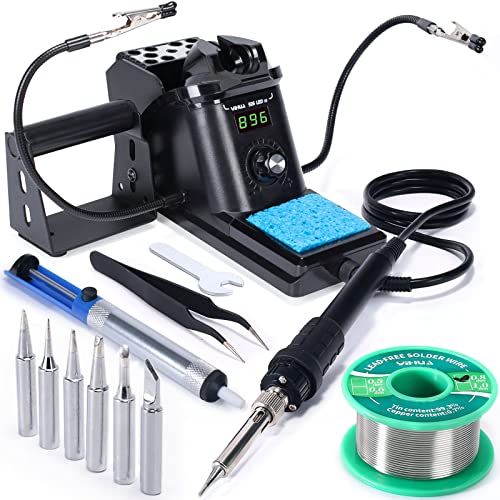
This digital soldering station emphasizes fast heat-up with a wide adjustable range from 194℉ to 896℉ (90°C to 480°C). A PID temperature stabilization system maintains a steady temperature, reducing tip wear and giving consistent results on small components. The included 2 helping hands and multiple tips expand versatility for dense PCB work. The compact form, along with a protective mesh and built-in storage for tips, helps keep benches organized. Sleep mode and temperature calibration are accessible via a single control knob and digital readout, aiding beginners and seasoned technicians alike.
Soldering Iron Kit, 60W With 5 Tips (Q-MING)

This 60W 110V pencil-type iron delivers adjustable temperatures (200–450°C) with a simple ON/OFF switch for energy efficiency. Quick heat-up is supported by a ceramic heating core, and its design prioritizes safe handling with a heat-dissipating four-vent system. The kit includes the iron, stand, sponge, five interchangeable tips, solder wire, and flux—covering common starter projects for electronics repair. It’s a practical option for hobbyists who want a complete, ready-to-use package straight out of the box.
Soldering Iron Kit, 80W, 110V Digital

Featuring an 80W ceramic-core heater, this soldering iron reaches operating temperatures quickly and holds them through a digital display with a wide 180°C–480°C (356°F–896°F) range. The device offers automatic sleep/temperature memory for energy efficiency and tip longevity. Its ergonomic handle and clear readout help technicians manage precise temperatures on small-scale electronics repair tasks. The combination of speed, stability, and a compact form factor makes it a strong choice for frequent, detail-oriented work.
Fanttik T1 Max Soldering Iron Kit

Fanttik’s T1 Max combines cordless convenience with rapid heat up to 840°F (450°C) and a 2600mAh battery for mobile work, plus 4 precision tips (C210 variants) and a 360° swivel stand. It includes intelligent gravity sensing: after 30 seconds of inactivity, it enters sleep mode, and restarts quickly when picked up again. In wired mode, it supports higher wattage for stationary use. This kit is suited for on-the-go electronics work or tight, space-limited benches where mobility matters.
Plusivo Soldering Iron Kit, 60W 5-in-1

Plusivo’s 60W 110V kit is designed as an easy-entry option with a broad temp range (200–450°C). The 5-in-1 package includes the soldering iron, stand, sponge, solder wire, flux, and an eBook about soldering, making it a practical gift for beginners or hobbyists. The iron features a ceramic heating element, four ventilation holes for heat dissipation, and a heat-resistant handle to support longer sessions on circuit-board projects. The all-in-one nature helps users start quickly without hunting for separate components.
Buying Guide: Key Purchase Considerations for Small Electronics
- Temperature control and stability: For delicate boards and surface-mount components, a stable PID-controlled or digital display helps prevent overheating and minimizes solder joint defects. Look for adjustable ranges that cover both low and high-temperature needs.
- Tip compatibility and variety: A range of tips (needle, chisel, conical) supports different joints and pad sizes. Interchangeable tips and included spare tips add long-term value.
- Power and heat-up speed: 60W is common for general electronics work; 80W variants heat faster and recover quickly after desoldering. Consider a model with a rapid heat-up time if you work with larger terminals or temperature-sensitive components.
- Ergonomics and safety: A comfortable grip, effective heat dissipation, and a reliable sleep mode protect the heating element and improve precision during extended sessions. Built-in stands and heat shields reduce accidental burns and tip contact with hot surfaces.
- Space and portability: Station-based units save workspace with integrated holders, while cordless models offer mobility for on-site repairs or tight work areas. Decide based on your typical workspace layout and project type.
- Included accessories: Stands, sponges, flux, solder wire, and extra tips contribute to overall value. A bundled kit is often more economical than purchasing components separately.
- Safety certifications: UL or equivalent safety certifications indicate compliance with electrical safety standards in the U.S.—particularly important for home workshops and professional environments.
- Ease of use for beginners vs. advanced users: UI simplicity (one-knob control, straightforward displays) benefits new users, while advanced features (calibration, multiple sleep timers) help seasoned technicians optimize performance.
In summary, the right soldering iron for small electronics combines fast, stable heat with precise temperature control and practical ergonomics. The five products above offer a mix of traditional stations and modern portable kits to support a range of repair tasks, from quick fixes to more intricate PCB work. Consider your typical projects, space constraints, and whether you value mobility or a fixed workstation when making a choice.