Best Sound Panels for Windows to Reduce Noise and Echoes
Searching for sound panels for windows? This guide highlights five effective options to reduce noise, limit echoes, and improve room acoustics. Each product is chosen for window-related sound control, whether you’re dampening street noise, tightening a home studio, or improving movie-night comfort. Suitable buyers include: homeowners seeking all-around noise dampening, apartment dwellers needing discreet solutions, home studio owners prioritizing studio-grade absorption, and DIY enthusiasts wanting easy installation. The table below compares the featured panels at a glance.
| Product | Best For | Installation | Notes |
|---|---|---|---|
| Saiqiang Acoustic Foam Panels | Home studios and offices | Stick-on with adhesive | High density foam for walls and windows |
| Focusound Acoustic Foam Panels (52 Pack) | Professional-ish recording spaces | Adhesive-backed installation | Large bundle with adhesive tape |
| Soundproof Curtain 70″ x 40″ | Windows and whole-room blackout | Hanging hardware included | Multi-layer curtain for sound and light control |
| BSHEAD 8 Pack Self-Adhesive Panels | DIY wall treatment | Self-adhesive | Thicker, denser foam and flexible layouts |
| ZonaSonic 12 Pack Pyramid Panels | High-density sound absorption | Self-adhesive | High-density PU foam with strong adhesion |
Note: Each product description below references the listed features to explain who benefits most and why it stands out for window-focused sound control. Where relevant, a brief caution highlights potential limitations.
Saiqiang Acoustic Foam Panels For Windows
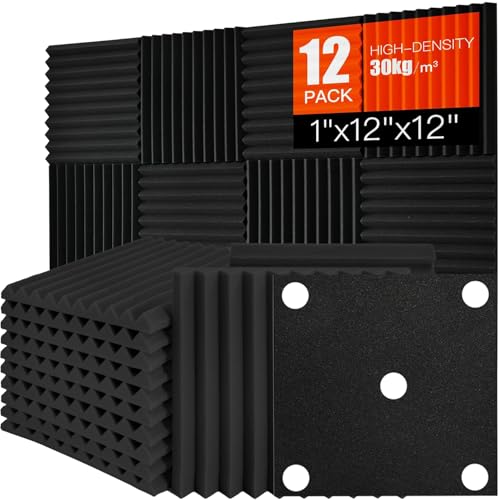
Best for: Small to medium rooms needing solid noise and echo reduction near windows. These 1″ x 12″ x 12″ panels use high-density polyurethane foam (about 30 kg/m³) to absorb sound and dampen reflections, which improves clarity in home studios, offices, or gaming setups adjacent to windows. The wedge design enhances surface area for absorption, benefiting spaces where sound leaks around window frames. This option is durable for daily use and provides stable, long-term soundproofing. Caution: May require multiple panels to cover window expanses for optimal effect.
Focusound 52 Pack Acoustic Foam Panels

Best for: Realistic studio setups or multi-area windows where you need abundant coverage. This kit features 52 foam panels with triangular grooves for enhanced absorption of noise, reflections, and flutter echoes. An included 300-piece adhesive tape set facilitates wall mounting without extra tools. Choose this if you want a robust, quick-install solution around window frames and large windows. Caution: The high quantity may be more than needed for small windows; plan layout before applying adhesive.
Soundproof Curtain 70″ x 40″

Best for: Windows where you need both sound dampening and complete light blocking. This multi-layer curtain blocks noise and external light, with a waterproof exterior and dense inner fabrics. It’s a solid choice for apartment windows, home theaters, or studios requiring a discrete, window-specific treatment. The set includes mounting hardware for secure installation. Caution: Curtains can be bulkier and require longer setup time than foam panels; may not suit minimalist spaces.
BSHEAD 8 Pack Self-Adhesive Panels

Best for: DIY window treatments and quick upgrades to reduce echo near windows. These 12″ x 12″ x 0.47″ panels are thicker and denser than standard foam, offering stronger sound absorption. The self-adhesive backing makes installation simple on walls around windows or doorways. Caution: Self-adhesive backing can impact wall finishes; test on a small area first to ensure compatibility with your surface.
ZonaSonic 12 Pack Pyramid Panels

Best for: Environments requiring high-density absorption around window openings and adjacent walls. The 12-pack pyramid panels use 35 kg/m³ density with a self-adhesive backing for strong adhesion and long-lasting performance. Their pyramid shape increases surface area for better high-frequency absorption. Caution: For very large window expanses, you may need additional panels to achieve even coverage.
Buying Guide
What should you consider when choosing window-focused sound panels?
- Room size and window area: Larger windows benefit from higher coverage or thicker foams and multi-layer solutions like curtains.
- Installation method: Self-adhesive panels are quick to install but test surface compatibility; curtains require curtain rods or hooks plus mounting hardware.
- Frequency focus: For high-frequency chatter near windows, denser foams and triangular pyramids improve absorption; for broad-spectrum noise, combine panels with curtains or blankets.
- Aesthetic and space: If you want minimal visual impact, opt for foam panels that blend with wall color or modular curtain solutions.
- Durability and reuse: Adhesive-backed panels offer easy removal but may affect paint; fabric curtains provide long-term dwell-time with less risk to walls.
- Installation density: To achieve effective attenuation, plan coverage in a grid or staggered pattern, especially around window frames where reflections occur.
Practical tips
- Place panels where sound reflections are strongest, typically at ear level and near windows.
- Consider a hybrid approach—foam panels for walls combined with a sound-dampening curtain for the window itself.
- Measure window dimensions before buying; calculate total panel coverage needed for your space.
FAQ
- Do foam panels work well on windows? Yes, when placed around window frames, they dampen reflections and reduce echo near the opening.
- Should I use curtains and panels together? Combining curtains with foam panels can improve both sound dampening and light blocking for rooms needing deeper control.
- Are self-adhesive panels safe for walls? Most are designed for easy removal, but you should test on a small area to avoid damage or residue.
- What density is best for window noise? Higher density foams around 25–35 kg/m³ work well for medium to loud environments, especially near windows.
- How many panels do I need? Coverage depends on window size and room acoustics; start with enough panels to create a balanced grid around the window and add as needed.
- Can curtains replace panels completely? For windows with heavy traffic noise or light control needs, curtains can complement or replace panels, but a combination often yields best results.