Best Standing Desk Mats for Foot Comfort and Fatigue Relief
Finding the right standing desk mat can significantly reduce fatigue and improve comfort during long workdays. This guide highlights five top-rated anti-fatigue mats that pair well with American workspaces, combining durable materials, supportive memory foam, and non-slip safety. Each product is chosen for its balance of cushion, support, ease of cleaning, and versatility for home offices, kitchens, or workstations. Read on to compare features and find the mat that best suits your standing routine.
Comparison Of Selected Mats
| Product | Brand | Size | Key Benefit |
|---|---|---|---|
| FEATOL Anti Fatigue Mat | FEATOL | 20″ x 32″ | 9/10″ extra-thick memory foam for long-lasting support |
| Topo Comfort Mat | Ergodriven | Original size varies; standard form factor | Calculated terrain for natural foot movement |
| ComfiLife Anti Fatigue Floor Mat | ComfiLife | 20″ x 32″ | 3/4″ thick memory foam with durable construction |
| Topo Mini Comfort Mat | Ergodriven | Compact version | Smaller design with terrain support |
| Ergohead Anti Fatigue Kitchen Floor Mat | ergohead | 17″ x 22″ | Massage points and portable handle for mobility |
Each mat below is described with its standout features, fit for standing desks, kitchen counters, or home offices. The overview table above helps you quickly compare thickness, material, and primary benefits to guide your decision.
FEATOL Anti Fatigue Mat For Standing

FEATOL’s mat emphasizes long-lasting support with a 9/10″ cushion designed to reduce stress on the feet, knees, and lower back during extended standing. The high-density memory foam offers a strong rebound, maintaining comfort with daily use. A PU leather top keeps the surface shape-stable and resistant to punctures and tears, while also making stains easy to wipe clean. This mat’s premium construction aims to deliver durable comfort for home offices and busy workspaces alike.
Topo Comfort Mat By Ergodriven

Topo Comfort Mat is a pioneering anti-fatigue mat specifically designed for standing desks. It promotes movement by encouraging subtle shifts in posture, which can help prevent fatigue and stiffness. The terrain-inspired surface engages the feet and improves circulation, potentially boosting energy levels during the workday. This mat is widely recognized as a premium option, offering improved standing ergonomics beyond simple flat mats.
ComfiLife Anti Fatigue Floor Mat
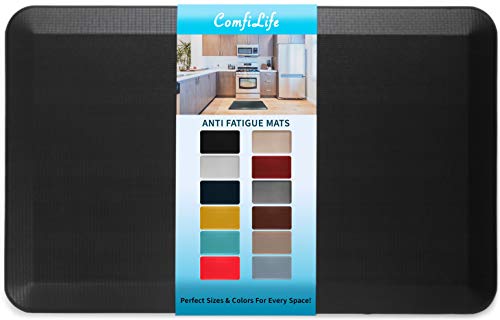
ComfiLife offers a classic, thick memory foam cushioned mat designed for both kitchen and desk use. Its 3/4-inch core delivers dependable support with long-lasting structure, supported by a durable top layer that resists compression. The mat works well in high-traffic areas such as kitchens or standing desks, with a non-slip base to maintain position throughout the day and easy cleaning for busy homes or offices.
Topo Mini Comfort Mat By Ergodriven

The Topo Mini offers the same foundational ergonomics as the full-size Topo but in a compact form. Its terrain-based design helps promote micro-movements and improved posture for shorter workstations or users who need a smaller footprint without sacrificing posture cues. This makes it a solid choice for tighter spaces or users who prefer a lighter, more portable option.
Ergohead Anti Fatigue Kitchen Floor Mat

Ergohead combines comfort with portability. The mat includes massage points to stimulate circulation and reduce fatigue, plus a built-in handle for easy transport and hanging storage. Its textured, non-slip bottom helps maintain stability on various floor surfaces, making it suitable for workstations, kitchens, or desks where mobility matters as much as cushion.
Buying Guide: Key Purchase Considerations
Choosing the right standing desk mat involves evaluating cushion thickness, material quality, surface texture, and safety features. Here are important factors to consider from multiple perspectives:
- Thickness and support: Thicker mats generally deliver more comfort but take up more space. If you stand for long periods, a mat in the 3/4″ to 1″ range can help reduce foot and leg fatigue.
- Material and durability: Memory foam cores provide good buffer, while PU or PVC surfaces offer durability and stain resistance. Look for high-density foam to maintain shape over time.
- Surface texture and shape: A textured top can improve grip and reduce slipping, while a smooth surface may be easier to clean. Terrain- or contour-based designs encourage subtle movement and can reduce fatigue.
- Anti-slip features: A non-slip bottom is essential to prevent shifting, especially on hard floors. Consider mats with reinforced edges to minimize curling.
- Portability and storage: Handles or lighter materials help if you move your mat between rooms or want to store it under a desk when not in use.
- Cleaning and maintenance: Water, stain resistance, and easy wipe-clean surfaces reduce upkeep time, especially in kitchens or busy home offices.
- Size compatibility: Ensure the mat size fits your desk area and standing zone. A larger mat can accommodate shifting feet, while a compact mat suits small spaces.
Context matters when selecting a mat: a kitchen worker might prioritize durability and spill resistance, while a remote worker may value terrain-inspired designs that promote gentle movement. Users who frequently move between standing and sitting will benefit from lighter, portable options.
Anti-fatigue mats are not a substitute for ergonomic office setup, but they can complement adjustable desks, proper footwear, and posture-aware work habits. When combined with a well-placed monitor height, keyboard position, and regular breaks, these mats help sustain comfortable long-duration standing routines in American homes and offices.