Best Submersible Sump Pump Solutions for a Dry Basement
Finding the right submersible sump pump can protect your home from basement flooding and water damage. This guide highlights five top options, covering different horsepower levels, materials, and features to fit varied needs—from compact, budget-friendly units to more robust, heavy-duty models. Each product is evaluated on flow rate, durability, and ease of installation to help you choose a reliable pump for heavy water events.
| Product | Brand | Flow (GPH) | Key Feature |
|---|---|---|---|
| WAYNE CDU790 | Wayne | up to 4,600 | Integrated vertical float switch; cast-iron housing |
| Aquastrong Sump Pump | AQUASTRONG | up to 4,500 | 1 HP motor; bottom suction design |
| Wayne CDU980E | Wayne | up to 5,490 | 3/4 HP; stainless steel housing |
| LANCHEZ 1/2 HP | LANCHEZ | up to 5,200 | Cast iron and stainless steel; integrated float |
| FOTING 1HP | FOTING | up to 4,600 | Thermoplastic; portable |
Wayne CDU790 Submersible Sump Pump

The Wayne CDU790 is a compact 1/3 HP submersible pump designed for indoor use, with a corrosion-resistant epoxy-coated steel motor housing and stainless steel fasteners. A cast-iron volute supports long life in tough sump applications. Its top suction design helps prevent air locks and reduces debris clogging at the bottom of the sump pit. Installation is straightforward, typically around 15 minutes, with no Weep hole required. It can move up to 4,600 gallons per hour, making it suitable for moderate water events in basements and crawl spaces.
Aquastrong Sump Pump 1 HP

The Aquastrong sump pump provides robust performance with a 1 HP motor capable of moving up to 4,500 GPH. It features a bottom suction design to minimize debris intake and improve efficiency, lifting water up to 30 feet. The unit is portable and designed for easy plug-in use, with a 10-foot UL-listed power cord for safety. It ships with flexible discharge options (1-1/4″ NPT and adapters) to simplify installation in pools, basements, and window wells.
Wayne CDU980E Submersible Sump Pump

The Wayne CDU980E offers a higher capacity with 3/4 HP and stainless steel housing for enhanced durability. It can pump up to 5,490 GPH, tackling heavy water flow from rain, melt, or flooding events. The top suction design minimizes air locks and clogging, and the unit is straightforward to install in about 15 minutes without a Weep hole. Its stainless steel construction makes it a strong choice for frequent use in challenging basement environments.
LANCHEZ 1/2 HP Submersible Sump Pump
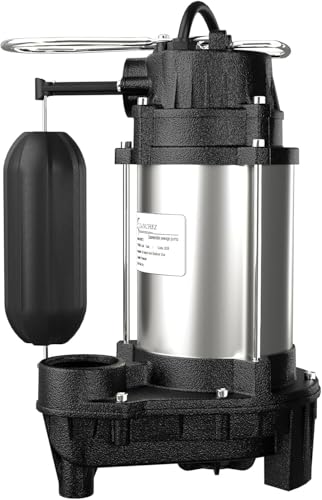
The LANCHEZ pump blends cast iron and stainless steel for corrosion resistance and long life. It packs a 1/2 HP PSC motor, delivering up to 5,200 GPH and lifting water up to 26 feet. A vertical float switch automatically turns the pump on and off, with a defined switch-on and switch-off range to prevent dry running. Built-in thermal overload protection adds a safety layer for continuous operation in wet basements. This unit offers strong performance in a compact package, suitable for mid-to-large basements and crawl spaces.
FOTING Sump Pump 1HP
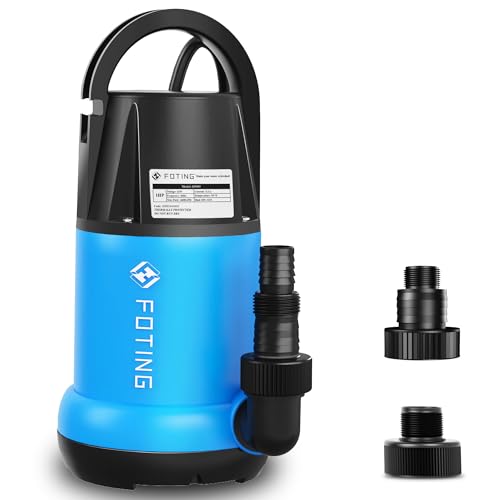
The FOTING 1HP sump pump delivers up to 4,600 GPH with a thermoplastic housing designed for durability and corrosion resistance. It lifts water up to 31 feet and can handle debris down to 1/5 inch, making it suitable for pools, ponds, basements, and hot tub drainage. The pump is portable with a 10-foot power cord for flexibility and features a removable bottom for easier cleaning and maintenance. It is positioned as a versatile option for homeowners needing reliable water removal capabilities.
Buying Guide: Key Purchase Considerations
When selecting a submersible sump pump, consider the following factors to ensure reliable performance and value:
- Flow rate (GPH): Match the pump capacity to the expected water load from rainfall, snowmelt, or plumbing issues. Higher GPH models handle larger volumes but may require more power and space.
- Discharge height: Check how high the pump can lift water, especially if the discharge line runs uphill or to an exterior drain. Higher lift requires more capable pumps.
- Material and durability: Cast iron and stainless steel housings endure moisture and debris better than basic plastics. Thermoplastic units are lighter and corrosion resistant but may not last as long in harsh conditions.
- Automatic vs. manual: Submersible pumps with automated float switches reduce the need for constant monitoring. Ensure the float switch reliably activates at appropriate water levels.
- Debris handling: Bottom suction and robust impellers reduce clogging from sediment, leaves, or debris. Consider pumps with filters or screens for cleaner operation.
- Power cord length: Longer cords provide flexibility for placement, but ensure cords and outlets meet electrical safety standards with GFCI protection where required.
- Installation considerations: Look for models that require minimal drilling, compatible discharge fittings (NPT sizes), and simple wiring for fast setup.
- Maintenance: Removable bases, cleanable impellers, and accessible filters help sustain long-term performance.
- Warranty and support: A longer warranty often reflects durability and manufacturer confidence; verify available customer support if issues arise.
For basements with frequent flooding or heavy water flow, higher-capacity models with stainless steel or cast-iron construction and reliable float switches tend to offer greater longevity and peace of mind. Lighter-duty units may suit occasional minor water intrusion or utility tasks, such as draining a pool cover or cleaning a sump pit. Always assess your specific conditions—pit size, typical water volume, and the presence of solids—before choosing.