Best Sump Pumps for Sewer Applications: Top Basement Models
Answering the need for reliable sewer and effluent pumping, these top-rated sump pumps are designed to handle solids and prevent basement flooding. This guide helps buyers pick the right unit for residential basements, crawlspaces, or below-grade sump pits. Each featured product is suited for homes with frequent rain or groundwater intrusion, or for properties with intermittent sewage ejector requirements. The following table highlights essential specifications to compare at a glance.
| Product | Discharge | Solid Handling | Best For |
|---|---|---|---|
| LANCHEZ 1/2 HP 5200 GPH | 1-1/2″ NPT | Integrated solids handling via design | Basements with high water volume |
| FOTING 1.5HP 9000GPH | 2″ NPT | Solids up to 2″ | Heavy flow, challenging basins |
| Superior Pump 93020 1/2 HP | 2″ | 2″ solids, non-clogging vortex | Small to mid basins, multiple fixtures |
| Zoeller Waste-Mate 267-0001 | 2″ | 2″ spherical solids, plastic impeller | Residential/commercial ejection tasks |
| Acquaer Sewage Pump | 2″ NPT | 2″ solids, durable cast iron | Basement/sewer ejector with long life |
LANCHEZ 1/2 HP 5200 GPH Submersible Sump Pump
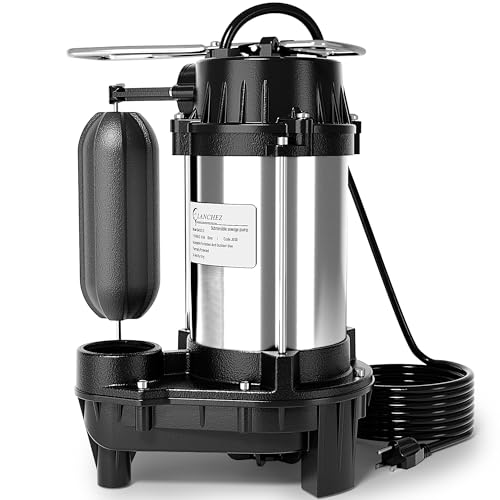
The LANCHEZ unit uses a 1/2 HP PSC motor to deliver up to 5200 GPH and lift water up to 26 feet. It includes an automatic vertical float switch with turn-on and turn-off at 10.24 inches and 4.33 inches, making it responsive to rising basement water. Best for basements with heavy rainfall or groundwater flow, it is built with a cast iron and stainless steel casing for corrosion resistance and durability. A built-in thermal overload protection helps reduce burnout during dry-running conditions. Avoid lifting by the power cord or float switch to protect the mechanism.
Who it’s for: homeowners needing strong flow for flooded basements or crawlspaces, especially where a higher vertical lift is necessary. Why chosen: high pumping rate and durable construction suit frequent water events. Limitation: do not lift by the power cord or float switch to prevent damage.
FOTING 1.5HP 9000GPH Sump Pump

With a 1.5HP PSC motor, this unit pumps up to 9000 GPH and lifts water up to 29 feet. It features an adjustable tethered float switch for auto operation, a 10-foot power cord, and a piggyback plug for simple setup. The cast iron housing and non-clogging vortex impeller support debris tolerance up to 2 inches, making it suitable for basement or septic-related applications. It is designed for heavy-duty basements and below-grade installations. Caution: never lift the unit by the power cord.
Who it’s for: homes needing robust, high-capacity drainage or septic-related pumping. Why chosen: the high flow and solid handling capacity handle larger volumes and solids efficiently. Limitation: heavier unit may be more challenging to install in tight basements.
Superior Pump 93020 1/2 HP Sump Pump System

This 1/2 HP cast iron pump delivers up to 4800 GPH with a 2″ discharge and an integrated vertical float switch. It includes a 30-gallon structural foam basin and a non-clogging vortex impeller for reliable operations. Best for small to medium basins where space is limited but dependable performance is needed. Choose this if you want a compact, durable option with straightforward auto operation. Limitation: solids handling is adequate for typical wastewater, not heavy solids beyond 2 inches.
Who it’s for: homeowners with modest basins or tight spaces seeking reliable, easy-to-maintain sump pumping. Why chosen: compact design paired with a robust cast-iron build and float switch. Caution: ensure the 30-gallon basin fits your setup.
Zoeller Waste-Mate 267-0001
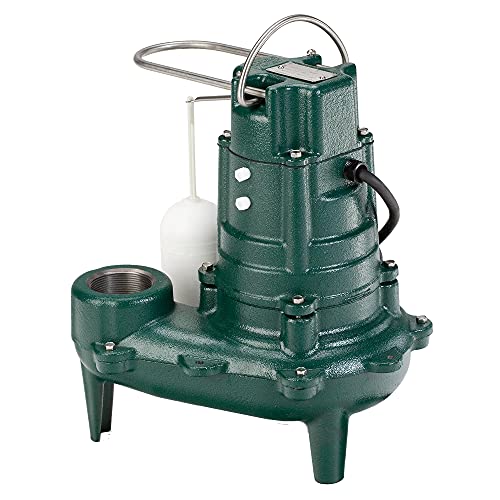
The Zoeller Waste-Mate 267-0001 is a heavy-duty 1/2 HP submersible pump designed for sewage, effluent, or dewatering tasks. It passes 2″ spherical solids and uses a plastic impeller with a float-operated switch. Best for residential or commercial setups where solids management and automatic operation are crucial. This model is chosen for its reputation in sewage applications and reliable automatic operation. Limitation: plastic impeller may be less durable in very hard solids scenarios compared to metal impellers.
Who it’s for: users needing dependable automatic sewage pumping with simple maintenance. Why chosen: proven architecture for sewage and effluent handling. Caution: ensure solids compatibility with the plastic impeller in heavy-duty scenarios.
Acquaer Sewage Pump
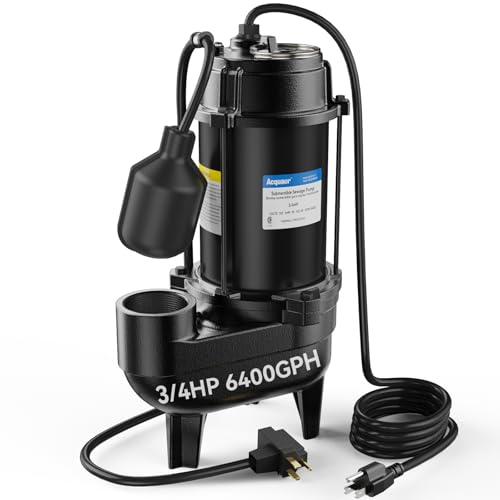
The Acquaer model features a 3/4 HP motor and a 2″ NPT discharge with a cast iron body and an auto tethered float switch. It’s designed for basement and residential sewage systems, delivering up to 6400 GPH and lifting water up to 29 feet. Durable and clog-resistant with a 2″ solids path, it’s a solid option for below-grade installations. Best for moderate to heavy sewage ejector needs. Caution: do not use in septic tanks where prohibited.
Who it’s for: homeowners seeking a balance of solid handling, reliability, and easy auto operation for typical basement drainage. Why chosen: versatile 2″ solids handling and rugged construction. Limitation: not suitable for septic tanks in some regions; verify local codes before installation.
Buying Guide
Key factors to consider when choosing a sump pump for sewer or effluent scenarios include:
- Discharge size and lift: ensure the unit’s discharge and maximum head fit your sump pit height and discharge routing.
- Solid handling capability: for sewage and effluent, confirm solids passing capacity (inches) to prevent clogs.
- Impeller design: non-clogging vortex impellers reduce maintenance needs and blockages.
- Float switch type: automatic tethered or vertical float switches trigger based on water level; ensure reliability in your setup.
- Housing material: cast iron offers durability and cooling; stainless steel provides corrosion resistance in aggressive environments.
- Power and efficiency: higher HP pumps move more water but use more electricity; balance capacity with energy use.
- Auto/manual options: some models offer dual operation modes for seasonal or backup needs.
- Installation context: below-grade basements, crawlspaces, or sewage ejector pits may require specific inlet/outlet configurations.
FAQ
- What is the difference between a sump pump and a sewage pump? A sump pump primarily handles clear water from basements, while a sewage pump is designed to pass solids and handle effluent.
- Can I use a sump pump in a septic system? Some pumps are designed for septic or sewage ejector use; always check the manufacturer’s guidance and local codes.
- What size discharge should I choose? A 2″ discharge is common for sewage applications and allows faster water removal in larger basins.
- Is cast iron better than stainless steel for these pumps? Cast iron is durable and well-suited to dirty, abrasive environments; stainless steel offers excellent corrosion resistance in harsher chemical conditions.
- How do I prevent clogging? Choose pumps with a non-clogging impeller and ensure the solids rating (inches) matches the typical debris in your system.
- Do I need an automatic float switch? Auto switches simplify maintenance by turning the pump on/off without manual intervention, especially in unattended basements.