Best Tools for Precision Wood Cutting: Top Saws, Gauges and Duplicators
Precision is the cornerstone of quality woodworking. The right tool can mean the difference between a clean, accurate cut and a misaligned seam. This guide highlights five highly-rated tools designed to enhance accuracy in various cutting tasks, from straight saw work to contour copying and precise marking. Each choice is evaluated for blade quality, ergonomics, and versatility to help American hobbyists and professionals alike achieve repeatable results in woodworking projects.
| Product | Brand | Key Benefit |
|---|---|---|
| RUITOOL Japanese Hand Saw 6 Inch Ryoba | RUITOOL | Flexible SK5 blade for flush and precise cuts |
| GARTOL Hand Saw, 2-Piece Japanese Pull Saw Set | GARTOL | Two-saw versatility with flush cut and Ryoba teeth |
| Clarke Brothers Wheel Marking Gauge | Clarke Brothers | Laser-engraved marks for accurate layout and repeatable lines |
| GOZWELL Contour Scribe Tool | GOZWELL | One-handed contour copying with adjustable positioning |
| Contour Gauge 10 Inch, Lambor Studios | Lambor Studios | Wide profile gauge for copying irregular shapes |
RUITOOL Japanese Hand Saw 6 Inch Ryoba

The RUITOOL Ryoba is a compact, double-edged pull saw designed for precision in woodworking. The 6-inch blade balances control and reach, making flush cuts and finish cuts easier on fine joinery and trim work. The SK5 high-carbon steel blade combines strength with a flexible edge, improving resistance to bending during tight radius cuts. Teeth processed with high-frequency hardening reach an HRC60-63, delivering reliable edge retention. A beech handle provides a comfortable grip for extended use. This tool is well-suited for tasks requiring crisp, dimensionally accurate cuts in both hardwood and softwood.
Key considerations: blade length suits narrow or delicate cuts; high-frequency hardening contributes to lasting sharpness; the pull-saw design reduces stock movement and tears when working along grain. For precision tasks like mitered corners or flush trimming, this saw offers predictable performance with minimal deflection. Proper maintenance—cleaning after use and occasional honing—helps sustain edge reliability through repeated sessions.
GARTOL Hand Saw Set: 6-Inch Flush Cut & Double-Edged Ryoba

The GARTOL 2-piece Japanese pull saw set provides both a flush-cut saw and a double-edged Ryoba, enabling fine woodworking and trim work with versatility. Coarse and fine teeth support a range of materials and cuts, from hardwood to softwood, ensuring clean edges with minimal tearing. The SK5 steel blades deliver durability and a long-lasting edge, while wooden handles offer an ergonomic, anti-slip grip that helps reduce fatigue during extended sessions. Whether you’re crafting furniture or performing precise repairs, this pair helps achieve refined, repeatable results.
Considerations: the two-saw approach lets you switch between a fine cut and a more aggressive cut without changing tools. The ergonomic handles support comfortable operation, particularly on long projects. For best results, keep blades sharp and use appropriate cutting pressure to prevent blade deflection.
GARTOL Miter Shears

These miter shears are engineered for precise angular cuts, ideal for trim, molding, PVC, and softwood. With a 45°-135° adjustable cutting angle and an integrated rotary scale, you can set up joints with accuracy before making a cut. The tool includes replacement blades, which helps minimize downtime and maintain cutting quality across multiple tasks. It is particularly useful for aligning casing, quarter rounds, and PVC trimming where consistent bevels matter for seamless assembly.
Practical notes: avoid using these shears on metal or hardwood beyond the intended scope to prevent blade wear or damage. The built-in scale supports precise setup, reducing trial-and-error cuts. Regular blade checks and replacements ensure consistent results on projects with numerous trim angles.
Clarke Brothers Wheel Marking Gauge

The Clarke Brothers Wheel Marking Gauge is a precision marking instrument designed to lay out lines parallel to a reference edge. Its patent-pending roll stop fence and flat spot help maintain consistent lines, crucial for accurate cuts and joinery. The laser-engraved graduation marks, in metric and imperial units up to 6 inches/150 mm, enable quick, repeatable measurements. Included are two hardened steel wheel cutters, adding value and reducing the likelihood of misaligned marks. This tool supports accurate layout for dowel centers, chamfers, and edge-to-edge joins.
Usage notes: ensure the gauge is firmly seated against the workpiece as you mark lines. The interchangeability of wheels aids in fitting different material thicknesses. Regular maintenance, such as cleaning the wheel surfaces and lightly oiling moving parts, keeps marking accuracy high over time.
GOZWELL Contour Scribe Tool with Lock

The GOZWELL contour scribe tool offers a simple method for copying complex shapes, making it suitable for edge work, tile layout, laminate, and pattern tracing. A pulley-and-pointer design allows one-handed operation, with adjustable pencil placement and easy blade or pencil replacement. The instrument helps mark accurate profiles by drawing along the edge while maintaining consistent pressure, reducing guesswork in layout stages of projects like countertops, cabinetry, or trim pieces that require custom curves.
Tips for use: lock the pencil easily for steady lines, and adjust the slider to capture varying radii or curves. For best outcomes, pair with a contour gauge to verify shapes before transferring them to stock and executing the cut. Regularly check the alignment of the pointer and replace worn components to sustain precision.
Multi Angle Miter Shear with Replacement Blades
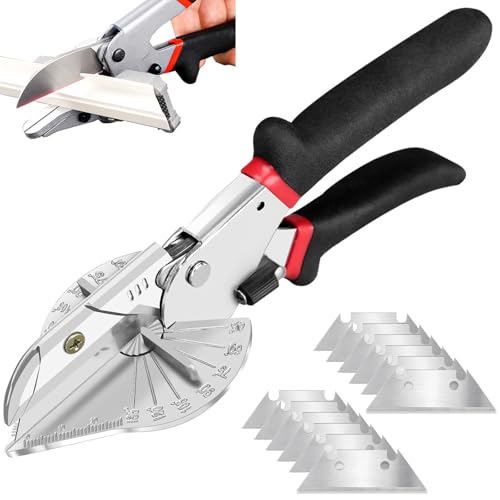
The Miter Shear from OOMDMI offers adjustable 45-135° cutting angles and a set of replacement blades for ongoing projects. The upgraded blades deliver precise cuts through wood, plastic, and light materials, with quick blade swaps designed to minimize downtime. This tool is useful for producing consistent miter cuts on trim, molding, and compartmental edges where space is constrained or where consistent bevel angles are essential.
Considerations: verify the blade compatibility with your preferred material thickness. Keeping spare blades on hand reduces interruptions during busy projects. The locking mechanism helps maintain accuracy, but periodic calibration and blade inspection should be part of regular maintenance to preserve cutting quality over time.
Buying Guide: Key Purchase Considerations And Comparisons
- Blade quality and material: SK5 high-carbon steel blades offer durability and edge retention; consider hardened blades for repeat cuts and minimal dulling during heavy use.
- Cutting action: pull saws tend to minimize stock movement and reduce tear-out, especially in intricate trim and fine joinery. Chamfers and flush cuts benefit from precise tooth configuration and blade flexibility.
- Ergonomics and grip: comfortable handles help maintain control and reduce fatigue on longer projects. Wooden grips often provide a natural feel and grip stability.
- Specialized features: marking gauges with laser-engraved scales, contour copying tools with adjustable pointers, and miter shears with angular measurement scales add value by improving setup accuracy and repeatability.
- Versatility vs. specialization: two-piece saw sets offer flexibility for different cut types, while single-purpose tools may excel in a narrow task. Choose based on project variety and budget.
- Maintenance: keep blades sharp, clean, and properly stored to extend tool life. Regular sharpening, oiling, and calibration help preserve precision.
- Compatibility with materials: ensure tools are appropriate for the common stock you work with (hardwood, softwood, plywood, PVC, etc.). Use tools within their intended material ranges to avoid damage.
- Price-to-performance balance: consider whether a bundle (saws plus marking gauges and contour tools) provides better long-term value through consistent performance and fewer replacements.
Overall, the five highlighted tools cover core precision tasks in woodworking: accurate straight cuts, clean flush cuts, precise marking, reliable contour copying, and dependable angle cuts for moldings and trim. When selecting tools, balance blade quality, ergonomics, and intended use to achieve repeatable, shop-wide precision across a range of projects.