Best Tools to Cut Bamboo for Precise Projects and Quick Results
Bamboo presents unique cutting challenges due to its fibrous structure. The right tool can make clean, accurate cuts with less fraying and fewer snagging incidents. This guide highlights five top-rated bamboo cutting tools, including Japanese hand saws, replacement blades, folding options, specialized saw blades, and a bamboo splitting tool. Each choice is designed to maximize control, reduce effort, and extend blade life for both raw and dried bamboo. Read on to compare features and select the best bamboo-cutting tool for your project needs.
Summary of chosen products:
| Product | Brand | Key Feature | Link |
|---|---|---|---|
| KAKURI Japanese Hand Saw (Bamboo Cutting) 8-1/4" | KAKURI | Replaceable blade; fine-tooth blade for bamboo fibers | Amazon |
| KAKURI Replacement Blade (Bamboo Cutting) | KAKURI | One-touch blade interchange; screw-free blade swap | Amazon |
| KAKURI Bamboo Saw Folding 4" (Japanese Pull Saw) | KAKURI | Pocket size; precision cuts in tight spaces | Amazon |
| EZARC Bamboo Cutting Blades 9" (Tri-Edged) | EZARC | Tri-Edged teeth; fast cutting; hardened teeth | Amazon |
| Bamboo Splitter 6" Manual Dividing Tool | Lowhigh | Efficient splitting; comfortable handles | Amazon |
KAKURI Japanese Hand Saw for Bamboo Cutting

The KAKURI 8-1/4″ Japanese hand saw is designed specifically for bamboo cutting, addressing the fibers that often snag standard saws. The blade is fine-toothed and designed to reduce fiber catching, delivering clean, precise cuts on both raw and dry bamboo. It features a replaceable blade system that can be swapped with one touch, eliminating the need for tools and screws. A plastic scabbard sleeve is included, offering storage and transport convenience for on-site work. This hand tool is crafted with high-grade Japanese steel, ensuring durability and sharpness for long-term use.
KAKURI Replacement Blade for Bamboo Cutting
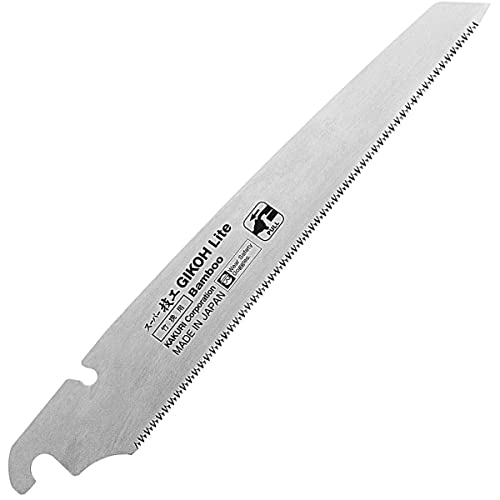
This replacement blade from KAKURI complements their bamboo pruning saws by enabling quick, screw-free blade changes. It is designed to smoothly cut bamboo fibers and maintain performance with repeated use. The blade interchange system allows users to adapt the tool for multiple tasks without complex adjustments, enhancing versatility for hobbyists and professionals working with bamboo materials. The specification emphasizes ease of handling and blade longevity, making it a practical upgrade or spare part for bamboo-specific projects.
KAKURI Bamboo Saw Folding 4″

This compact folding saw is tailored for bamboo craft and tight spaces. The blade teeth are optimized for bamboo, offering smooth, precise cuts when you need portability. The blade is made from high-quality Japanese carbon steel, delivering sharpness and durability, with anti-rust plating to prolong life. Foldable design makes it suitable for fieldwork or kitchen craft projects where a small, dependable saw is required.
EZARC 9-Inch Bamboo Cutting Blades

EZARC offers 9-inch reciprocating saw blades designed for bamboo cutting, using a chromium-vanadium steel body for improved toughness and flexibility. The Tri-Edged Fleam Ground Teeth technology accelerates cutting speed with reduced binding, making it efficient for quick bamboo work. The high-frequency heat-treated teeth extend blade life and reduce the frequency of replacements, particularly in projects involving dense bamboo segments or repeated cuts.
Lowhigh Bamboo Splitter 6 Inch

The Lowhigh bamboo splitter is a manual tool designed to divide bamboo sheets efficiently. Its 6-inch form factor suits mid-sized projects, with an inner diameter around 16 cm, making it suitable for more controlled splits. The handles on both sides provide a comfortable grip to reduce hand fatigue during extended sessions, enabling more precise, uniform splits for bamboo components used in crafts or construction.
Buying Guide: Key Considerations For Bamboo Cutting Tools
- Blade design and teeth geometry: Bamboo fibers can catch or fray with dull or generic blades. Look for fine teeth, tri-edged designs, or specialty bamboo blades that minimize snagging and produce clean edges.
- Material and durability: Tools built with high-grade Japanese steel or chromium-vanadium blades tend to hold sharpness longer and resist rust when exposed to humidity typical of bamboo environments.
- Interchangeability and maintenance: Replaceable blades and tool-free changes save time, especially in multi-step projects. A robust scabbard or case helps protect blades when transporting to job sites.
- Portability vs. stability: Folding or pocket saws provide portability for fieldwork, while larger fixed blades offer stability for longer, straight cuts. Choose based on workspace constraints and cut length requirements.
- Handling and ergonomics: Comfortable handles reduce fatigue during extended sessions. Balanced weight distribution helps maintain accuracy in repetitive bamboo cutting tasks.
- Safety features: Lock mechanisms for folding blades and blade guards reduce accidental injuries during storage and use in crowded environments or workshops.
- Compatibility with bamboo variety: Some blades are optimized for raw bamboo, others for dry bamboo. Consider the moisture content and fiber density of your material when selecting a blade type.
- Cost and availability: Consider replacement blade availability and per-cut cost for long-term projects. Investing in a versatile tool with readily available blades can lower total project costs.
- Usage context: For precise hobby work, compact folding blades may suffice. For bulk cutting or construction, a high-tatigue blade with quick interchange can improve throughput.
- Safety practices: Always wear eye protection, secure your bamboo piece, and maintain a sharp edge to prevent slips and kickback during cutting.