Best UV Lights for Water Systems: Clear Guide to Safe Home Filtration
Discover the best ultraviolet (UV) water lights for home systems to reduce pathogens and improve water safety. This guide highlights five top options, explaining who each is best for, how they perform, and practical buying tips. Ideal for homeowners seeking whole-house protection, under-sink filtration, or more targeted well-water treatment.
The following table provides a quick comparison of the selected products to help with initial decisions.
| Product | Flow Rate | Type | Best For | Notes |
|---|---|---|---|---|
| HQUA-TWS-12 | 12 GPM | Whole-house purifier | Medium to large homes | Compact design, easy integration |
| HQUA-OWS-12 | 12 GPM | Whole-house purifier | DIY installs | Extra UV bulb included |
| BLUONICS 24 GPM | 24 GPM | Stainless steel chamber | Larger homes | High capacity, dual ballasts |
| iSpring UVF11A | 11 W UV lamp | Under-sink filter | RO or pre-filtered setups | Smart flow control |
| Waterdrop UV | Low flow (under-sink) | Under-sink UV | RO or RV use | Compact, 50-year life claim |
Note: All options listed are UV-based systems designed to treat water at the point of entry or point of use. Selection depends on your home size, water source, and whether you need whole-house coverage or targeted filtration. The following sections detail five viable choices with practical consideration notes.
HQUA-TWS-12 Ultraviolet Water Purifier

Best for: Homeowners needing reliable whole-house UV treatment with straightforward installation. This 12 GPM unit sits compactly in-line with your pipe system and adds an extra UV lamp sleeve, supporting redundancy for ongoing operation. The design mirrors practical uptake by DIY installers seeking a balanced balance of capacity and space.
Why selected: It provides a robust 12 GPM capacity and a relatively small footprint, making it suitable for standard family homes. The 3/4″ MNPT connections simplify integration into existing plumbing. A key strength is its promise of no secondary pollution—water chemistry remains unchanged while pathogens are inactivated.
Caution: The system relies on proper flow and bulb integrity. Regular maintenance of the UV lamp and sleeve is necessary to maintain performance.
HQUA-OWS-12 120V UV Water Purifier

Best for: Homes needing a straightforward, toggle-friendly whole-house UV filter with an extra bulb for long-term maintenance. This model is suited for owners who value quick replacement options.
Why selected: The unit operates at 12 GPM with a durable stainless-like chamber and 3/4″ MNPT fittings. It emphasizes ease of installation and chemical-free operation, preserving taste and odor. The kit’s included spare UV bulb is a practical feature for ongoing uptime.
Caution: Horizontal installation is recommended with metal connectors. Ensure compatibility with your existing plumbing and confirm the space for vertical or horizontal orientation before purchase.
BLUONICS Whole House UV Water Filter System
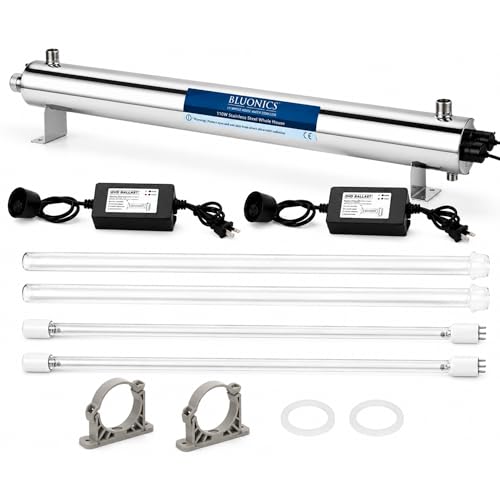
Best for: Larger homes or light commercial use needing high-capacity UV treatment and durable stainless steel construction. It supports continuous operation with two ballasts for redundancy.
Why selected: The 24 GPM capacity targets bigger households, ensuring sufficient UV exposure time for high flow. Stainless steel chamber and 1″ NPT connections support reliable, long-term operation. The two electronic ballasts provide a practical uptime advantage for continuous use.
Caution: The higher flow rate requires more space and a properly sized electrical setup. Verify your installation area and service access before purchasing.
iSpring UVF11A UV Filter With Smart Flow Control
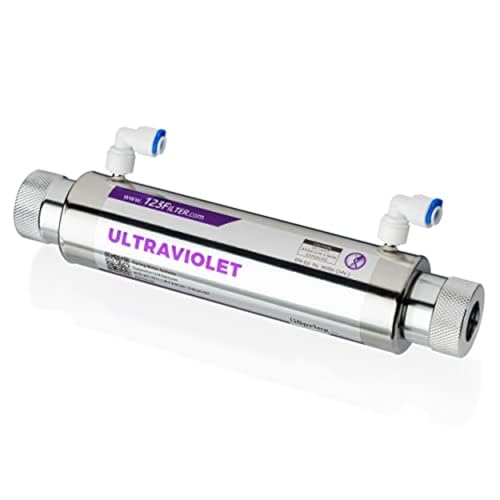
Best for: Under-sink filtration or small RO setups needing automatic flow-controlled UV exposure. This unit is ideal where space is limited and precise flow control is important.
Why selected: The smart flow sensor switch reduces energy use by turning the UV lamp on only when water flows, extending lamp life. It’s compatible with many RO systems as a final-stage UV treatment, and the 11W lamp in a stainless steel chamber is compact for under-sink placement.
Caution: Designed for pre-filtered or filtered water; performance declines with untreated water. Space requirements should be checked to ensure a proper under-sink fit.
iSpring UVF20 Whole House UV System
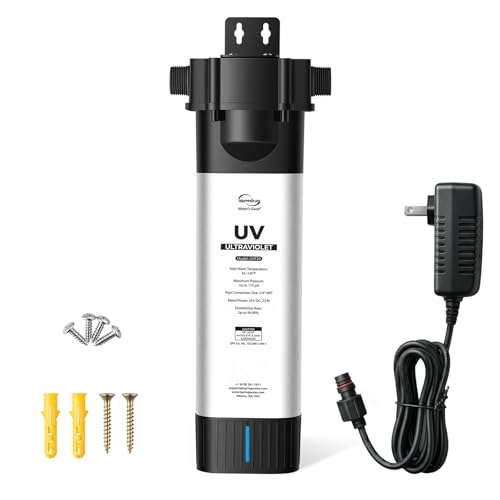
Best for: Homes needing long-term service with minimal bulb maintenance and automatic flow control. This model is designed for whole-house use with extended LED-based uptime.
Why selected: The LED-based UV light claims up to 11 years of life, reducing the need for frequent bulb changes. The 3/4″ MNPT connections and built-in flow sensor support efficient, safe whole-house treatment, with automatic activation tied to water flow.
Caution: Verify expected service life and the electrical setup to support continuous operation. The system is designed for larger homes and may be oversized for smaller properties.
VIQUA VH410 Stainless Steel UV System

Best for: Whole-house filtration for higher reliability under varying water conditions. The VH410 is known for strong performance across temperature and pH ranges.
Why selected: The 18 GPM capability covers many mid-sized homes, with a high-output lamp and a stainless steel chamber designed for robust performance. The safety cap and lamp plug add an active safety feature for maintenance.
Caution: The system requires proper installation and electrical supply; ensure compatibility with your home’s electrical and water system. The stainless steel design adds durability but may require a larger footprint than some compact units.
Buying Guide: Key Considerations For UV Water Light Purchases
- Whole-house vs. point-of-use: Whole-house systems treat all water entering the home, ideal for families and multi-point consumption. Point-of-use systems are often installed under sinks or near RO units for targeted protection.
- Flow rate and capacity: Choose a unit rated for your home’s peak flow. Higher GPM capacity is essential for larger households or well water setups with higher usage.
- Chamber material and durability: Stainless steel or protected metal chambers provide longevity and corrosion resistance in varying water chemistries.
- Electrical requirements and safety: Some units include dual ballasts or smart flow sensors. Confirm electrical fittings, space, and accessibility for maintenance.
- Maintenance needs: Consider bulb/lamp life, sleeve condition, and whether the system supports easy replacement. Look for systems with spare bulbs or sleeves included.
- Water source considerations: Untreated well water or highly turbid water may require pre-treatment or filtration before UV exposure to maintain effectiveness.
- Ease of installation: DIY-friendly models with standard MNPT fittings can reduce installation time. Confirm space and orientation requirements before purchasing.
FAQ
Do UV lights remove all contaminants from water?
UV treatment inactivates microbes, including bacteria and some viruses. It does not remove chemical contaminants or particulates; pre-filtration or additional treatment may be required for comprehensive purification.
Can UV systems be used with well water?
Yes, with appropriate pretreatment for turbidity and organics. High-quality UV systems can treat well water if the water is adequately clarified first.
How often should UV lamps be replaced?
Replacement intervals vary by model and usage. Some units offer long-life LED or lamp modules, while others require bulb changes every 6–12 months in typical use.
Is professional installation necessary?
Many UV systems are designed for DIY installation, especially those with standard fittings. However, consult local codes and consider professional help for complex pipe layouts or electrical connections.
What maintenance tips improve UV effectiveness?
Keep the quartz sleeve clean, ensure there is no scale buildup, and periodically verify flow sensors and ballast operation. Regular inspection helps maintain consistent performance.