Best Veneer for Cabinet Refacing: Easy, Durable Options for a Fresh Look
When refacing cabinets, choosing the right veneer makes a big difference in how smooth, durable, and seamless the finish will be. These 5 options cover real wood looks, ease of use, and practical compatibility with common cabinet projects. They are best for homeowners seeking a ready-to-stain, authentic appearance, DIY enthusiasts tackling small to mid-size refacing jobs, and professionals needing reliable sheets or tools for precise edge work.
Summary table of selected products:
| Product | Best For | Key Benefit | Limitations |
|---|---|---|---|
| Edge Supply Birch Wood Veneer Sheet | Repairing furniture and cabinet faces | Real wood look, paper-backed for easy handling | Unbacked backing may require careful application |
| Real Wood Boxwood Veneer Sheet | Cabinet refacing and wall panels | Genuine unbacked veneer with straight grain | Unbacked requires precise adhesion |
| WoodPress Real White Oak Veneer (6 sheets) | Marquetry, cabinets, crafts | US letter sheets, versatile for multiple uses | Smaller sheet size may need seam planning |
| Fir Douglas VG Veneer 10MIL 2×8 | Early-stage cabinet repairs | Real wood, plain sawn for authentic grain | Smaller dimensions require more fitting |
| Veneer Edge Trimmer Guide (Rockler) | Edge trimming and finishing | Precise, stable guide for clean edges | Tool-focused; not a veneer sheet |
Edge Supply Birch Wood Veneer Sheet Flat Cut

This birch veneer sheet is a real wood option ready to stain, ideal for furniture repairs and cabinet refinishing. It comes with a 10 mil paper backing to help grip during handling and aligns well with standard contact adhesives for a strong bond. The sheet is easy to cut to size with a box knife and designed to bend without grain splitting, making it a practical choice for curved cabinet edges. Best for homeowners tackling DIY refacing projects or small repairs where a natural birch look is desired.
Best for: DIY renovators and woodworkers focused on seamless color matching and natural wood appearance. Choose this if you value a real wood veneer with straightforward handling and good bend tolerance. Caution: working with paper-backed sheets still requires even adhesive application to avoid air pockets.
GSCIT Club Maple Edge Banding
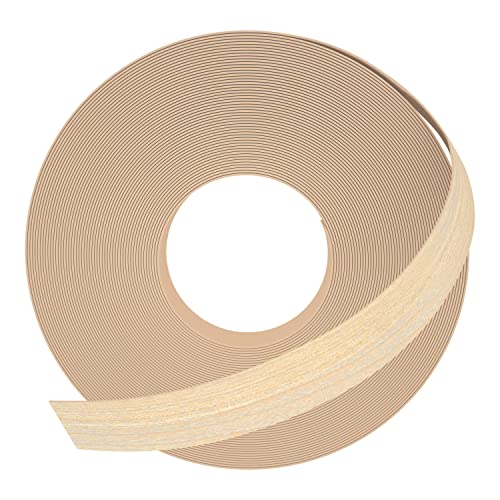
Maple edge banding is a flexible veneer tape designed for pre-glued back applications. This option is best when you need to cover exposed cabinet edges with a consistent veneer look, particularly on laminated or painted surfaces. It’s ideal for mid-size repair work or fresh edge finishing where full veneer sheets aren’t required. Best for: cabinet edge restoration or repair where a quick, pre-glued solution is preferred. Limitation: edge banding is not a full panel veneer and may require careful matching at joints.
GSCIT Club Oak Wood Veneer Edge Banding

Oak edge banding offers a durable, flexible veneer solution for cabinet edges. The 12-inch by 15-foot roll with a 0.6 mm thickness supports long runs along edge faces and corners. Best for: projects needing durable edge protection and a natural oak look on exposed edges. Caution: edge banding requires heat-activation and precise trimming to avoid gaps or texture mismatches at joints.
Fir Douglas VG Veneer 10MIL 4×8

This 10 mil Douglas fir veneer sheet comes in a larger 4×8 size, offering more coverage per panel and a versatile plain-sawn texture. Best for: larger cabinet panels or multi-door refreshes where a true wood look is desired. Better for: projects that require fewer seams due to longer sheet dimensions. Caution: larger sheets demand careful handling to prevent bending or warping during storage or application.
Real Wood Boxwood Veneer Sheet

The boxwood veneer sheet features a straight grain and a two-tone natural variation that delivers an authentic wood appearance. It is unbacked, which means it requires precise adhesive control, but it offers a traditional, premium veneer finish for cabinet refacing. Best for: high-end face panel replacements where natural grain alignment matters. Limitations: unbacked sheets can be more challenging to apply for beginners and require careful edge alignment.
Buying Guide
- What type of veneer should I choose for cabinet refacing? Real wood veneers (edge-ready sheets) give authentic grain; pre-glued edge banding is faster for edges but not full panel veneers.
- Which backing is best for casual DIY vs. professional work? Paper-backed sheets (like some Birch veneers) are easier to handle; unbacked sheets may require more precise adhesive control but give a more natural look.
- What sheet size is right for my project? Larger sheets reduce seams; smaller sheets are good for curved faces or tight corners. Plan for waste and cuts when estimating material needs.
- How important is grain direction and matching? Align grain across panels to maintain a continuous look; mismatches are more visible on high-contrast grains like boxwood or oak.
- Edge finishing: when to use edge banding vs. full veneer? Edge banding is best for quick edge refreshes; full veneer sheets are preferred for complete cabinet faces or large surfaces.
- Adhesive choice matters: use a compatible contact adhesive or veneer glue and ensure clamping or weighting during curing to avoid air pockets.
Frequently Asked Questions
- What is the difference between veneer sheets and edge banding? Veneer sheets cover entire cabinet faces, while edge banding covers only edges, typically after a partial veneer or laminate install.
- Can I stain all veneers the same color? Most real wood veneers accept stain uniformly, but color matching should be tested on a scrap piece first.
- Are unbacked veneers harder to apply? Yes, unbacked veneers require precise adhesive control and careful alignment to avoid warping or curling.
- How do I ensure seams are less visible? Plan panel sizes to minimize seams, match grain direction, and use a high-quality adhesive with even application.
- Is larger veneer sheet better for cabinets? Larger sheets reduce seam lines but require space for handling and careful alignment during installation.
- What tools help with cabinet veneer installation? Common tools include a sharp utility knife, a roller for adhesive, a heat source for edge banding, and a veneer trimmer for clean edges.