Best Vibrating Screed for Concrete: Top Tools for Quick, Even Finishes
Choosing the right vibrating screed can dramatically improve concrete finishing speed and quality. This guide reviews five leading options, highlighting power, board length, vibration efficiency, and handling. Use the buying guide below to compare motor power, blade length, and battery or fuel requirements for your job site needs.
| Product | Brand | Board Length | Power Type | Key Benefit |
|---|---|---|---|---|
| Power Concrete Screed Vibratory Kit | CNCEST | 5 ft | Battery | High RPM for fast, uniform vibration |
| GX35 Concrete Screed | LIANDU-US | 3-20 ft (blade options) | Gasoline | High performance with flexible blade lengths |
| Concrete Screed Vibrating Tool | MSAIERPLR | Board included; battery powered | Battery | Stabilized operation with dual reinforcement |
| VEVOR Concrete Power Screed | VEVOR | 4 ft, 6 ft, 8 ft, 11 ft options | Gasoline | High RPM and adjustable handles |
| 5.9 Ft Power Screed | Generic | 5.9 ft | Battery | Lightweight cordless efficiency |
Note: Each product featured below is designed to help achieve a smooth, level surface with reduced labor. The sections provide a concise overview of features and practical considerations for American job sites.
CNCEST 5ft Battery Screed Kit

The CNCEST vibrating screed features a powerful 5000mAh battery powered motor delivering up to 6000 rpm for uniform vibration along a 5ft board. Designed to produce near bull float finishing results, this tool emphasizes fast, consistent leveling with reduced manual effort. The 5ft stainless steel screed board is thickened to 80mm, offering wear-resistance and corrosion resistance for longer service life. Battery power reduces weight and simplifies handling on elevated or restricted-access sites. Ideal for form-to-form screeding and wet screeding operations where a straight edge is essential.
LOYALHEARTDY 4 Stroke Gas Concrete Wet Screed
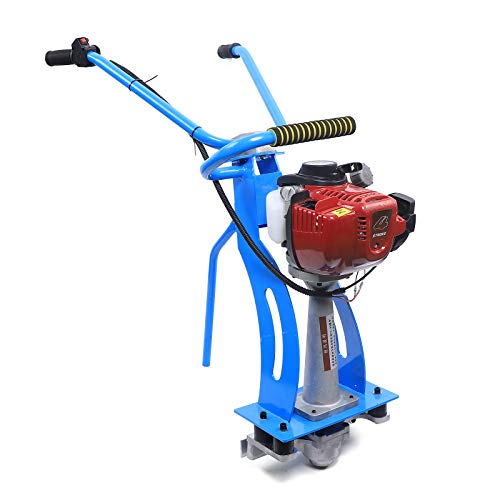
The LOYALHEARTDY screed combines a 900W 4-stroke engine (35.8cc) with a high displacement and high RPM (9500-10000) to deliver strong vibration and rapid leveling. The steel frame is robust, scratch-resistant, and designed for longevity. It provides efficient air removal from concrete to improve density and flatten the surface. Control is straightforward: throttle to adjust fuel flow and an emergency stop for immediate shutdown. Suitable for larger pours where high performance and durable construction matter most.
LIANDU-US GX35 Concrete Screed

Powered by a 37.7cc 4-stroke engine, the LIANDU-US GX35 drives a vibration system up to 5200 RPM. It supports blades from 3 to 20 feet (not included) and emphasizes a user-friendly design with an upright kick stand. The machine’s light weight and modular blade setup enable quick adjustments for varying job widths. It’s suited for smoothing, leveling, and placing concrete on large horizontal surfaces, especially when longer blade lengths are needed for expansive pours.
VEVOR 4 Ft Concrete Power Screed

The VEVOR 4ft screed features a robust 1.6HP engine designed for 6500 RPM vibration. It offers a lightweight frame with an adjustable handle to suit operator height, reducing fatigue during long pours. The 7mm thick aluminum blade is corrosion-resistant and durable, making the unit suitable for frequent use on commercial sites. This configuration emphasizes quick, even leveling with strong vibration transmitted through a compact board.
Generic 5.9 Ft Battery Powered Screed
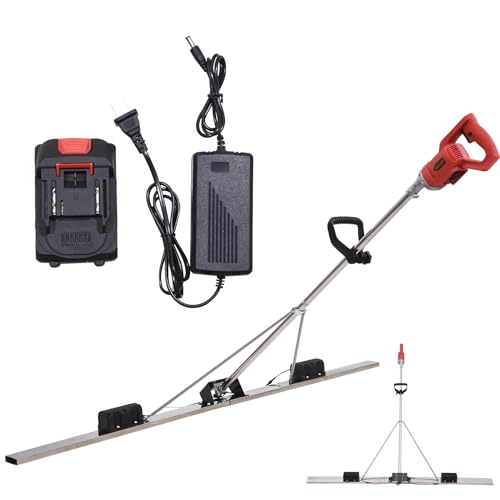
This cordless screed option provides a 60W brushed all-copper motor with a 21V 2500mAh battery offering roughly 1–2 hours of continuous operation. The tool uses a triangular fixed structure for stability and includes a 5.9-inch stainless steel guide rail to maximize coverage per pass. It’s designed for portability and ease of use on smaller sites or overhead pours where fuel-powered options are impractical.
Buying Guide
- Power source and mobility: Battery-powered screeds reduce emissions, weight, and maintenance, ideal for indoor or restricted-access sites. Gasoline-powered units deliver longer run times and higher RPMs for bigger pours but require fuel and more maintenance.
- Board length and blade options: Longer boards increase coverage per pass but add weight. Check blade compatibility for your typical pour width (3–20 ft is common). Ensure blades are corrosion- and wear-resistant.
- Vibration speed and efficiency: Higher RPM and robust vibration help consolidate concrete and reduce air voids. Look for models with brushless motors or durable transmissions for longevity.
- Ease of operation: Features such as adjustable handles, kick stands, and straightforward starting mechanisms reduce operator fatigue and downtime on active sites.
- Maintenance and parts availability: Prefer brands with accessible spare parts, simple blade replacements, and clear service intervals to minimize downtime.
- Weight and ergonomics: Lighter units reduce fatigue, but ensure enough rigidity to maintain a straight edge. Triangular reinforcement and stabilizing rods can improve control during leveling.
- Cost-to-value balance: While high-end units offer speed, evaluate the total cost of ownership, including fuel, batteries, blades, and potential spare parts replacement over the project duration.
Across these options, cordless models offer portability and cleaner operation for smaller jobs, while gas-powered screeds excel on large-scale pours requiring sustained power. For projects demanding precise edge straightness and minimal labor, consider boards with reinforced structures and easily interchangeable blades. Always verify blade length compatibility with your deck width and project scope before purchasing.