Best Waterproofing Membrane Solutions for Concrete Projects
Finding a durable waterproofing membrane for concrete involves assessing adhesion, flexibility, and ease of application. This guide covers five top-rated membranes designed to protect basements, foundations, and concrete surfaces from moisture intrusion. Each product is explained with key features, ideal uses, and application notes to help you compare options and decide which membrane best fits your project.
| Product | ||
|---|---|---|
| Liquid Rubber Basement and Foundation Repair Sealant (5 Gal) | Liquid Rubber | Basements, foundation leaks, showers, planter boxes |
| USG DUROCK Brand Liquid Waterproofing Membrane (1 Gal) | USG Interiors | Concrete, bathrooms, foundational leaks, prep for tiling |
| Liquid Rubber Basement and Foundation Repair Sealant (1 Gal) | Liquid Rubber | Basement leaks, foundation repair, DIY projects |
| LATICRETE Hydro BAN Easy to Apply Anti-Fracture Membrane (1 Gal) | Laticrete | Gaps and crack insulation, shower floors, walls |
| Liquid Rubber Color Waterproof Sealant (5 Gal) | Liquid Rubber | Flat or slope roofs, foundations, basements |
Note: All products listed are suitable for concrete-related waterproofing tasks. When selecting a membrane, consider substrate, anticipated movement, UV exposure, and curing conditions to ensure long-term performance.
Liquid Rubber Basement and Foundation Sealant — 5 Gallon

Liquid Rubber’s foundation sealer forms a permanent waterproof membrane designed for basement waterproofing, foundation leak repair, shower liners, and planter boxes. It delivers high elongation (about 900%), ensuring flexibility and crack-bridging ability across temperature changes. This product is positioned as a complete basement waterproofing system, designed to seal against active leaks and moisture. It adheres well to concrete, masonry, wood, metal, and foundation surfaces, making it suitable for both interior and exterior applications. The formulation supports self-leveling concrete compatibility and serves as a durable, broad-use sealant for DIY and professional projects.
Applications and considerations: Ideal for basement leaks, foundation repair, and other moisture-prone areas. Ensure proper surface preparation, clean dry surfaces, and apply as directed for best results. Curing will depend on ambient conditions; follow the manufacturer’s guidelines for thickness and layering to achieve the recommended membrane performance.
USG DUROCK Brand Liquid Waterproofing Membrane (1 Gal)
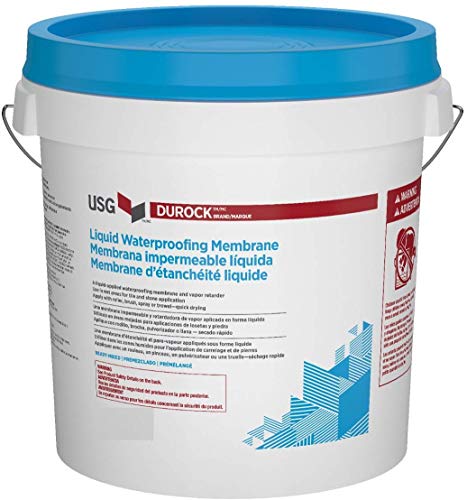
USG DUROCK’s liquid waterproofing membrane is a versatile option that can be rolled, brushed, troweled, or sprayed. It offers fast-drying times to support quick project turnaround and a low perm rating of 0.38 perms at 20 mils dry thickness (per ASTM E96 Procedure E). This membrane is designed for concrete and foundation surfaces needing moisture protection and is suitable as a base layer before tiling or finishing in wet areas. The non-fiber-based formula can be applied to various substrates, including concrete, for a continuous waterproofing seal.
Considerations: Temperature and surface prep influence cure time. While it dries quickly, ensure the surface is clean and dry prior to application. The low perm rating helps reduce water vapor transmission, contributing to a moisture barrier in damp environments.
Liquid Rubber Basement and Foundation Repair Sealant — 1 Gallon

This 1-gallon variant mirrors the 5-gallon formula in a smaller package, offering the same flexible, durable membrane for basement waterproofing, foundation leaks, and concrete crack filling. The product emphasizes a permanent waterproof membrane with high elongation, enabling crack-bridging performance that accommodates substrate movement. It’s presented as part of a complete basement waterproofing approach and is suitable for DIY projects and professional repairs where space or weight considerations matter.
Key points: Ensure compatible surfaces (concrete, masonry, wood, metal, foundations) and follow recommended thicknesses. Flexibility at multiple temperatures helps prevent future cracking in structural concrete as temperatures fluctuate.
LATICRETE Hydro BAN Easy to Apply Anti-Fracture Membrane (1 Gal)

Hydro BAN is designed as an anti-fracture membrane that helps prevent cracks and undermines the spread of moisture through concrete and tiled surfaces. It allows for quick flood testing after curing and does not require fabric reinforcement for gaps up to 1/8 inch (3 mm) under specified conditions. The product is IAPMO approved, indicating compliance with plumbing and building standards for moisture control in wet areas. This membrane is well-suited for shower surrounds, bathroom walls, and other areas where crack management is critical for long-term waterproofing performance.
Practical considerations: Follow installation guidelines for gaps and substrate conditions. Consider the system’s compatibility with subsequent tile or coating layers and the cure time required before grouting or tiling work.
Liquid Rubber Color Waterproof Sealant (5 Gal)

This white, elastomeric coating provides a flexible waterproof membrane suitable for flat or slope roofs and foundations. It offers up to five times more flexibility than traditional coatings, with a claimed application capability of 150-250 sq ft per 5-gallon bucket depending on surface. It can be applied like paint using a brush, roller, or sprayer, and cures to a durable, rubber-like barrier. The product is appropriate for DIY roof and foundation projects where a seamless, flexible waterproof layer is desired, with the benefit of color options for visibility and reflectivity in some use cases.
Usage notes: Prepare clean, dry surfaces; apply multiple coats as needed for vertical or horizontal surfaces; avoid wet conditions and follow temperature guidelines for best results. The membrane’s elasticity helps accommodate substrate movement and thermal expansion.
Buying Guide: Key Purchase Considerations for Concrete Waterproofing Membranes
- Substrate compatibility: Confirm the membrane adheres well to concrete, masonry, or cementitious surfaces and whether it’s suitable for interior, exterior, or both environments.
- Elongation and flexibility: Higher elongation values indicate better crack-bridging and movement tolerance, important for foundations and basements where temperature changes occur.
- Application method and cure time: Consider whether you prefer rolling, brushing, spraying, or troweling, and align cure times with project timelines and weather conditions.
- Vapor permeability: A low-perm membrane reduces moisture movement but ensure it still allows enough vapor management for the substrate to avoid trapping moisture.
- Crack isolation vs. continuous membrane: Anti-fracture or cementitious membranes isolate cracks; continuous liquid membranes provide a seamless barrier.
- Surface preparation requirements: Most membranes require clean, dry surfaces and may need priming or moisture testing before application.
- Durability and UV exposure: For exterior uses, consider UV resistance and long-term durability; some products are interior-focused, while others are designed for roofing or external foundations.
- Compatibility with subsequent layers: Check if the membrane works with tile, coatings, paints, or roof coatings to avoid adhesion conflicts.
- Regulatory approvals: Look for certifications or approvals (e.g., IAPMO) indicating compliance with building and plumbing standards.
Selecting the right waterproofing membrane depends on your project type, climate, and structural needs. For basements and foundations, flexible epoxy-like or liquid membranes with high elongation provide durable, crack-bridging protection. For showers and wet areas, anti-fracture membranes or seamless liquid membranes offer reliable moisture barriers. Roofing and exterior applications may benefit from elastomeric coatings that maintain flexibility over time while reflecting solar heat. Always follow the manufacturer’s instructions for surface prep, curing, and re-application intervals to ensure optimal performance.