Best Weight Axe for Splitting Wood
Choosing the right weight axe can dramatically affect your efficiency, safety, and fatigue during long wood-cutting sessions. This guide highlights five top-scoring splitting axes that balance head weight, handle design, and durability for American outdoorsmen and DIYers. Each option aims to maximize one-strike power while keeping user comfort in mind, whether you’re building a fire pit, stockpiling firewood, or clearing fallen timber. Read on for practical differences, performance notes, and purchase considerations to help you make an informed choice.
Quick comparison table of selected products:
| Product | Brand | Head Weight (approx.) | Length | Notable Feature |
|---|---|---|---|---|
| Fiskars X25 Splitting Axe | Fiskars | ~3.5 lb | 28″ | Advanced bevel geometry for power and ease of removal |
| ESTWING Fireside Friend Axe | Estwing | ~2.5 lb | 14″ | One-piece forged steel with shock-reduction grip |
| INTERTOOL 36-Inch Wood Splitting Maul | INTERTOOL | ~5 lb | 36″ | Fiberglass handle with shock absorption |
| 35.4″ Splitting Axe (DWFKHT) | DWFKHT | ~4.3 lb head | 35.4″ | High-carbon steel head and balanced design |
| Fiskars Pro IsoCore Splitting Maul | Fiskars | ~6 lb | 36″ | IsoCore shock reduction system |
Fiskars X25 Splitting Axe

The Fiskars X25 is designed as a mid-to-large size splitting axe with a 28-inch handle. The blade geometry emphasizes improved power and ease of withdrawal, enabling more efficient one-strike splits on medium to large logs. The design also focuses on balance to enhance swing speed, contributing to a comfortable wood-splitting experience during longer sessions. This model is well-suited for firewood prep and yard work where a reliable, durable cutting edge is a priority. The included sheath adds a layer of storage safety when not in use.
ESTWING Fireside Friend Axe

ESTWING’s Fireside Friend Axe is a compact 14-inch wood-splitting maul built from a single forged piece of steel. Its one-piece construction offers high durability with fewer failure points, ideal for quick firewood prep and backpack-friendly use. The weight distribution and grip are designed for controlled swings, helping reduce fatigue during shorter, repetitive tasks. A ballistic nylon sheath protects the edge, promoting safety during storage and transport while preserving blade sharpness.
INTERTOOL 36-Inch Wood Splitting Maul
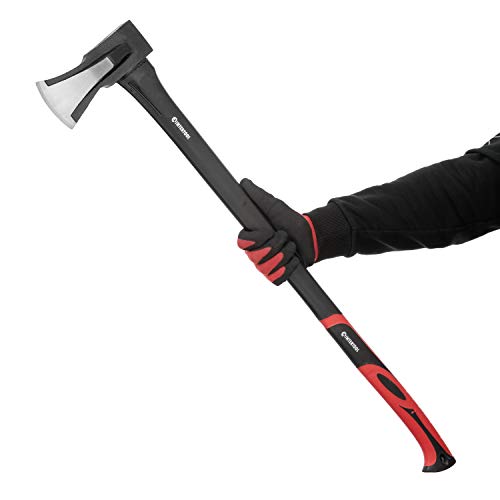
INTERTOOL’s 36-inch splitting maul features a heavy-duty head around five pounds and a fiberglass handle with shock-absorbing properties. The blade is heat-treated carbon steel with a protective anti-corrosive coating, designed to maintain sharpness through seasons of use. The oversized handle provides leverage for deep, forceful chops, and the included durable blade sheath ensures safe storage when the tool is not in use. A textured rubber grip improves handling in varying weather conditions.
DWFKHT 35.4″ Splitting Axe

This DWFKHT model provides a long 35.4-inch overall length with a 4.3-pound head. The wedge-shaped blade is designed for exceptional efficiency when splitting larger logs and rounds. The high-carbon steel head enhances durability and edge retention, while the balanced weight distribution improves control and swing power. A leather sheath is included to protect the edge when not in use, contributing to long-term tool longevity.
Fiskars Pro IsoCore Splitting Maul

The Fiskars Pro IsoCore Splitting Maul is built with a 36-inch handle and a 6-pound head, designed to minimize user fatigue through patented IsoCore shock reduction. The head is securely riveted and engineered for long-lasting performance under heavy, repeated swings. This model targets serious wood splitters who regularly handle large or tough logs, delivering efficient splitting with reduced impact on the body. The combination of forged, heat-treated steel and IsoCore technology makes it a durable choice for frequent users seeking comfort over extended sessions.
Buying Guide: Key Purchase Considerations
- Weight distribution and head mass: Heavier heads deliver more raw splitting power, but require better swing control and wrist/arm strength. Lighter heads reduce fatigue but may require more swings for larger logs.
- Handle material and length: Fiberglass or composite handles often dampen shock, while wooden handles provide traditional feel. Longer handles increase leverage but can be heavier to maneuver in tighter spaces.
- Blade geometry: A wedge-shaped or convex grind can improve penetration and reduce stuck blades. Consider blades designed for easy withdrawal to sustain momentum on repeated cuts.
- Durability and build quality: One-piece forged steel constructions tend to offer greater durability and edge retention, especially under heavy use. Anti-corrosion coatings protect blades in damp environments.
- Shock reduction features: Models with shock-absorbing systems or IsoCore technology help minimize impact transmission to the user, reducing fatigue during long sessions.
- Safety accessories: A blade sheath or protective cover helps prevent accidents during storage and transport. Non-slip grips improve handling in wet conditions.
- Intended use: Match the tool to log size and planned tasks. Shorter axes excel at kindling and smaller logs; longer, heavier mauls suit large firewood tasks.
- Maintenance considerations: Regularly sharpen edges and inspect for cracks or loose fittings. Proper storage protects the blade and extends tool life.
Comparative Perspectives
- Efficiency vs. fatigue: Heavier head weights often yield more split power but demand greater user stamina and technique. Opt for a model that aligns with your typical workload and comfort level.
- Durability vs. cost: Premium forged steel and shock-reduction systems usually come at higher price points but offer lasting performance in demanding use. For occasional home use, reliable mid-range options may suffice.
- Portability vs. reach: Shorter axes are easy to handle in tight spaces and for kindling, while longer tools provide leverage for larger logs but require more space and control.