Best Welder for Thin Sheet Metal and Related Tools for Precision Work
Choosing the right welder and supporting tools for thin sheet metal requires balancing heat control, precision, and ease of use. This guide highlights five top products that specifically support welding thin gauges, from portable MIG welders to precision aluminum plates and measurement gauges. Each selection focuses on reliability, ease of use, and suitability for small-scale fabrication, automotive projects, and DIY crafts on thin metals.
| Product | Brand | Recommended Use | Notes |
|---|---|---|---|
| Eastwood 140 Amp MIG Welder | Eastwood | Sheet metal and thin steel welding | Portable with regulator and hose; good starter option |
| Amyhill Aluminum Weld Plates | Amyhill | Practice welding on thin aluminum | Multiple plates; dimensions fit standard practice |
| Zonon Steel Sheets 12″ x 6″ x 0.032″ | Zonon | Thin steel practice and forming | 8 sheets per pack; easy to cut to fit |
| Hicarer 18 Gauge Steel Sheets | Hicarer | Light to moderate fabrications | 4-piece pack; suitable for beginners |
| Weewooday Thickness Gauge Sets | Weewooday | Accurate metal thickness measurement | 6 gauges; handy for prep before welding |
Below you’ll find product-by-product sections that outline key features, how they support welding thin sheet metal, and what to consider before purchase. Each entry includes a direct link to Amazon for quick access.
Eastwood 140 Amp MIG Welder For Thin Steel
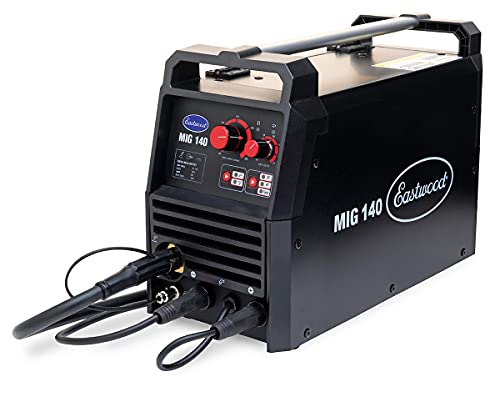
The Eastwood MIG Welder is designed for sheet metal and thin steel welding, offering a portable footprint and a broad welding range that supports gauges from 24 to 3/16 inch. Its 120-volt operation and adjustable amperage (30% duty cycle at 90 Amps, 60% at 65 Amps) make it approachable for beginners while still capable for more complex projects. The unit uses .023–.035 wire, supports 2T/4T modes for long welds, and accommodates gas or flux-core welding. This combination makes it a versatile choice for automotive body work and other thin metal applications.
Key considerations: ensure you have appropriate shielding gas or flux-core options, stock compatible consumables, and space for a reliable ground connection. For best results on thin sheets, practice with scrap pieces to dial in spray vs. short-arc techniques and avoid overheating delicate joints.
Amyhill Aluminum Sheet Plates For Practice

Amyhill provides 20 aluminum plates sized about 2 x 4 inches with 1/8 inch (3 mm) thickness. These plates are ideal practice substrates for MIG, TIG, stick, and arc welding on aluminum. The plates are heat-treatable and corrosion resistant, which helps when experimenting with heat input and post-weld finishing. The compact size simplifies handling and alignment on small fixtures, making it suitable for hobbyists and professionals testing weld parameters on thin aluminum without risking larger stock.
Key considerations: aluminum requires meticulous cleanliness and oxide control. Use a suitable filler and ensure the workpiece is clamped securely to minimize warping during welding. Regular inspection for any edge burrs helps maintain consistent joints in practice sessions.
Zonon 8 Pcs 12″ Steel Sheets 0.032″ Thick

These Zonon cold-rolled steel sheets measure 12 x 6 inches with a thickness of 0.032 inches (0.8 mm). The package includes eight sheets, offering ample material for multiple practice welds or component mock-ups. The cold-rolled process delivers a smoother surface finish, which aids in consistent arc performance and cleaner weld beads. The sheets are easy to cut to size, enabling rapid fixture setup for experimenting with tack welds and seam welds on thin steel.
Key considerations: ensure your grinder and deburring tools leave a smooth edge to prevent gouges or burn-through. When working with multiple sheets, maintain consistent clamp pressure to avoid warping during heat input.
Hicarer 18 Gauge Steel Sheets For Welding

The Hicarer set includes four 18-gauge metal sheets, each about 0.05 inch (1.2 mm) thick. These sheets are straightforward to cut, shape, and weld, making them practical for practice runs and initial project builds. The pack is designed to support larger projects that require more surface area, while still maintaining the manageability of thin sheet work. The potential uses range from test fixtures to prototyping complex lugs and brackets for automotive or machinery frames.
Key considerations: watch heat input to prevent distortion; for 18-gauge steel, small tacks and short weld segments help maintain flatness. Surface rust on shipping may occur; clean prior to welding for best bead formation.
Weewooday 6 Pcs Thickness Gauges For Metal
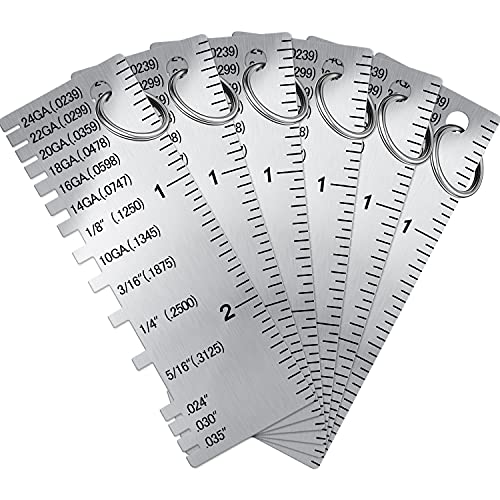
This 6-piece thickness gauge set from Weewooday helps ensure accurate pre-weld measurements of metal thickness or wire diameter. The template’s clear scales support quick verification of stock dimensions before welding, aiding in selecting the correct heat input, travel speed, and filler material. Precision in prep work reduces the risk of burn-through and inconsistent bead width on delicate sheets. The stainless steel construction offers durability and long service life for shop use.
Key considerations: keep gauges clean and free from oil or dirt to maintain reading accuracy. Use separate gauges for different metals to avoid cross-contamination in critical joints.
Buying Guide: Thickness, Heat, and Practice For Thin Sheet Welding
When selecting tools for welding thin sheet metal, consider the following perspectives to ensure optimal performance and project success.
- Material type and thickness: For aluminum, stainless, and carbon steel, choose equipment and practice plates that mirror your target materials. Thin sheets require careful control of heat input to prevent burn-through and warping.
- Welder capability and settings: A portable MIG welder with adjustable amperage and a suitable wire size is ideal for thin steel. Ensure compatibility with shielding gas or flux-core options based on your setup. Practice with tack welds before sealing long seams.
- Practice substrates: Use practice plates and sheets to dial in travel speed, torch angle, and wire feed. Aluminum plates require different cleaning and oxide management compared with steel.
- Measurement and prep: Accurate thickness measurement and edge prep prevent mis-twins in welds. Keep a clean workspace and use clamps to minimize movement during welding sessions.
- Safety and maintenance: Wear appropriate PPE, including a respirator for fumes. Clean and store sheets and plates to prevent rust and edge corrosion that could affect weld results.
- Cost vs. value: While bundles of plates and gauges may seem redundant, they reduce material waste during practice and help achieve repeatable results on thin sheets.
- Future-proofing: If you anticipate frequent work with thin sheets, invest in a reliable MIG welder with good duty cycle, plus a dedicated set of aluminum plates and gauges to support repeatable results.
In sum, the combination of a capable MIG welder, a set of thin aluminum and steel practice sheets, and precise thickness gauges provides a practical toolkit for achieving clean, strong joints on thin sheet metal. The products highlighted above cover essential needs: welding capability for thin steel, practice-ready aluminum plates, multiple sheet stock for experimentation, and accurate measurement to set up the weld correctly.