Best White Primer for Wood: Top Picks for Smooth, Durable Finishes
Answering the question “which white primer is best for wood?” this guide highlights five reliable options that bias toward interior or exterior wood projects, including furniture, trim, and surfaces that demand good stain blocking and adhesion. Each pick caters to different project needs—budget-friendly, fast-drying, low odor, or heavy-coverage primers. Use the brief buyer notes to choose the best match for your wood project and environment.
Summary table of selected products
| Product | Best For | Key Benefit | Notes |
|---|---|---|---|
| 1 Quart Bulls Eye 1-2-3 Primer Sealer Stain Killer | General interior/exterior wood | Stain-blocking and adhesion | Dries at low temps |
| Rust-Oleum 334019 Painter’s Touch 2X | Indoor/outdoor wood and more | Built-in primer for faster projects | Oil-based, low odor |
| Zinsser 02244 Water-Base Bulls Eye | Homes with sensitive spaces | Low odor, excellent hiding on dark surfaces | Water-based |
| Polar All Surface Primer Matte White | Multi-surface prep | Enhanced adhesion and gap-filling | Great for rough surfaces |
| Polar Wood Primer (Matte White) | Wood specific prep | Weather-resistant adhesion | High coverage per can |
1 Quart Bulls Eye 1-2-3 Primer Sealer Stain Killer

Best for general wood prep, interior and exterior. This Zinsser primer/sealer bonds well to glossy surfaces without scuff sanding, making it suitable for existing painted wood, cabinets, or paneling. It also acts as a stain killer, blocking bleed-through on knots or tannin-rich woods. Choose this if you need a reliable base layer that reduces surface prep and improves topcoat adhesion on a variety of wood substrates.
- Best for: gloss-to-wood transitions, DIY furniture, and trim prep
- Why selected: proven stain-blocking and adhesion, usable in cooler conditions (low-temperature application)
- Limitation: Not explicitly designed for heavy outdoor weather exposure without topcoat
Rust-Oleum 334019 Painter’s Touch 2X Ultra Cover Primer Spray

Best for quick, broad coverage on wood surfaces and other materials. This oil-based primer offers a low-odor profile for an oil-based product and dries to touch in about 20 minutes. It resists chipping and provides long-lasting protection, making it a solid choice for projects requiring a durable, fast-drying primer on wood, plastic, metal, or masonry. Choose this if you want a spray-on primer that covers large areas quickly.
- Best for: quick DIY refreshes, interior/exterior wood projects
- Why selected: fast-drying, broad surface compatibility, durable base
- Limitation: Oil-based formula may have odor and cleanup considerations
Zinsser Bulls Eye Water-Base Primer and Sealer

Best for interior wood priming where odor control is important. This water-based primer provides excellent stain hiding, including on dark or porous surfaces, with a relatively fast dry time. It is suitable for walls, doors, trim, plaster, and concrete, making it a versatile interior option. Choose this if indoor air quality is a priority and you want low-odor performance.
- Best for: interior walls and trim with odor sensitivity
- Why selected: low odor, strong stain blocking
- Limitation: May require longer cure before topcoat on very porous surfaces
Polar All Surface Primer Matte White
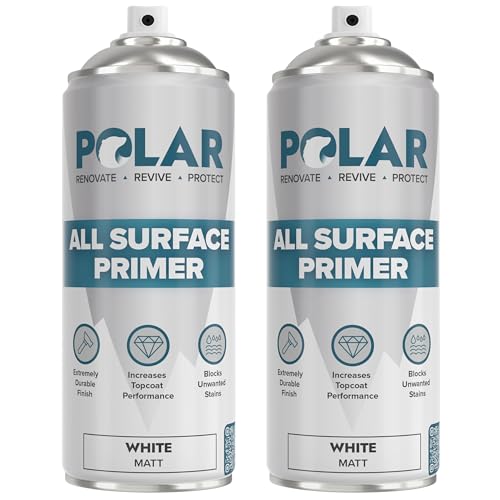
Best for projects requiring a true all-surface base. Its high-build formula emphasizes enhanced adhesion and gap-filling, making it suitable for surfaces like wood, metal, plastic, and painted brick before topcoats. Choose this when you need a versatile primer that handles uneven textures and provides a solid base for multiple materials.
- Best for: multi-surface prep with a single product
- Why selected: enhanced adhesion, good gap-filling properties
- Limitation: may be heavier than specialized wood primers for bare wood projects
Polar Wood Primer

Best for bare and painted wood where long-lasting adhesion is key. This matte white primer creates a durable base for topcoats and resists weathering when used on exterior wood surfaces. Its high-coverage formulation helps streamline large wood projects, such as exterior trim or decking, while maintaining a smooth finish. Choose this if you need robust weather resistance on wood surfaces.
- Best for: exterior wood and painted wood priming
- Why selected: strong adhesion and weather resistance
- Limitation: matte finish may influence sheen of final topcoat on some projects
Buying Guide
Key considerations for selecting a white primer for wood:
- Substrate and environment: Interior uses prioritize low odor and quick drying; exterior uses require weather resistance and adhesion.
- Base type: Water-based primers typically offer lower odor and easier cleanup, while oil-based primers tend to provide stronger stain blocking and durability on challenging woods.
- Adhesion and filling: If surfaces are rough or have minor imperfections, choose a primer with good filling and adhesion properties to reduce topcoat issues.
- Stain blocking: Knotty or tannin-heavy woods benefit from primers with strong stain-blocking capabilities.
- Topcoat compatibility: Ensure the primer is compatible with your intended topcoat (latex, oil-based, or enamel) and topping schedule.
- Dry time and recoat window: Faster-drying formulas enable quicker project completion but may require more precise timing for topcoats.
FAQ
What is the best white primer for knotty wood?
Primers with strong stain-blocking properties, such as Zinsser Bulls Eye or Bulls Eye Water-Base, perform well on knotty wood by preventing tannin bleed.
Can I use any white primer on exterior wood?
Yes, but choose a primer rated for exterior use and weather resistance to ensure durability and adhesion over time.
Is water-based primer enough for old, glossy surfaces?
Often yes, especially with a bonding primer or a light scuff/sand to improve adhesion before applying water-based primer.
How long should I let primer dry before topcoating?
Typical dry times range from 30 minutes to a few hours, depending on the product and conditions. Always follow the manufacturer’s guidance on the can.
Do I need to sand between coats?
Lightly sanding between coats improves adhesion and smoothness, particularly on glossy or uneven surfaces.
Which primer provides the best one-coat coverage for wood?
High-build primers and all-surface primers can offer better initial coverage, but results depend on wood type and surface condition.