Best Whole House Solar Generator for Reliable Home Power
These whole-house solar generators offer scalable energy storage, rapid recharging, and multiple outlets to keep essential appliances powered during outages or off-grid living. The following selections balance capacity, safety features, and ease of use to help American households choose a robust solar backup system.
| Product | Brand | Capacity | Max Output (W) |
|---|---|---|---|
| Jackery HomePower 3000 | Jackery | 3072Wh | 3600W / 7200W surge |
| Anker SOLIX F2000 (PowerHouse 767) | Anker | 2400Wh | 2400W (3600W surge) |
| EF ECOFLOW DELTA Pro Ultra | EF ECOFLOW | 6144Wh (per unit); expandable to 90kWh | 7200W (up to 21.6kW with multiple units) |
| EF ECOFLOW DELTA Pro 12kWh Plus | EF ECOFLOW | 12000Wh | 7200W (4500W with X-Boost) |
| EF ECOFLOW DELTA Pro Ultra Plus with Extra Battery | EF ECOFLOW | 6144Wh + extra modules | 7200W (up to 21.6kW with inverters) |
Note: The table highlights core specs like capacity and peak output to help compare suitability for home backup, camping, and RV use. Always verify compatibility with your home electrical system and local grid requirements before purchase.
Jackery HomePower 3000 Portable Power Station

The Jackery HomePower 3000 delivers a robust 3600W continuous output with a 7200W surge, backed by a 3072Wh LiFePO4 battery. This combination supports common household essentials such as refrigerators, fans, routers, and lighting during outages. The device targets reliable home backup for moderate to larger homes and is designed to switch quickly with a ≤20ms UL-certified UPS, ensuring uninterrupted operation for critical devices like security cameras or medical refrigerators. The system is eligible for the residential clean energy credit, with a 30% federal tax credit potential, subject to program terms and deadlines. Its compact form factor and solar panel compatibility make it a versatile entry point for homeowners seeking practical off-grid resilience.
Key features include: 3600W continuous output, 7200W surge capability, 3072Wh capacity, UL UPS transition, and energy credit eligibility. The unit is suitable for emergency power during storms or outages and can support essential loads for hours or days depending on usage and external charging. Users should plan for utility confirmation of eligibility and ensure they have a compatible charging setup for optimal operation.
Anker SOLIX F2000 Portable Power Station
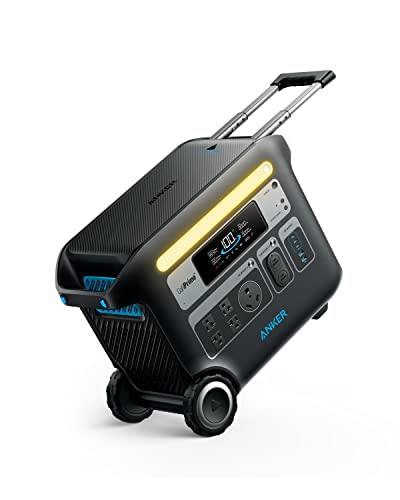
The Anker SOLIX F2000 (PowerHouse 767) emphasizes longevity and device-friendly charging, featuring InfiniPower’s long-lasting design for more than a decade of use. Its HyperFlash rapid recharge enables 0–80% in about 1.4 hours, minimizing downtime during outages. With a 2400W baseline output and multiple ports—including AC outlets, USB-C, USB-A, and RV-specific connections—it powers a broad range of devices simultaneously. SurgePad technology helps manage high-wattage loads without overloading the unit, supporting larger appliances up to 3600W when needed.
Important considerations include its 2400Wh capacity, rapid recharge capability, and broad outlet mix. While not as large as some wall-embedded or ultra-expandable systems, the SOLIX F2000 stands out for quick replenishment and the ability to run many devices in a well-equipped home or campsite. Prospective buyers should assess their typical outage duration and whether the 2400Wh capacity aligns with nightly power needs and charging options.
EF ECOFLOW DELTA Pro Ultra with Smart Home Panel 2

The Delta Pro Ultra with Smart Home Panel 2 combines a 6144Wh battery with a 7200W inverter, designed to power almost any home appliance. The system supports expansion to 21.6kW with multiple inverters and a smart panel, enabling centralized control over circuits and prioritized loads during outages. It offers flexible charging methods and rapid recharging, with the ability to receive power via solar, wall outlets, EV charging, or liquid generators. The Ultra model emphasizes scalability, making it suitable for larger homes that require a resilient, long-duration backup power solution.
Key considerations include expansion potential, multi-inverter outputs, and the Smart Home Panel 2 integration. This solution suits homeowners seeking a scalable, high-capacity backup that can be tailored to specific circuits and load priorities. Prospective buyers should evaluate their home’s peak load, desired outage duration, and future solar or generator charging plans to maximize benefit.
EF ECOFLOW DELTA Pro 3600Wh Portable Power Station
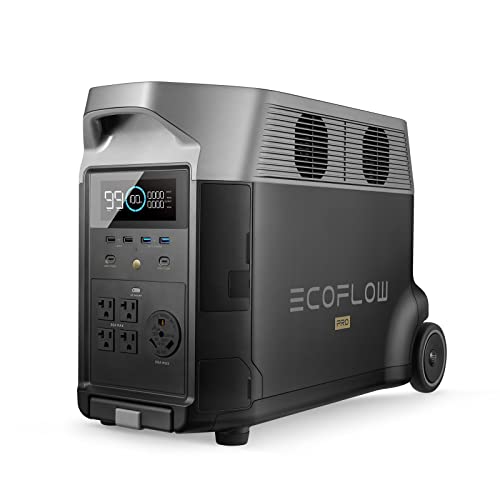
The Delta Pro 3600Wh model emphasizes maximum output with a 3600W AC capacity, expandable up to 4500W via X-Boost and up to 7200W when using multiple units. It includes 15 different output methods, including USB-C, USB-A, and multiple AC outlets, supporting a wide range of devices. Its 3600Wh LiFePO4 battery provides solid storage for home backup and outdoor use, with compatibility for expansion through extra batteries or smart generators to extend backup duration. This configuration is ideal for households needing robust power for essential circuits during outages or for off-grid use.
Considerations include the balance of capacity, expandability, and the breadth of output ports. Users should map their critical loads and verify how many outlets are required to power essential devices simultaneously. The Delta Pro 3600Wh can be a core component of a flexible, multi-outlet backup strategy, especially when paired with solar panels for continuous charging.
EF ECOFLOW DELTA Pro Ultra with Extra Battery

The Delta Pro Ultra with Extra Battery combines a 6144Wh core with additional battery modules to scale energy storage significantly, potentially reaching up to 90kWh in a full setup. It maintains a 7200W inverter output and can deliver up to 21.6kW with multiple inverters, supporting a substantial portion of a home’s essential loads during an outage. The system offers extensive customization, including prioritizing circuits via the EcoFlow app, and supports many charging methods, including solar and utility power. This option is well-suited for larger homes or those planning extended outages or frequent off-grid living.
Key considerations include total system energy capacity, expansion options, and how the home’s peak loads will be managed. Potential buyers should assess the number of circuits they want to prioritize, the feasibility of solar expansion, and the cost-benefit of a longer-duration backup against upfront investment.
Buying Guide: Key Purchase Considerations For Whole-House Solar Generators
- Power needs and capacity: Estimate daily usage for critical loads (refrigeration, medical devices, Wi-Fi, lighting) and choose a system with sufficient usable capacity. Consider both continuous wattage and surge requirements for appliances like air conditioners or pumps.
- Output flexibility: Look for multiple outlets, including AC, USB-C, USB-A, and car/power ports. A higher number of portable outlets supports more devices during outages.
- Battery chemistry and lifespan: Lithium iron phosphate (LiFePO4) batteries offer longer cycle life and durability, which matters for frequent use. Check warranty terms and expected cycle life.
- Charge speed and sources: Rapid recharging reduces downtime. Evaluate solar panel compatibility, MPPT efficiency, and charging speed from wall outlets or generators to minimize outage time.
- Expandability: For growing energy needs, choose systems that allow additional batteries or extra inverters. This is especially helpful for large homes or future solar expansion plans.
- Reliability and safety: UL certifications, UPS switching under 20ms, thermal management, and service support are essential for reliable operation during storms and emergencies.
- Care and maintenance: Consider modular design for easier battery replacement or upgrades. Understand how to store and maintain batteries when not in use.
- Tax incentives and rebates: Some systems are eligible for federal tax credits or other incentives. Confirm eligibility and deadlines with your utility and tax professional.
In assessing options, homeowners should weigh upfront costs against long-term resilience, integration with existing solar arrays, and the desired level of automation. A balanced setup often combines high-capacity storage with flexible charging methods, enabling reliable power for essential circuits while enabling future expansion as energy needs evolve.