Best Commercial Wood Chippers for Heavy-Duty Jobs
When tackling large-scale yard cleanup or professional landscaping, a reliable commercial wood chipper is essential. This guide highlights top-performing models that balance power, durability, and ease of use. Each option offers distinct features for budget-conscious buyers, fleet operators, and contractors seeking high throughput and dependable results. Below you’ll find five strong choices with practical details to help you compare capabilities, maintenance needs, and safety features before you buy.
Summary of selected products:
| Product | Brand | Max Capacity | Engine / Power | Key Benefit |
|---|---|---|---|---|
| EFCUT C40 Wood Chipper | EFCUT | 4 inches | 9 HP / 274cc Gas | High throughput with large flywheel |
| MechMaxx B150 | MechMaxx | 6 inches | 15 HP / 420cc Gas | Tow-ready with safety features |
| LawnMaster FD1503 | LawnMaster | 1.8 inches | 15 Amps Electric | Quiet, low emissions, simple maintenance |
| EFCUT C30 LITE | EFCUT | 3 inches | 7 HP / 212cc Gas | Lightweight, easy transport |
| Patriot CSV-3090B | Patriot | 3 inches | 9 HP Briggs | Compact yet capable duty |
EFCUT C40 Wood Chipper 4″ Capacity

The EFCUT C40 is designed for heavy-duty yard work with a robust 9 HP, 274cc gas engine. This model emphasizes rapid chipping and efficiency, making it suitable for professional crews and large properties. With a 4-inch maximum capacity, a larger flywheel and high-speed steel blades, it handles thicker wood quickly, reducing downtime. The 15:1 reduction ratio contributes to efficient mulching, turning wood waste into manageable mulch for disposal or reuse. Operators should observe standard safety procedures, including guarding and proper feeding practices.
MechMaxx B150 6” Chipper Mulcher

The MechMaxx B150 offers a 6-inch capacity with a 420cc, 15 HP gas engine and an electric start for quick startups. It includes a towbar, tail lights, emergency stop, and a 360° discharge chute, making it well-suited for work on farms or large properties that require mobility and safety. The design supports up to 6-inch material and features a stable wheelbase for towing, along with safety interlocks that protect users during maintenance and operation.
LawnMaster FD1503 Electric Wood Chipper

The LawnMaster FD1503 is an electric wood chipper designed for lower noise and emissions with a 15-amp motor capable of 1.8-inch maximum diameter. It achieves a 14:1 reduction ratio, turning yard debris into mulch efficiently. The unit is ideal for residential or light commercial use where electrical power is readily available. It offers straightforward operation and maintenance, with dependable cutting performance through a dual-edged blade rotating up to 3,700 RPM.
EFCUT C30 LITE Wood Chipper Mulcher

The C30 LITE delivers compact power with a 7 HP, 212cc engine and a larger 11.8-inch rotor for stable speed. It supports up to 3 inches with a 15:1 reduction ratio, enabling efficient chipping and mulching while staying portable for easy storage in tight spaces. It features reinforced welding, a user-friendly manual, and a check window for blade replacement. The extended feeding hopper and adjustable discharge chute improve debris handling and discharge accuracy.
BILT HARD Wood Chipper 7.5 HP

The BILT HARD model combines 7.5 HP, 224cc gas power with a 3-inch maximum capacity, making it a capable option for mid-size jobs. It includes a two-blade rotor and a sizable 2.0 bushel collection bag. The unit is designed for heavy-duty use, delivering solid performance in forestry, garden maintenance, and landscaping applications. It offers straightforward assembly and operation, along with a compact footprint for easier storage.
Patriot CSV-3090B Gas Wood Chipper
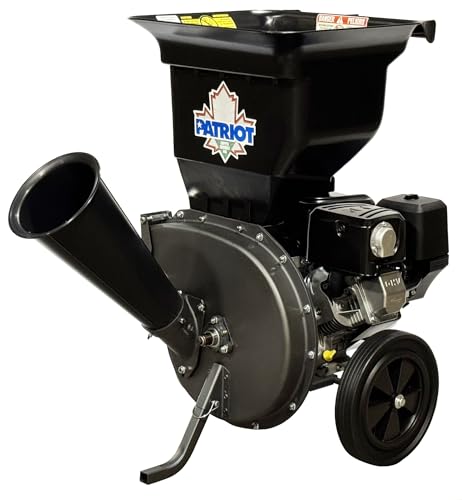
The Patriot CSV-3090B uses a 9 HP Briggs engine and a funnel-shaped intake to produce coin-sized chips from branches up to 3 inches in diameter. It handles leaves by shredding with Patriot’s swinging Y-hammer system. This unit balances power with a compact profile, making it a practical choice for contractors needing reliable chipping and mulching capabilities in a smaller footprint. It suits yard cleanups, municipal work, and mid-sized landscaping projects.
Buying Guide
Key purchase considerations for commercial wood chippers include capacity, power source, mobility, and safety. Capacity determines how large branches you can process in a single pass, while power output affects throughput and ease of mulching. Gas engines typically offer portability and high torque for heavy materials, while electric models provide quieter operation and lower emissions—often with sufficient power for residential and some light commercial tasks.
- Capacity vs. space: Larger chippers can handle thicker branches but require more storage room and may be heavier to move. Consider trailers or tow-ready designs for frequent relocation.
- Powertrain choice: Gas engines deliver strong performance for larger yard debris; electric options are cleaner and simpler to maintain but may limit continuous heavy use on very large jobs.
- Discharge and mulching: A wide and adjustable discharge chute helps direct chips where needed. A high reduction ratio (e.g., 15:1) reduces volume efficiently but check if debris type (leaves vs. branches) affects performance.
- Mobility and setup: Tow bars, wheelbase, and front/rear wheels affect transportability. Look for quick-start features, safety interlocks, and accessible maintenance points to minimize downtime.
- Safety features: Emergency stop, protective guards, overload protection, and shielded blades are essential for operator safety during routine use and maintenance.
Performance perspective: For contractors needing high-output, models with larger capacities and robust engines (6 inches or more) provide faster material processing, especially on larger properties. For on-site composting or lighter commercial workloads, mid-range units with 3–4 inch capacity and reliable mulching can deliver efficient results with lower operating costs. Durability and warranty coverage should align with the expected maintenance schedule and workload.
Maintenance perspective: Regular blade inspection, rotor integrity, and proper fuel or electricity supply are critical. Gas-powered units benefit from fresh fuel, air filter checks, and spark plug replacements. Electric models require motor maintenance, cord management, and dust control to sustain performance over time. Maintenance intervals and parts availability are important factors when evaluating long-term cost of ownership.
Usage perspective: Consider typical job sites—urban properties may favor quieter electric or compact gas models, while rural or farm settings might justify larger, tow-ready gas chippers. Training requirements and operator familiarity with choke, prime, and starting procedures influence site safety and efficiency.